
 2 hours ago
21
2 hours ago
21
Jeff Booth spent about 15,000 hours trying to kill Bitcoin. He failed. The Canadian entrepreneur says the attempt left him more convinced the network cannot be broken.
Booth is a founding partner at Ego Death Capital and a director at Core Scientific. He wrote the 2020 book The Price of Tomorrow. His conclusion is that he was the weak link, not the code.
Why a 20-Year Tech Veteran Set Out to Kill Bitcoin
Booth did not start as a believer. He co-founded the online building supplier BuildDirect in 1999 and ran it for 18 years. When his book landed in January 2020, Bitcoin (BTC) got a single paragraph.
The problem was not the math. It was the power he expected to come after it. At that stage he doubted the network could stay decentralized and secure against a determined state.
So he tried to break it. He ran a node. He modeled the attacks a government, a rival, or a large miner would use.
“I spent about 15,000 hours trying to say, ‘How do I kill Bitcoin? What does that look like?'” Booth said in an interview with the Wolf of All Streets, Scott Melker.
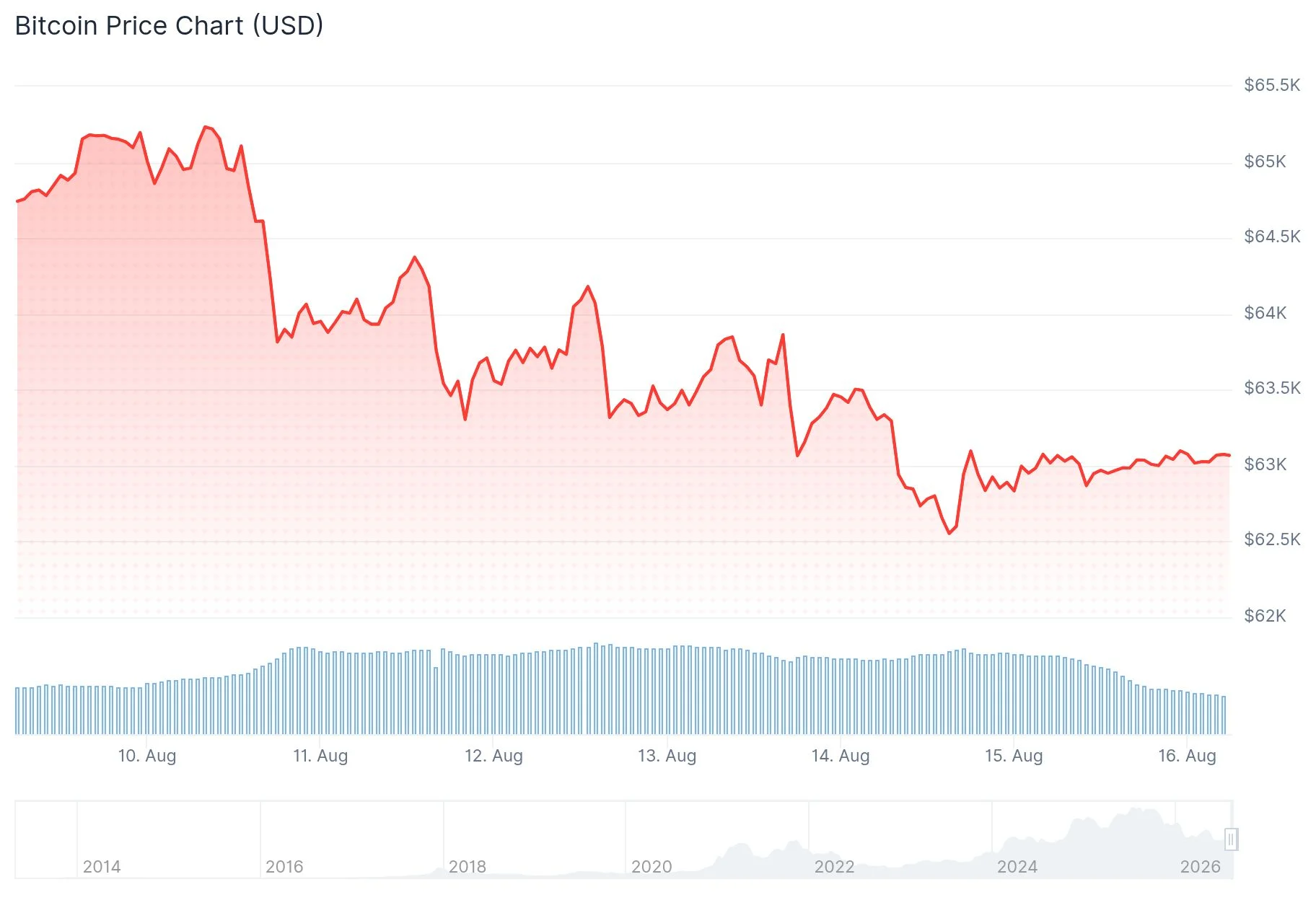
The timing of that verdict matters. BTC currently trades near $63,000 with a market value around $1.27 trillion. That is roughly 50% below the record $126,198 it set on October 6, 2025.
 Bitcoin Price Performance. Source: BeInCrypto
Booth argues price and security are separate questions. One moves daily. The other has not moved at all.
What 15,000 Hours of Attacks Actually Found
Every scenario ran into the same wall. Blocks kept arriving on schedule, and each one cost real energy to produce.
“…every 10 minutes there was a new block bounded by energy decentralized and secure and it would emerge exactly like the internet…”
The comparison is deliberate. Early internet protocols stayed narrow, so anyone could build on top without asking permission. Booth reads Bitcoin the same way.
The rulebook backs him up on one point. Roughly 24,000 reachable nodes enforce the same consensus rules today, and the 21 million supply cap survived another public round of debate this month after Adam Back rejected a proposal to lift it.
“Do I think Bitcoin is decentralized and secure right now? Yes, I do.”
His money follows the conclusion. Booth helped found Ego Death Capital in 2022, a fund that backs software companies built on Bitcoin rather than miners or tokens.
It closed a $100 million second fund in July 2025. He has also sat on the board of Core Scientific since the mining firm left Chapter 11 in January 2024.
The Risks Booth Still Names
He does not claim the network is finished or flawless.
“Mining pools are a risk. Centralization mining is a risk.”
Both risks are measurable. Three pools produced about 61% of all blocks over the past month. Roughly 80% of reachable nodes run one client, Bitcoin Core, which leaves a single codebase carrying most of the network.
Booth expects competition to grind those numbers down without any protocol change. His argument is that expensive miners simply go bust.
The math supports the pressure. Riot Platforms spent $90,631 per coin last quarter once depreciation is counted, far above the current market price. Hashrate has fallen about 22% from its October 2025 peak as miners leave the network or rent their power to AI tenants instead.
Core Scientific shows the shift in one line of accounts. It drew 83% of second-quarter revenue from colocation and only 13% from mining its own coins.
Where Other Voices Disagree
Not everyone reads the same data the same way. Venture investor Chamath Palihapitiya has called the energy shift toward AI a structural problem for miners rather than a healthy cleanout. Coinbase CEO Brian Armstrong disputes that reading.
The governance fight is also live rather than settled. A group of developers pushed BIP-110, a temporary softfork that would have forced blocks to signal support or be rejected. The chain split at block 961,632 on August 8.
That breakaway BIP-110 fork has since found four blocks. Bitcoin has found more than 1,100. Mining pool OCEAN still runs a separate endpoint for the minority chain, carrying 1.15 exahashes per second against 19.22 on its main endpoint.
Users have taken real losses in the meantime. The Coldcard wallet hack and a BTCPay Server exploit both drained funds this summer. Neither touched consensus, which is the distinction Booth keeps drawing.
That leaves one failure case in his framework, and it is human rather than technical. Booth argues Bitcoin only fails if people collectively keep pouring their time and money into the system he says takes from them.
He still expects broad adoption, and he refuses to put a date on it.
“I think it’s inevitable. It’s just a matter of timeline.”
The next test arrives soon. BIP-110 backers have floated September 1 for a proof-of-work change and a separate coin. Whether anyone follows them will say more about Bitcoin’s governance than 15,000 hours of theory ever could.
The post 20-Year Tech Veteran Spent 15,000 Hours Trying to Kill Bitcoin, What Did He Find? appeared first on BeInCrypto.





 English (US) ·