
 3 months ago
37
3 months ago
37
- Stablecoin volume surpasses $33 trillion, overtaking Visa’s yearly throughput
- Institutional flows now dominate, making up over 70% of activity
- Capital is sitting in digital dollars, not leaving crypto markets
Thirty-three trillion dollars is not a small number, and when it shows up in stablecoin volume, it stops being a niche crypto stat and starts looking like global finance. Stablecoins processed more value in 2025 than Visa, which sounds dramatic… because it is.
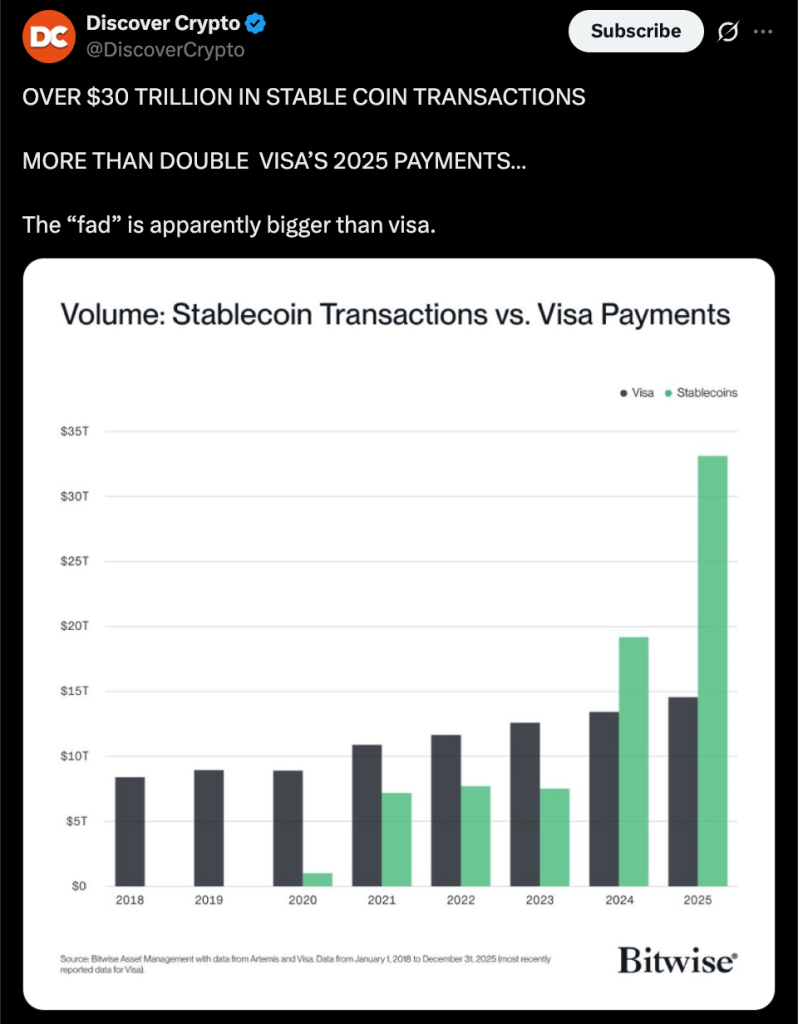
But the more important question isn’t how much moved, it’s who’s moving it, and why it hasn’t fully deployed yet.
This Isn’t Retail Driving the Market
One of the more surprising shifts is who’s behind the activity. Smaller transfers are actually declining, while large-scale flows, often tied to institutions and automated systems, are growing rapidly.
That means this isn’t retail traders parking funds on the sidelines. It’s bigger players using stablecoins as infrastructure, as settlement tools, liquidity buffers, and operational capital.
USDC Takes the Lead
Within that shift, USDC has been gaining ground, particularly among institutional users. It now accounts for a large share of organic volume, which suggests a preference for regulated, transparent assets over less compliant alternatives.
That preference matters, because it shapes where capital flows when it eventually moves out of stablecoins.
Capital Isn’t Leaving, It’s Waiting
Stablecoins often get interpreted as a sign of caution, and sometimes they are. But increasingly, they’re acting more like staging areas for capital, funds waiting for the right conditions before being deployed.
That’s a different kind of signal. It suggests readiness, not retreat.
Why Bitcoin Is Still the First Stop
Historically, when large pools of stablecoin liquidity move, Bitcoin tends to benefit first. It’s the most liquid, the most recognized, and still the default entry point for institutional exposure.
So when people talk about “dry powder” in crypto, this is what they mean, capital already inside the system, just not yet committed to risk.
A Market Sitting on Potential Energy
What makes this setup interesting is the imbalance. You have trillions in stablecoins moving through the system, but not fully rotating into assets like Bitcoin or Ethereum yet.
That creates a kind of tension. When conditions shift, whether through macro changes, policy signals, or market momentum, that capital can move quickly.
The Quiet Setup Before the Move
Right now, stablecoins look less like an exit and more like a pause. The money hasn’t gone anywhere, it’s just waiting for a clearer signal.
And when that signal comes, the scale of capital already in place means the reaction could be faster, and larger, than many expect.
Disclaimer: BlockNews provides independent reporting on crypto, blockchain, and digital finance. All content is for informational purposes only and does not constitute financial advice. Readers should do their own research before making investment decisions. Some articles may use AI tools to assist in drafting, but every piece is reviewed and edited by our editorial team of experienced crypto writers and analysts before publication.








 English (US) ·