
 1 hour ago
13
1 hour ago
13
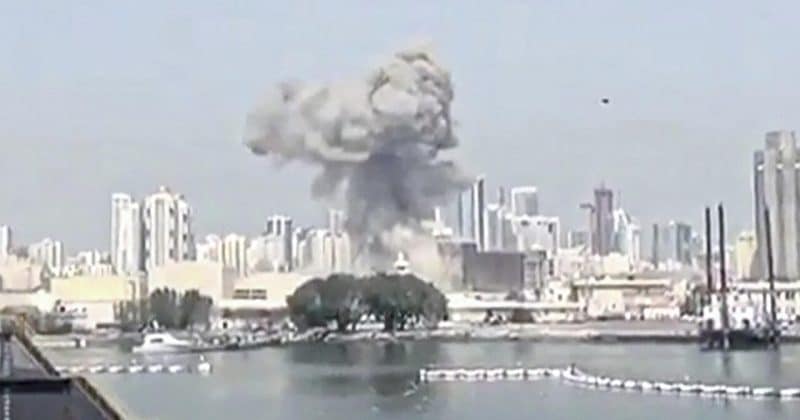
Iran launched missile and drone strikes targeting military facilities in Kuwait and Bahrain in early June 2026, prompting the Arab League to issue a formal condemnation and call for an immediate end to hostilities. The attacks, which hit targets including Kuwait International Airport and the Ali Al Salem air base, represent a significant escalation in a region already fraying at the seams.
The Arab League convened emergency ministerial meetings in response, with member states rallying behind Kuwait and Bahrain. Saudi Arabia, Jordan, and Egypt jointly condemned the strikes, describing them as breaches of both sovereignty and international law.
What happened on the ground
Iran’s Revolutionary Guard publicly claimed responsibility for the attacks, which targeted key military installations across the Gulf. Kuwait International Airport and the Ali Al Salem air base were among the sites hit.
Bahrain reported successfully intercepting multiple projectiles during the strikes, which took place around June 6, 2026. The US Navy 5th Fleet headquarters in Bahrain was also among the reported targets.
The Arab League had already convened meetings earlier in 2026, including a significant gathering in March, to address rising tensions. The June attacks, however, forced a qualitative shift in the conversation from diplomatic concern to outright crisis management.
The diplomatic response
The Arab League’s emergency sessions represent the organization’s most forceful collective action in recent memory. The body called on Iran to cease military operations immediately and advocated for urgent de-escalation.
Saudi Arabia, Jordan, and Egypt issued a joint statement emphasizing their support for Kuwait and Bahrain, labeling the strikes as clear violations of international law.
This incident follows a period of escalating confrontations involving US and Israeli military actions against Iranian interests. The Arab League’s foreign ministers, as recently as March 2026, reinforced the right of each member to self-defense against aggression.
What this means for investors
The Gulf states targeted in these attacks sit at the heart of global petroleum supply chains. Kuwait alone is one of the world’s top oil producers, and any sustained military threat to its infrastructure could send crude prices sharply higher. Bahrain, while a smaller producer, hosts critical logistics and military coordination facilities that underpin regional stability.
Discussions around these strikes have contained essentially zero mention of digital assets or blockchain technology, suggesting the crypto market may remain largely insulated from this particular conflict in the near term.
Disclosure: This article was edited by Editorial Team. For more information on how we create and review content, see our Editorial Policy.






 English (US) ·