
 3 weeks ago
57
3 weeks ago
57
FinancePublished:Jul 26, 2026, 7:30 AM
With the move, Argentines can now collect their wages in dollars, a proposal that will be more enticing to companies that already get paid in dollars. Nonetheless, this new option clashes with the historical distrust that Argentines have in banking institutions.
Published: Jul 26, 2026, 7:30 AM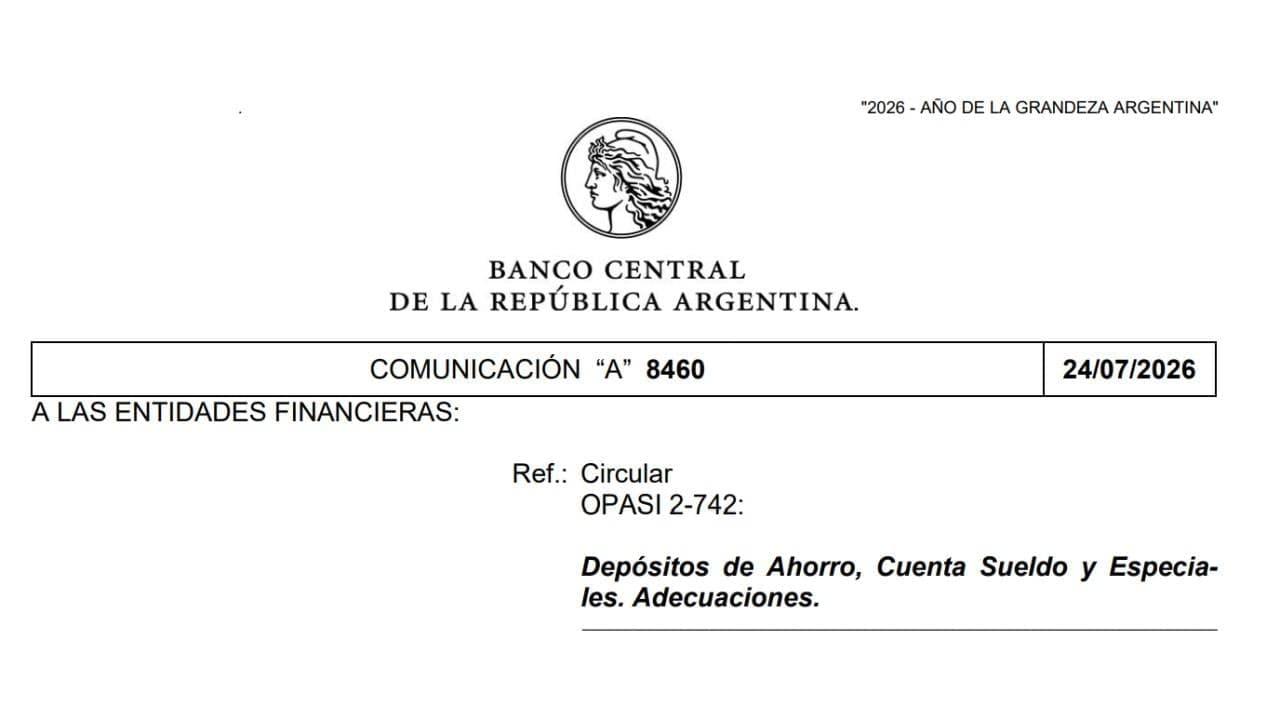
Key Takeaways
- Argentina’s Central Bank directed private banks to process US dollar wages, expanding financial options.
- The policy targets dollar-earning firms, allowing them to formalize previously informal foreign payments.
- Adoption of this measure relies heavily on worker trust in local banks due to the 2001 withdrawal limitations.
Argentina’s Central Bank Authorizes Salary Payments in Dollars
Argentina is advancing to a multi-currency-friendly financial model, with the Central Bank opening the doors for employers to pay wages in U.S. dollars.
On Friday, the central bank issued Communication “A” 8460 titled “Savings, Salary, and Special Accounts. Adjustments,” directed to private banks and financial institutions to incorporate the U.S. dollar as an admitted currency for wage operations.
The document stresses that these institutions are to “include the U.S. dollar as an accepted currency for deposits into the ‘Salary Account’ provided for in point 2.1 of the consolidated text on Savings, Salary, and Special Accounts.”
Furthermore, the bank stressed that private banks must accept and support deposits and withdrawal operations involving the U.S. dollar to service customers taking advantage of this new possibility, providing these services gratuitously.
The move is a follow-up to the inclusion of this possibility in the Labor Modernization Law, which previously authorized the payment and collection of wages in foreign currency but left digital wallets out, and follows the presentation of a Deregulation bill that also seeks to dynamize the national financial market.
The companies enticed to take advantage of this opportunity are those that receive payments in dollars, including commodity exporters, software development houses, and digital design and marketing, among others. Most of these companies were already paying their employees in dollars, but did it informally through foreign accounts or other methods.
Firms that don’t receive payments in dollars are unlikely to pay in foreign currency, as they are still limited from accessing the official forex market by law. Even so, there is another issue: the historical distrust that Argentines have of banking institutions, having faced a dreaded cash withdrawal limitation established in 2001, informally denominated “corralito.”
The currency of payment must be agreed upon between employer and employee, and the adoption of the dollar will depend on the employees’ willingness to receive their payments through national banks, choosing to place their trust in the national banking system.





 English (US) ·