
 3 months ago
74
3 months ago
74
- Base launched its first independent network upgrade, Azul, focused on security, scalability, and decentralization.
- The upgrade introduces a multiproof system using both TEE technology and Zero-Knowledge proofs.
- Base is targeting a future capacity of 1 gigagas per second as it advances toward billion-user blockchain adoption.
The crypto industry talks endlessly about what comes next, but every now and then a project actually delivers something meaningful. That is exactly what Coinbase-backed Layer 2 network Base is aiming to do with Azul, its first independently coordinated network upgrade. While blockchain upgrades happen all the time, Azul feels a little different. It signals that Base is no longer simply following Ethereum’s roadmap—it is beginning to establish one of its own.
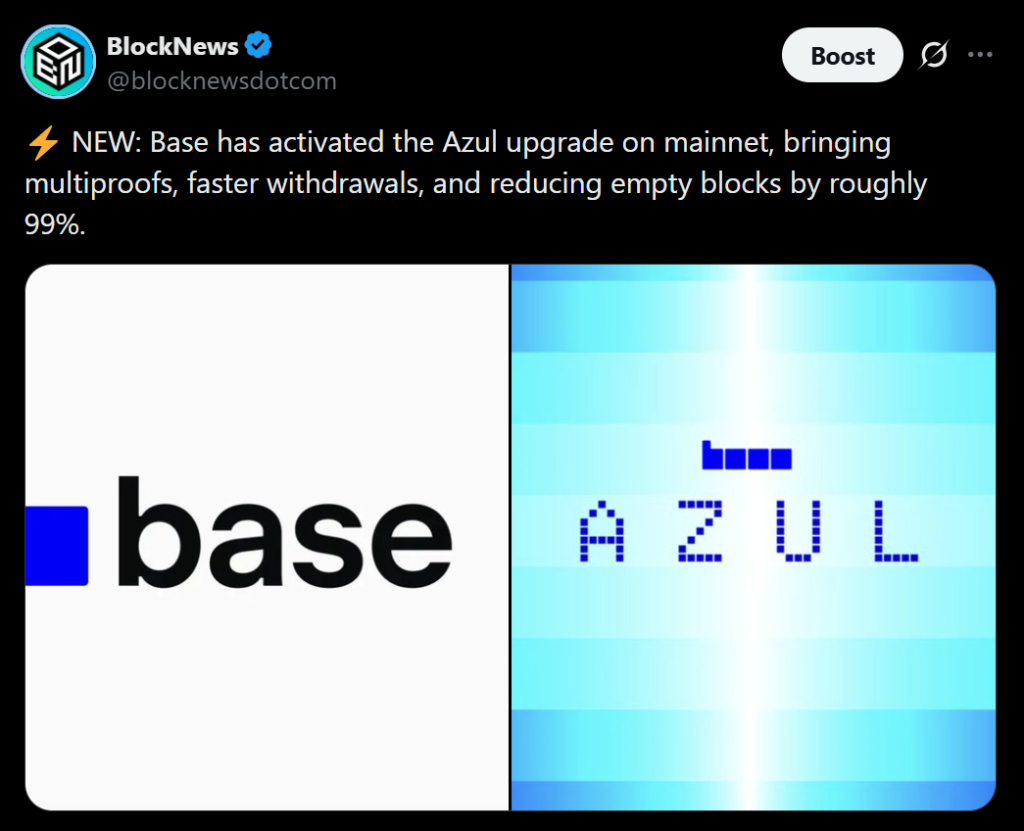
The launch comes after months of behind-the-scenes infrastructure improvements that many users may never notice directly, yet benefit from every day. According to Base, the network has already reduced empty blocks by nearly 99% while handling transaction spikes above 5,000 transactions per second. Those numbers may not create viral headlines, but they represent the type of engineering progress that helps networks survive long term.
Stronger Security Through Multiproof Technology
One of the most significant changes introduced with Azul is a new multiproof architecture that combines Trusted Execution Environment (TEE) technology with Zero-Knowledge proofs. The terminology sounds complex, admittedly, but the objective is pretty straightforward: improve security while making transaction validation more efficient.
Instead of relying on a single verification method, the system allows either proof mechanism to independently confirm transactions. When both systems reach the same conclusion, users can potentially see withdrawal periods reduced to as little as one day. That creates a network that is not only harder to compromise but also more practical for everyday users who want faster access to their assets.
Built for Massive Future Demand
Beyond security improvements, Azul streamlines Base’s infrastructure through a more optimized client stack built specifically for performance and scalability. The long-term ambition is enormous. Base is targeting a future capacity of 1 gigagas per second, a milestone that would dramatically increase the amount of activity the network can process without driving fees higher.
In crypto, demand often arrives unexpectedly. One viral application, major partnership, or breakout trend can push network capacity to its limits almost overnight. By investing in scalability before that demand arrives, Base is positioning itself to support significantly larger user populations while maintaining a smoother experience for developers and everyday participants alike.
A Quiet Upgrade With Major Implications
Azul is unlikely to generate the same excitement as a trending memecoin or speculative token launch. Yet its importance may ultimately prove much greater. The upgrade focuses on the less glamorous but far more critical foundations of blockchain growth: security, scalability, reliability, and decentralization.
As Base continues progressing toward Stage 2 decentralization, the network moves closer to becoming infrastructure capable of supporting hundreds of millions—or potentially billions—of users. Real-world adoption will not be driven by hype alone. It will require robust engineering, and Azul represents another meaningful step in that direction. Here is why many developers and industry observers will be watching Base’s next moves very closely.
Disclaimer: BlockNews provides independent reporting on crypto, blockchain, and digital finance. All content is for informational purposes only and does not constitute financial advice. Readers should do their own research before making investment decisions. Some articles may use AI tools to assist in drafting, but every piece is reviewed and edited by our editorial team of experienced crypto writers and analysts before publication.







 English (US) ·