
 2 hours ago
12
2 hours ago
12
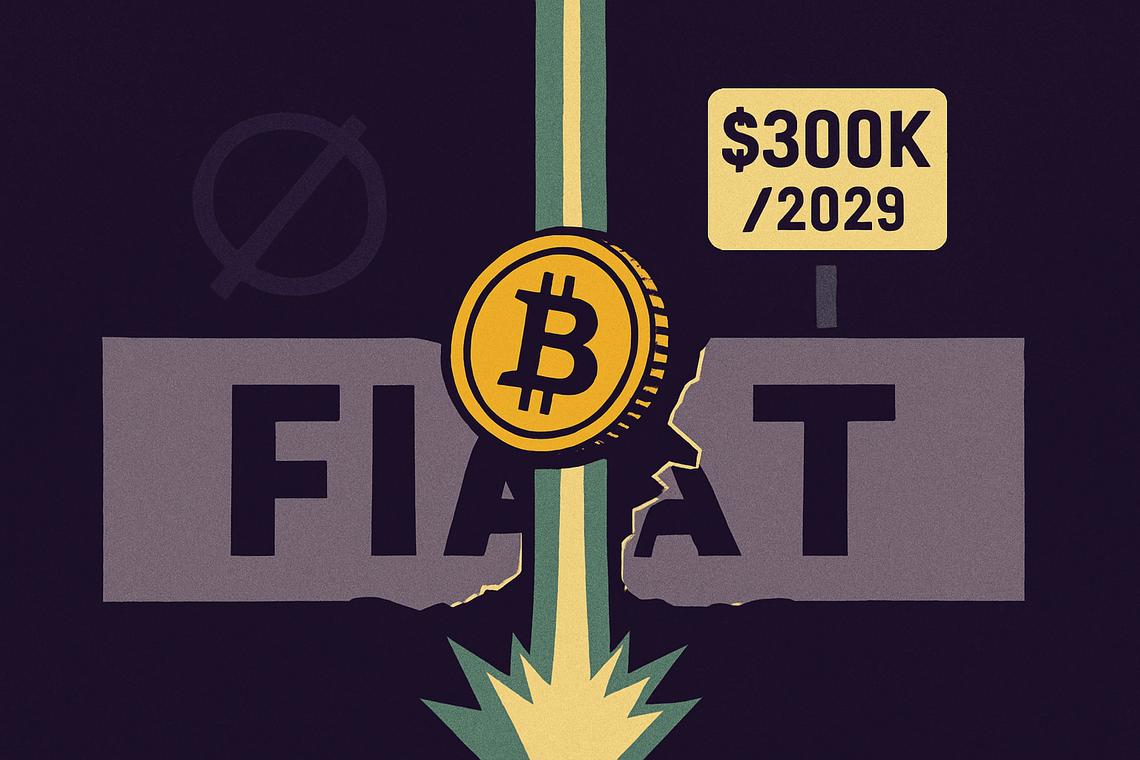
Bernstein has put a number on what many crypto investors have been asking for years: how high can Bitcoin realistically go, and when. The investment bank’s latest Bitcoin price forecast puts the next major peak at $300,000 by 2029, framing the world’s largest cryptocurrency as the primary beneficiary of a broader shift away from traditional fiat currencies. The call comes from Bernstein analyst Gautam Chhugani, who ties the projection to what he calls the “debasement trade” — a strategy built around holding scarce assets while governments face growing pressure to let their currencies weaken.
Key takeaways
- Bernstein projects Bitcoin will hit $300,000 by 2029, based on its price-to-marginal-cost ratio model.
- Analyst Gautam Chhugani expects a new all-time high near $150,000 by mid-2027.
- The bank believes four decades of falling interest rates are ending, straining government budgets worldwide.
- Bernstein argues policymakers will likely favor currency debasement over painful fiscal tightening.
- About 60% of Bitcoin holders reportedly stay put even through drawdowns larger than 50%.
Bernstein’s Bitcoin Price Forecast to 2029
Bernstein’s Bitcoin price forecast rests on a specific valuation tool rather than a gut feeling about market sentiment. The firm expects Bitcoin to climb toward $300,000 by 2029, positioning the asset as a direct hedge against weakening fiat currencies caused by mounting sovereign debt pressures.
Price-to-Marginal-Cost Ratio Model
Chhugani’s team built the projection on what they describe as a price-to-marginal-cost ratio model, a framework that measures Bitcoin’s market price against the cost of producing new coins through mining. “Following our model based on the price-to-marginal-cost ratio, we expect the next market peak to reach $300,000 by 2029,” Chhugani wrote in a client note. The analyst tied this outlook to the continuation of Bitcoin’s well-known four-year cycle, the roughly recurring pattern of boom-and-bust phases that has shaped the asset’s trading history since its earliest years.
Projected Milestones for 2027 and 2029
Before reaching that 2029 target, Bernstein sees an intermediate milestone arriving much sooner. Chhugani wrote that “the market will move to new all-time highs at $150,000 by mid-2027,” effectively splitting the Bernstein Bitcoin prediction into two distinct legs: a near-term breakout followed by a longer climb toward the six-figure territory forecast for the end of the decade.
Macroeconomic Context Influencing Bitcoin Valuation
Bernstein’s numbers don’t exist in a vacuum. The bank links its Bitcoin thesis directly to a structural shift in global interest rates and government finances, arguing that decades-old economic patterns are unraveling in ways that could reshape how investors think about money itself.
End of Four Decades of Declining Interest Rates
Bernstein’s outlook hinges on the belief that the multi-decade decline in interest rates has run its course. For roughly forty years, borrowing costs trended downward, giving governments room to accumulate debt without facing crushing repayment burdens. Bernstein argues that era is now over, leaving many governments exposed just as debt levels have reached record highs.
Rising Debt Costs and Fiscal Deficits Globally
Higher yields don’t just cost more to service, according to Bernstein — they feed a self-reinforcing problem. The firm describes a “vicious circle” in which rising yields push up interest burdens, which widen deficits, which then require even more borrowing, compounding the pressure on national budgets. That dynamic is central to understanding how interest rates impact Bitcoin valuations in Bernstein’s framework: the worse the fiscal math gets for governments, the more attractive scarce, non-sovereign assets become to investors looking for shelter.
Government Policy Choices: Currency Debasement over Fiscal Tightening
Faced with tightening budgets, governments generally have two paths: cut spending and raise taxes, or let their currencies lose value over time. Bernstein bets on the second option. “Faced with a choice between fiscal tension and currency debasement, we believe policymakers will opt for the latter, as it is politically less destabilizing,” the firm said. In plain terms, devaluing a currency gradually tends to draw less public backlash than austerity measures, making it the more politically convenient escape route for governments buried under debt.
This is where the analysis moves from macroeconomics to market strategy. If currency debasement becomes the default policy response, investors holding assets that cannot be printed or diluted stand to gain relative purchasing power — a dynamic Bernstein believes strongly favors Bitcoin over the coming years.
Bitcoin as a Safe-Haven Asset Amid Currency Debasement
Bernstein treats Bitcoin less like a speculative trade and more like an insurance policy against government-driven currency erosion. That framing is what connects the bank’s macroeconomic view to its long-term price targets, and it’s a big reason the firm keeps referring to Bitcoin as a leading cryptocurrency safe-haven asset.
Bitcoin’s Scarcity and Investment Thesis
The core argument is simple: Bitcoin’s fixed supply makes it resistant to the kind of dilution that fiat currencies face when central banks expand money supply. “Investors can benefit from owning scarce assets that cannot be easily diluted,” Bernstein said, framing Bitcoin as a direct counterweight to the debasement risk building up in sovereign debt markets. This scarcity argument has become one of the most recurring themes in institutional research covering digital assets over the past few years, and Bernstein’s note leans heavily on it.
Investor Base and Institutional Adoption Trends
Bernstein also points to the composition of Bitcoin’s holder base as evidence the asset is maturing. The firm notes that about 60% of Bitcoin is held by investors who stay price-insensitive even during drawdowns exceeding 50% — a level of conviction that’s rare in traditional markets and suggests a growing base of long-term holders rather than short-term traders chasing momentum. Combined with expanding access for both institutional and retail investors, that holder behavior forms the backbone of Bernstein’s case that Bitcoin is shifting from a speculative instrument toward a recognized store-of-value asset.
Whether that shift plays out on Bernstein’s timeline will depend on factors well beyond any single research note — from how central banks respond to debt pressures to whether Bitcoin’s historical four-year cycle keeps repeating as it has in the past. But the bank’s framing makes one thing clear: for Bernstein, the next chapter of Bitcoin’s story is less about crypto-native speculation and more about how governments choose to manage trillions of dollars in debt.
FAQ
What is Bernstein’s price forecast for Bitcoin by 2029?
Bernstein forecasts that Bitcoin will reach $300,000 by 2029 based on its price-to-marginal-cost ratio model.
On what model does Bernstein base its Bitcoin price prediction?
The forecast relies on Bitcoin’s price-to-marginal-cost ratio model and the continuation of Bitcoin’s four-year cycle.
Why does Bernstein believe Bitcoin will benefit from macroeconomic trends?
The bank expects rising interest rates to raise debt costs, prompting policymakers to favor currency debasement, which would make Bitcoin a scarce, safe-haven asset that benefits from such conditions.
How does Bernstein describe the Bitcoin investor base?
Bernstein notes that about 60% of Bitcoin holders are price-insensitive even during drawdowns greater than 50%, with increasing accessibility for institutional and retail investors alike.
Article produced with the assistance of artificial intelligence and reviewed by the editorial team.








 English (US) ·