
 3 months ago
113
3 months ago
113
TLDR:
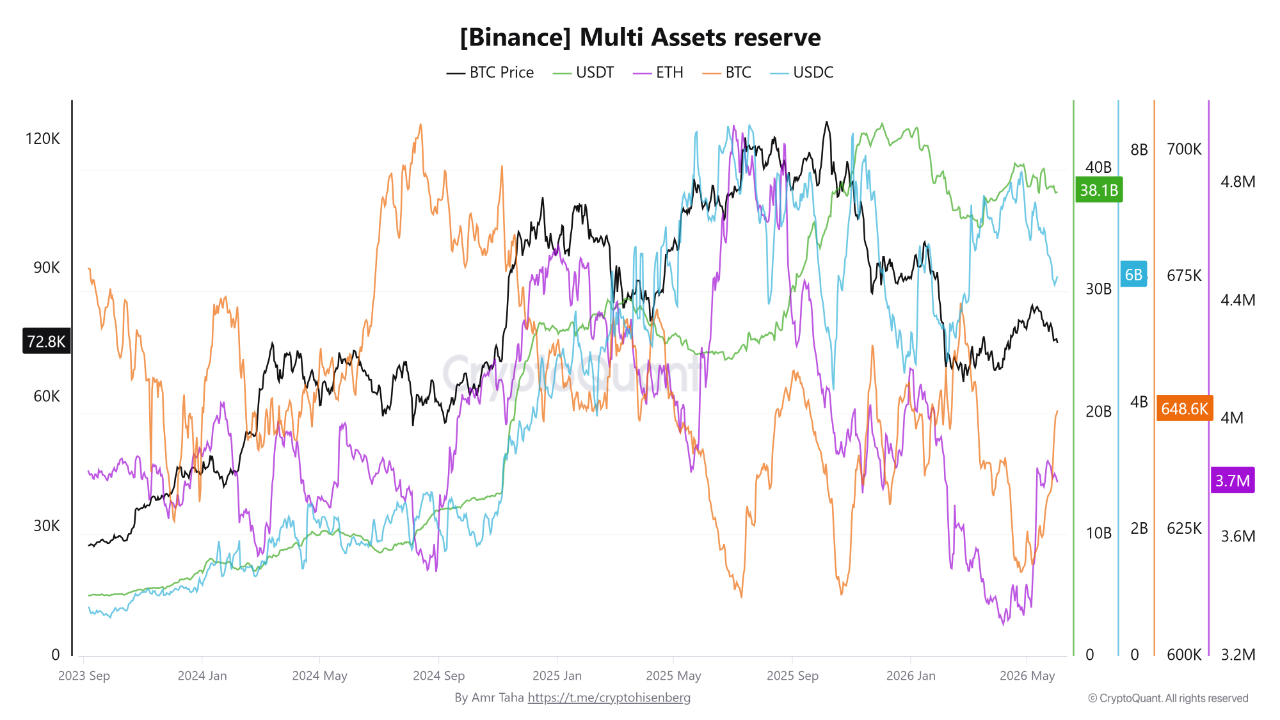
- Binance Bitcoin reserves grew 5.1%, rising from 617,000 BTC to 648,600 BTC between April 25 and June 1, 2026.
- Ethereum holdings on Binance climbed 10.4%, adding 350,000 ETH during the same five-week observation period.
- Combined USDT and USDC reserves on Binance dropped $3.87 billion, reducing available spot market buying power significantly.
- Bitcoin fell below $71,000 amid rising crypto supply and shrinking stablecoin liquidity, reflecting a structural shift inside Binance.
Binance Bitcoin reserves recorded a notable increase between late April and early June 2026, rising by 31,600 BTC. At the same time, combined stablecoin reserves on the exchange fell by $3.87 billion.
This shift in reserve composition came as Bitcoin dropped below $71,000 for the first time since April. The data points to a broader liquidity change inside the world’s largest cryptocurrency exchange.
Rising Crypto Reserves Paint a Complex Market Picture
Binance’s Bitcoin reserve climbed from 617,000 BTC to 648,600 BTC between April 25 and June 1. That represents a 5.1% increase over roughly five weeks.
Meanwhile, Ethereum reserves also moved higher during the same window. Holdings grew from 3.35 million ETH to approximately 3.7 million ETH, an increase of about 350,000 ETH, or 10.4%.
Source: Cryptoquant
Higher exchange reserves can suggest that more crypto supply is available for trading on the platform. When coins accumulate on exchanges, it often indicates that holders have moved assets closer to potential selling points. However, reserve movements alone do not confirm that selling is occurring or imminent.
The simultaneous rise in both Bitcoin and Ethereum holdings is worth noting. It suggests the trend was not isolated to a single asset. Instead, it reflected a broader movement of crypto into Binance’s custodial reserves across the period.
What makes this development more pointed is that it occurred alongside a drop in Bitcoin’s price. The timing of rising supply and declining stablecoin buffers raises questions about the balance of buying and selling pressure on the exchange.
Falling Stablecoin Reserves Reduce Immediate Buying Power
While crypto reserves increased, stablecoin balances moved in the opposite direction. Binance’s USDC holdings declined from $7.67 billion to $6 billion, a drop of $1.67 billion. USDT reserves also fell, moving from $40.3 billion to $38.1 billion, a reduction of $2.2 billion.
Together, the two stablecoin declines total approximately $3.87 billion. Stablecoins on exchanges generally represent available capital ready to purchase crypto in spot markets. When those balances shrink, the pool of immediate buying power contracts accordingly.
This matters because the spot market relies on stablecoin liquidity to absorb available supply. Fewer stablecoins on a platform means less firepower for buyers to bid up prices or defend key support levels. That dynamic can contribute to downside price pressure when supply is simultaneously increasing.
The combined effect, more crypto supply alongside reduced stablecoin liquidity, created a less supportive environment for Bitcoin’s price.
Bitcoin’s move below $71,000 occurred within this framework, suggesting the decline reflected structural conditions inside the exchange, not just broader market sentiment.
The post Binance Bitcoin Reserves Surge 5.1% While Stablecoin Liquidity Shrinks $3.87B, Pushing BTC Below $71K appeared first on Blockonomi.



 English (US) ·