
 2 months ago
40
2 months ago
40
- Binance SAFU fund up $217M after converting stablecoins into Bitcoin
- Fund holds 15,000 BTC with average cost around $67,000
- Move signals long-term confidence in Bitcoin over stable assets
Binance’s emergency reserve fund is sitting on a pretty sizable paper gain right now, and it all comes down to one decision, swapping stablecoins for Bitcoin. The SAFU fund, which once leaned heavily on USDC and similar assets, now holds around 15,000 BTC, and with Bitcoin pushing past $81,000, that bet is starting to look… well timed.
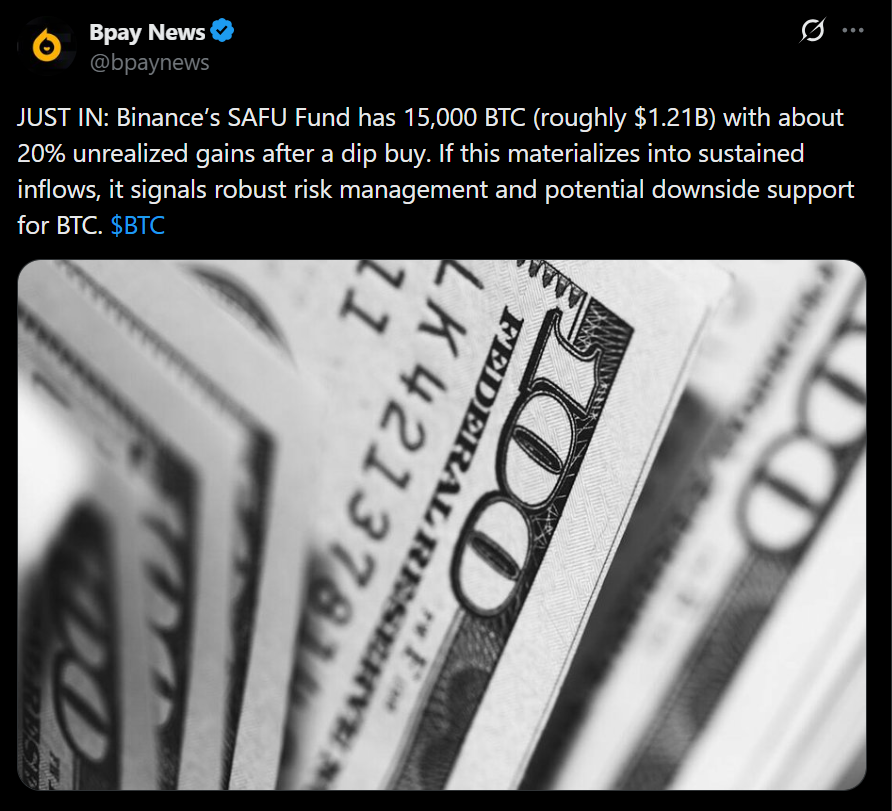
On paper, the fund is up about $217 million, which isn’t exactly small change, even for a platform like Binance.
A Strategic Shift From Stability to Volatility
The move to convert roughly $1 billion in stablecoins into Bitcoin earlier this year marked a clear shift in strategy. Stablecoins offer predictability, but not much upside, while Bitcoin brings volatility, but also the potential for long-term growth.
By building its position at an average cost of around $67,000, Binance effectively positioned itself ahead of the recent rally, which has pushed the fund’s value above $1.2 billion.
A Fund Built for Protection
SAFU wasn’t always this aggressive. It was originally created back in 2018 as a safety net after a series of exchange hacks, funded by allocating 10% of trading fees into a reserve designed to protect users.
For years, that reserve stayed relatively conservative, mostly sitting in stable assets, quietly doing its job in the background.
Managing Risk in a Volatile Market
Of course, holding Bitcoin comes with its own risks. Despite the recent recovery, BTC is still below its previous highs and has seen significant swings throughout the year, which means the fund’s value isn’t guaranteed to stay elevated.

Binance has already indicated it may rebalance the fund if its value drops below $800 million, which suggests there’s still a level of caution behind the strategy.
A Bet on Long-Term Value
At its core, this move reflects a broader belief that Bitcoin offers stronger long-term value compared to holding purely stable assets. It’s a calculated risk, trading short-term stability for potential upside over time.
And for now, at least, that decision seems to be paying off, even if the real test will be how it holds up when the market inevitably shifts again.
Disclaimer: BlockNews provides independent reporting on crypto, blockchain, and digital finance. All content is for informational purposes only and does not constitute financial advice. Readers should do their own research before making investment decisions. Some articles may use AI tools to assist in drafting, but every piece is reviewed and edited by our editorial team of experienced crypto writers and analysts before publication.





 English (US) ·