
 2 months ago
57
2 months ago
57
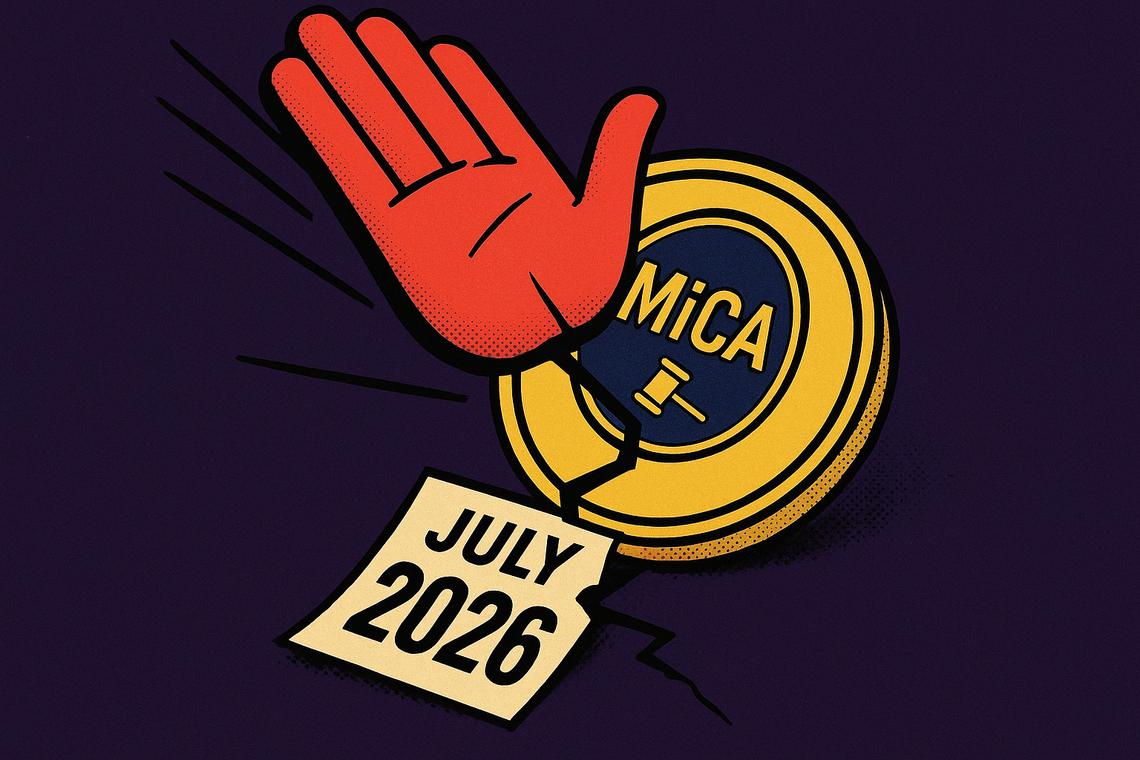
Binance’s MiCA license bid may be collapsing in Greece, and the fallout could strip the world’s largest crypto exchange of its legal right to operate across the entire European Union. According to a Reuters report citing two people familiar with the matter, Greece’s financial regulator is preparing to reject the application — a development that would set off a chain reaction with consequences far beyond one country’s borders.
Key takeaways
- Greece’s Hellenic Capital Market Commission (HCMC) is reportedly set to reject Binance’s MiCA license application, according to Reuters sources.
- Without a MiCA license, Binance could lose the legal ability to serve EU customers from July 2026, when the regulation’s transition period expires.
- A single MiCA authorization grants passporting rights across all 27 EU member countries, making a national license essential for pan-European access.
- Binance submitted its application through a Greek subsidiary after 18 months of engagement with regulators, and denies receiving any formal indication of rejection.
- Licensed competitors Coinbase and Kraken stand to benefit if Binance loses its EU market access.
Binance’s MiCA License Application Faces Rejection in Greece
The reported decision by Greece’s Hellenic Capital Market Commission would mark one of the most significant regulatory setbacks in Binance’s history. The exchange had staked much of its European strategy on securing authorization through a Greek subsidiary — and spent a year and a half working through the process.
No formal announcement has been made public, and the HCMC declined to comment, citing confidentiality obligations around licensing reviews. But the Reuters report, sourced from two people familiar with the matter, has injected serious uncertainty into Binance’s EU future just weeks before the critical deadline.
Reported Decision by Hellenic Capital Market Commission
If the HCMC proceeds with rejection, the timing is brutal. The MiCA transition period expires at the end of June 2026, meaning any firm without an authorized license faces the prospect of having to wind down EU services from July 1, 2026 onward. For an exchange of Binance’s scale, that is not a minor compliance hiccup — it would mean losing access to one of the most valuable regulated crypto markets on the planet.
The MiCA framework was specifically designed to end the regulatory patchwork that allowed crypto firms to operate in legal grey zones across Europe. It replaced that fragmentation with a single, rigorous authorization process. Pass it, and you get the entire bloc. Fail it, and you lose everything in one decision.
Binance’s Denial and Compliance Claims
Binance pushed back firmly against the reports. A spokesperson told Reuters that the exchange had worked constructively with regulators over the past 18 months and believed it had satisfied all requirements for MiCA authorization. The spokesperson added that the HCMC had completed its review and considered the application compliant — and that “HCMC has given no formal indication of the contrary.”
That’s a notable distinction. There is still no official rejection on record. Binance may yet pursue further discussions or file an appeal, depending on how the HCMC’s final decision is communicated. The situation remains fluid.
MiCA Licensing and Its Importance for Binance’s EU Access
Understanding why this matters requires understanding how MiCA works. The regulation creates a unified authorization system: a crypto firm that secures approval from any one national regulator within the EU gains passporting rights — the legal ability to offer services freely across all 27 member states without needing separate approvals in each country. It is one license, one door, and access to the entire bloc.
For Binance, which serves millions of European users, that architecture made the Greek application not just important but existential for its EU operations.
Binance’s 18-Month Application Process Through Greek Subsidiary
The exchange didn’t rush this. Binance filed its application through a Greek subsidiary in January 2026 after months of preparatory work, and spent the following period in active dialogue with regulators. Co-CEO Richard Teng — who previously held regulatory roles in Singapore and Abu Dhabi — publicly championed Greece as Binance’s preferred base as recently as February, expressing confidence the exchange would meet the authorization deadline.
Teng cited Greece’s skilled workforce and strong security profile as factors that gave the country an edge over larger, more established financial centers competing to attract crypto businesses. At the time, those comments read as a confident bet on the outcome. In hindsight, they underscore how unexpected the reported rejection is for the company.
Consequences of Losing MiCA Authorization
The consequences of a confirmed rejection are severe and immediate. Without a valid MiCA license, Binance would be legally required to stop offering services to EU-based customers once the transition window closes. That means trading, deposits, and withdrawals for European users could all become unavailable — unless the exchange secures authorization elsewhere before the deadline, or successfully appeals the Greek decision.
This is what makes MiCA so structurally consequential: it doesn’t just impose standards, it enforces them with a hard cutoff. Regulators are signaling clearly that even the industry’s largest players are not exempt from meeting the same bar as everyone else.
Strategic Choice of Greece and Market Implications
Binance’s decision to anchor its EU regulatory strategy in Greece was deliberate and public. Richard Teng framed it as a considered choice: Greece offered talent, security infrastructure, and a regulatory environment that Binance believed it could navigate successfully. The exchange positioned Athens as a launchpad for accelerating European expansion, not merely as a compliance formality.
That strategic framing now looks vulnerable. Whether the application ultimately fails or survives through an appeal, the episode has exposed how precarious Binance’s EU position actually is — and how much was riding on a single national decision.
Impact on Competitors and the EU Crypto Market
The beneficiaries of a Binance exclusion from the EU are easy to identify. Coinbase and Kraken, both of which have already secured or are well advanced in MiCA-compliant operations, would be positioned to absorb a significant share of the European user base that Binance currently serves. In a market where regulatory compliance is now the price of entry, licensed exchanges hold a structural advantage that no amount of product features can offset.
For European crypto users, the practical question is straightforward: if Binance can no longer legally operate in the EU, where do they go? The answer points directly to its regulated competitors. That shift in user flow, if it materializes, could reshape competitive dynamics in European crypto markets for years.
Beyond the immediate competitive picture, this episode carries a broader signal for institutional adoption. MiCA is increasingly being watched as a global benchmark for crypto regulation. How regulators treat even the largest exchanges under this framework will influence how institutions assess regulatory risk across the sector — and whether they view Europe as a stable environment for crypto investment and infrastructure.
FAQ
What is the MiCA license and why is it important for Binance?
The MiCA license is an EU regulatory authorization under the Markets in Crypto Assets regulation that allows crypto firms to operate across all 27 EU member countries with a single national approval. For Binance, securing this license was essential to maintaining legal access to the entire European market from July 2026 onward.
Why is Greece significant in Binance’s MiCA application?
Binance chose Greece as its EU regulatory base because of the country’s skilled workforce and strong security profile, as highlighted by co-CEO Richard Teng in February 2026. The exchange submitted its MiCA application through a Greek subsidiary and engaged with the Hellenic Capital Market Commission for 18 months as part of the authorization process.
What happens if Binance’s MiCA application is rejected?
A confirmed rejection would mean Binance loses the legal ability to offer services to customers across the EU from July 2026, when the MiCA transition period expires. This outcome would likely benefit licensed competitors such as Coinbase and Kraken, who could capture the European user base Binance currently serves.
Has Binance formally been rejected by Greek regulators?
No formal public announcement has been made. The Hellenic Capital Market Commission declined to comment, citing confidentiality rules. Binance denies receiving any formal indication of rejection, stating it has met all MiCA requirements and believes the HCMC found its application compliant. The exchange may still pursue further discussions or an appeal depending on the regulator’s final decision.
Article produced with the assistance of artificial intelligence and reviewed by the editorial team.





 English (US) ·