
 2 hours ago
13
2 hours ago
13
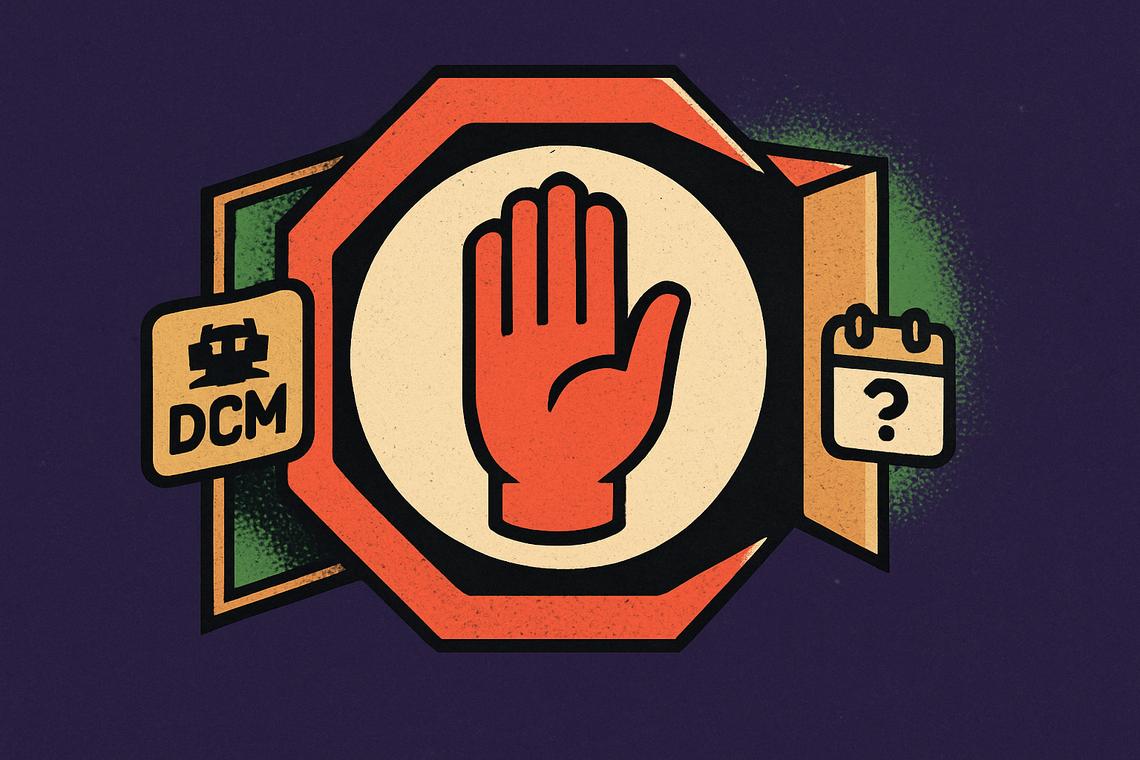
Binance US is making a regulatory bet that could reshape its entire business model. The US arm of the world’s largest crypto exchange plans to file an application with the Commodity Futures Trading Commission next month for a Designated Contract Market license — a move squarely aimed at bringing Binance US prediction markets to American customers for the first time.
Key takeaways
- Binance US plans to apply to the CFTC next month for a Designated Contract Market (DCM) license.
- The license would allow the exchange to launch prediction markets and crypto perpetual futures for US customers.
- CEO Stevie Satoshi described the push as part of a broader growth strategy that also includes lower trading fees.
- The move signals a deliberate expansion beyond spot trading into regulated derivatives products.
- A federal judge recently blocked Minnesota’s attempt to ban prediction markets, reinforcing CFTC’s exclusive federal authority in this space.
Binance US’s Plan to Enter Regulated Prediction Markets
Securing a DCM license from the CFTC would place Binance US in the same regulatory category as established prediction market platforms like Kalshi and Polymarket, both of which already hold that designation. That federal stamp is significant — and the timing is deliberate.
Just days ago, a federal judge in Minnesota blocked the state’s first-of-its-kind ban on prediction markets, reinforcing the principle that the CFTC holds exclusive authority to regulate event contracts traded on federally registered exchanges. The ruling, issued by U.S. District Judge Katherine Menendez, found that Minnesota’s total prohibition likely violates federal law because many trades on CFTC-registered platforms qualify as “swaps” under the Commodity Exchange Act. For an exchange eyeing a DCM license right now, that legal clarity is anything but coincidental backdrop — it’s a green light.
CFTC License Application Timeline
Binance US has set next month as its target for submitting the DCM license application, according to reporting by Coinpedia. No further timeline on when products would go live has been provided beyond that filing milestone. The application itself is only the starting point; CFTC review processes can take considerable time before any approval is granted.
What a Designated Contract Market License Actually Means
A DCM license authorizes an exchange to offer regulated derivatives products — including futures, options, and event contracts — to US customers under federal oversight. It is the same regulatory framework that currently protects participants on Kalshi and Polymarket. For Binance US, obtaining this designation would open the door not just to prediction markets, but potentially to a much wider derivatives product suite.
New Product Launch: Prediction Markets and Beyond
Prediction markets allow participants to trade contracts based on the outcome of real-world events — elections, economic indicators, sports results, and more. For a crypto exchange that has primarily operated in spot trading, this represents a significant product category shift.
Expansion into Crypto Perpetual Futures and Other Offerings
Beyond prediction markets, Binance US is also targeting crypto perpetual futures as part of its expansion. Perpetual futures are among the highest-volume products in global crypto markets, dominating the offerings of offshore exchanges. Bringing them under a CFTC-regulated framework in the US would be a notable industry development, potentially attracting a segment of traders who currently use unregulated offshore venues.
The two product lines together — prediction markets and perpetual futures — suggest Binance US is not making a single calculated bet, but rather positioning for a broad derivatives buildout under US regulatory cover.
Strategic Vision and CEO Statement
CEO Stevie Satoshi framed the CFTC application as part of a deliberate, multi-pronged growth plan. The strategy does not rest on derivatives alone. Alongside the regulatory push, Binance US is also moving to lower trading fees — a competitive lever that directly targets the exchange’s core spot trading business, where rivals have intensified fee pressure over recent years.
What makes the strategy analytically interesting is the combination of those two moves. Cutting fees compresses per-trade revenue in the short term, while pursuing regulated derivatives products creates entirely new revenue streams that could more than offset that compression. It is the kind of repositioning that suggests Binance US is thinking about market share not just in crypto spot trading, but across the entire US retail and institutional derivatives market.
The Broader Regulatory Context
Binance US’s push comes at a moment when the regulatory environment for prediction markets in the US is actively being contested at the state level. Minnesota’s failed ban, Arizona’s blocked criminal charges against Kalshi, and ongoing state-level restrictions in Nevada and Utah all point to a landscape where federal authority — embodied by the CFTC — is asserting itself. For an exchange that secures a DCM license, those state-level battles largely become someone else’s problem; federal pre-emption insulates licensed platforms from the patchwork of state gambling laws.
That legal insulation is precisely why the DCM license matters so much strategically. It is not merely a product enablement tool — it is a regulatory moat. If Binance US successfully joins Kalshi and Polymarket in the federally registered tier, it enters a club that has demonstrably withstood state-level attempts at prohibition, with the CFTC and even the Justice Department going to court to defend it.
FAQ
What license is Binance US planning to apply for to expand its product offerings?
Binance US plans to apply for a Designated Contract Market license from the U.S. Commodity Futures Trading Commission next month. This federal license would authorize the exchange to offer regulated derivatives products, including prediction markets and crypto perpetual futures, to US customers.
What new products does Binance US aim to introduce beyond spot trading?
Binance US intends to launch prediction markets and crypto perpetual futures as part of its product expansion beyond its current spot trading focus. These additions would place it alongside established CFTC-registered platforms like Kalshi and Polymarket.
What did Binance US CEO Stevie Satoshi say about this initiative?
CEO Stevie Satoshi said the CFTC license application is part of the exchange’s broader growth strategy, which also includes reducing trading fees and diversifying the product lineup beyond spot trading into regulated derivatives markets.
Article produced with the assistance of artificial intelligence and reviewed by the editorial team.








 English (US) ·