
 2 months ago
62
2 months ago
62
Key Takeaways
- Bitcoin (BTC) plunged 9% over a three-day period, marking its lowest price point since September 2024
- The PCE inflation metric jumped to 4.1% year-over-year, the highest reading since April 2023, reinforcing expectations for tighter monetary policy
- Bitcoin spot ETFs recorded $469 million in net withdrawals on Wednesday, the largest single-day exodus in months
- A massive $13 billion options contract expiration is heavily weighted toward bearish positions
- MicroStrategy (MSTR) faces substantial unrealized losses on its $64.1 billion Bitcoin holdings
Bitcoin slipped beneath the $60,000 threshold on Thursday following the release of the Federal Reserve’s preferred inflation measure, which reached its most elevated level since 2023. This decline followed a turbulent period that witnessed BTC shedding 9% of its value across just three trading sessions, reaching depths not visited since September 2024.
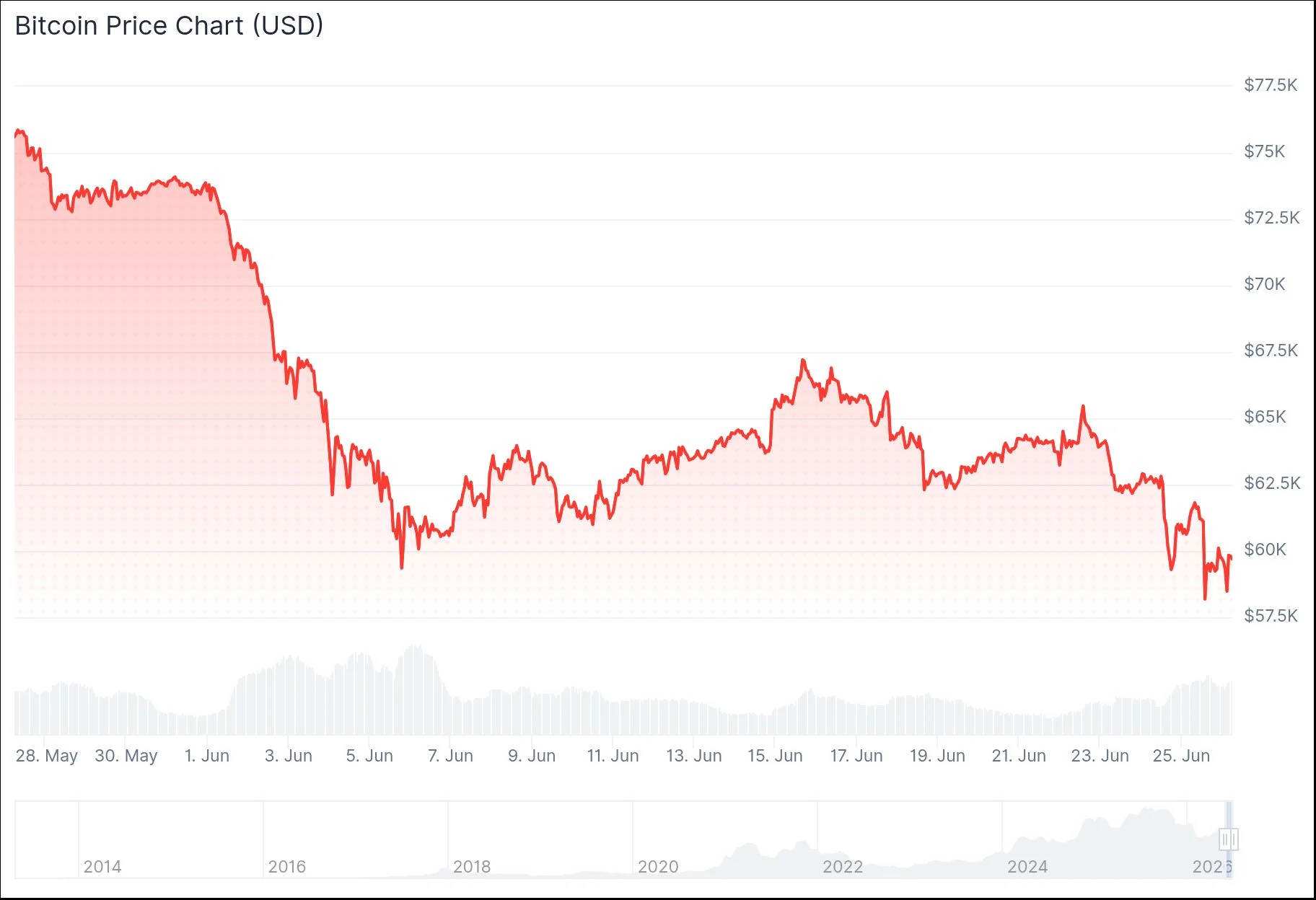 Bitcoin (BTC) Price
The core Personal Consumption Expenditures (PCE) price index advanced 3.4% on an annual basis, representing the most significant increase since October 2023. Meanwhile, the headline PCE figure registered a 4.1% year-over-year climb. These figures reinforced market anticipation that interest rate increases remain a realistic policy option.
Market participants now assign an 80% probability to a US interest rate hike materializing by December, a notable increase from the 68% odds calculated just thirty days earlier, based on CME FedWatch Tool data. Elevated interest rates typically create headwinds for non-yielding assets such as Bitcoin.
The brief touch of the $58,000 price level sparked over $1 billion in forced liquidations across leveraged Bitcoin trading positions. While Bitcoin staged a modest recovery toward $59,500, the prevailing market sentiment remained decidedly cautious.
Trading analyst Daan Crypto Trades shared on X that bullish traders “have a big job to do,” cautioning that a closing price beneath the established range floor would constitute a verified technical breakdown. He emphasized that with MicroStrategy and MSTR establishing fresh lows on a daily basis, a higher timeframe breakdown in Bitcoin would intensify existing downward momentum.
Spot ETF Withdrawals Reflect Weakening Appetite
Bitcoin spot exchange-traded funds experienced $469 million in net capital outflows on Wednesday, representing their most substantial single-session withdrawal since early June. The products were tracking toward their seventh consecutive week of negative flows.
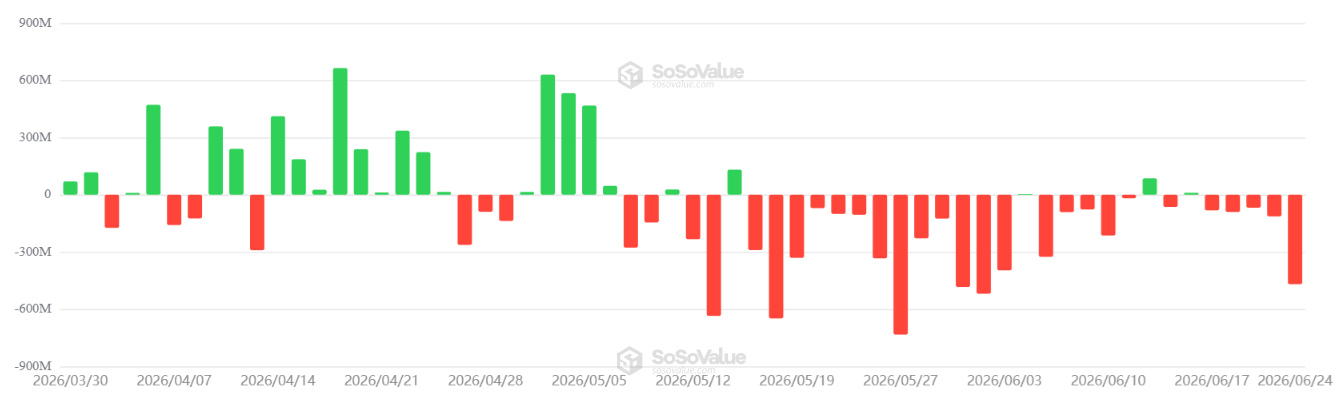 Source: SoSoValue
Data from Glassnode revealed Bitcoin trading at a negative premium on Coinbase relative to international pricing benchmarks, indicating subdued retail participation from United States-based investors.
Meanwhile, institutional capital appeared to be migrating toward artificial intelligence-focused equities. Micron Technology surged 16% following robust quarterly financial results. Western Digital climbed 18% while Applied Materials registered a 10% advance.
Derivatives Positioning Tilts Bearish Ahead of Expiry
A $13 billion Bitcoin options expiration scheduled for Friday displayed pronounced bearish positioning. Approximately 78% of call options carried strike prices at $72,000 or higher, indicating that the majority of bullish derivative contracts face worthless expiration.
Open interest in put options on Deribit will surpass call options by $3.4 billion when contracts settle.
Market analyst Ted Pillows highlighted two concentrated short-side liquidity zones developing at the $62,000 and $63,500 levels, suggesting Bitcoin may probe both price points before any potential resumption of the downward trajectory.
MicroStrategy (MSTR) currently holds unrealized losses across its $64.1 billion Bitcoin portfolio, which the company has accumulated since 2020. The firm’s equity shares have been establishing new lows in tandem with BTC price declines.
The post Bitcoin (BTC) Plunges Below $60K: Inflation Data Sparks Sharp Selloff appeared first on Blockonomi.


 English (US) ·