
 2 months ago
55
2 months ago
55
- Bitcoin surged toward $67,000 after optimism surrounding a reported US-Iran peace agreement.
- Despite one of the largest unrealized loss periods in Bitcoin’s history, panic selling remains surprisingly low.
- Analysts remain divided on whether the recent rally is sustainable or simply a short-term liquidity sweep.
Bitcoin staged a strong move higher on Monday, briefly approaching the $67,000 mark after reports emerged that the United States had helped broker a peace agreement with Iran, potentially leading to the reopening of the Strait of Hormuz. The development injected a fresh wave of optimism into financial markets, with crypto assets responding almost immediately.
Yet beneath the surface, the Bitcoin market is telling a more complicated story.
While prices are recovering, on-chain data suggests a large number of investors remain deep underwater. Oddly enough, though, they aren’t rushing for the exits. That contrast is becoming one of the more fascinating dynamics shaping the current market.
Bitcoin Holders Are Sitting on Massive Paper Losses
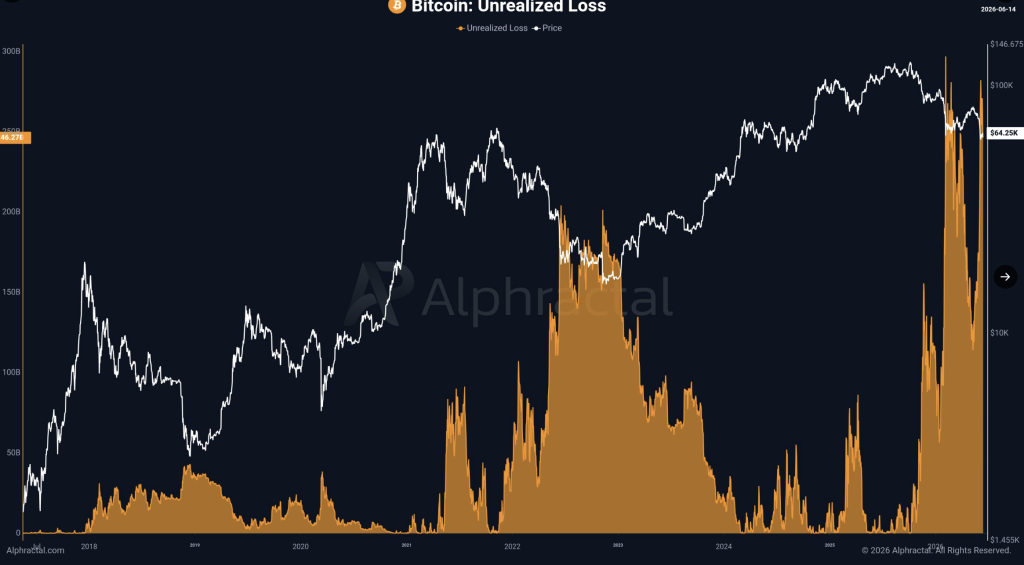
According to recent analysis from Alphractal founder Joao Wedson, Bitcoin is currently experiencing the second-largest unrealized loss period in its history.
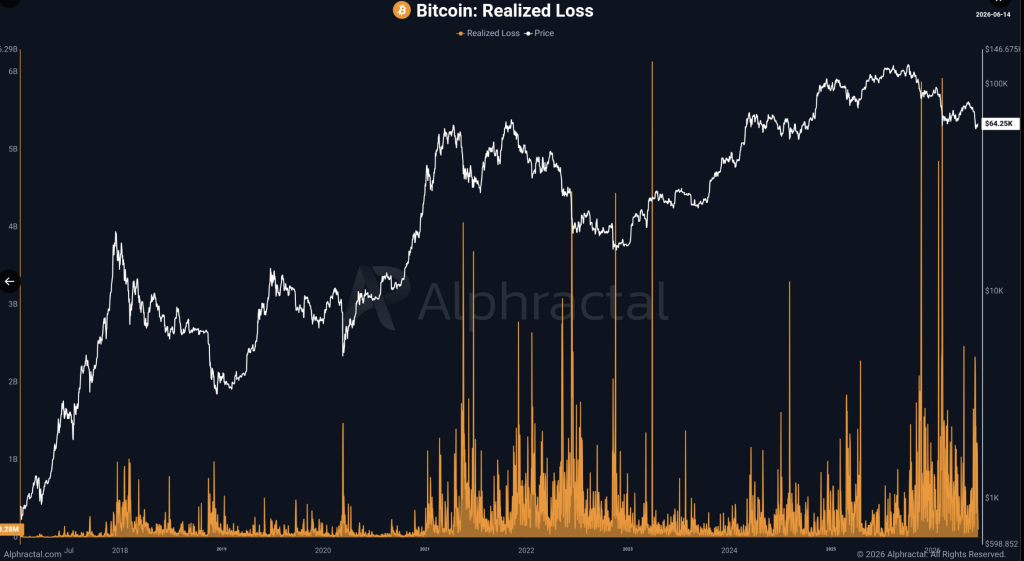
In practical terms, that means countless BTC holders are holding positions that remain below their purchase prices. Under normal circumstances, such widespread losses would often trigger a wave of capitulation, where investors give up and sell into weakness.
That hasn’t happened.
Instead, realized losses remain relatively muted. Investors may be feeling the pain on paper, but they’re not converting those losses into actual sales at the same pace seen during previous market corrections.
Wedson believes this divergence is important. A growing gap between unrealized losses and realized losses suggests that many market participants are choosing patience over panic.
For now, anyway.
Why the Lack of Capitulation Matters
Historically, major market bottoms often arrive after investors finally capitulate. Selling accelerates, weak hands exit, and the market goes through a cleansing phase before recovery can begin.
Bitcoin isn’t quite there yet.
According to Wedson, if realized losses suddenly begin rising, it could signal that a deeper flush-out is underway. Until then, the market remains in an unusual position where many investors are underwater, yet confidence hasn’t completely broken.
That’s a notable difference from some previous bear market cycles.
The current data suggests holders are still willing to wait, perhaps betting that broader macro conditions will improve before further downside develops.
Is The Rally Real or Just a Liquidity Grab?
Not everyone is convinced that Bitcoin’s latest rebound marks the beginning of a larger recovery.
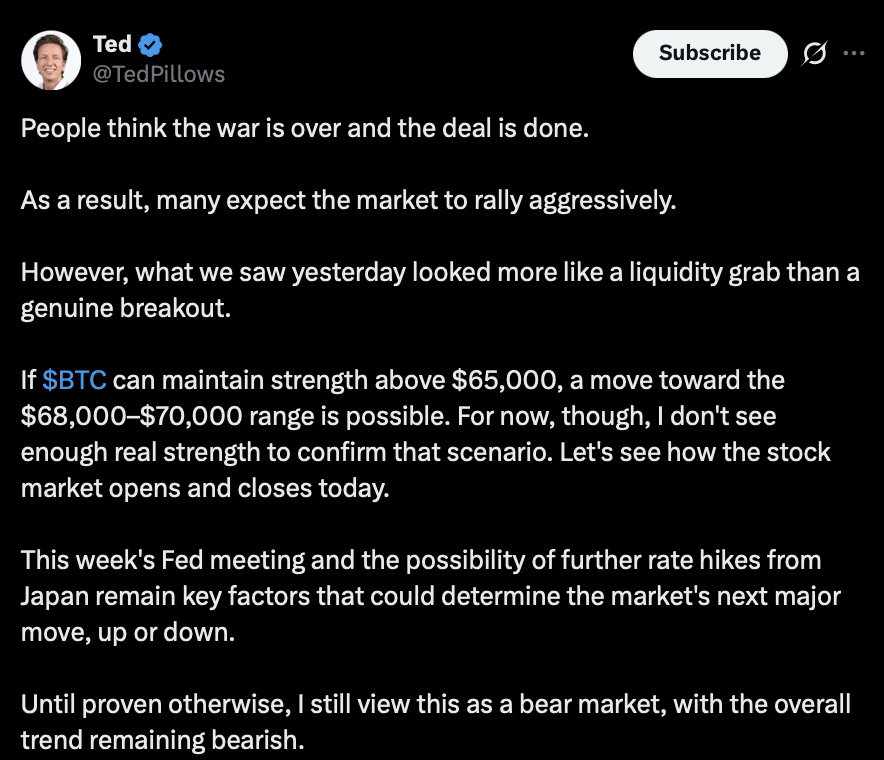
Crypto analyst Ted Pillows argued that the move may be more about liquidity than genuine bullish momentum. In his view, traders have quickly embraced the idea that geopolitical tensions are easing and that a meaningful agreement has already been reached.
Markets tend to price in good news rapidly, sometimes a little too rapidly.
Pillows believes Bitcoin could still climb toward the $68,000 to $70,000 range if it manages to hold above the important $65,000 level. However, he stopped short of calling for a confirmed breakout, noting that the market still lacks enough strength to fully validate that scenario.
In other words, higher prices remain possible, but the conviction behind the move is still being questioned.
Macro Events Could Decide The Next Move
Beyond geopolitics, traders are also watching a number of macroeconomic developments that could influence Bitcoin’s direction.
The upcoming Federal Reserve meeting remains a major focus. Investors continue searching for clues regarding future interest rate policy, liquidity conditions, and the broader outlook for risk assets.
At the same time, concerns surrounding potential policy tightening in Japan could create additional volatility across global markets.
These events may ultimately have a greater impact on Bitcoin’s medium-term trajectory than any single geopolitical headline.
Markets are rarely driven by one catalyst alone.
Key Support Levels Remain Critical
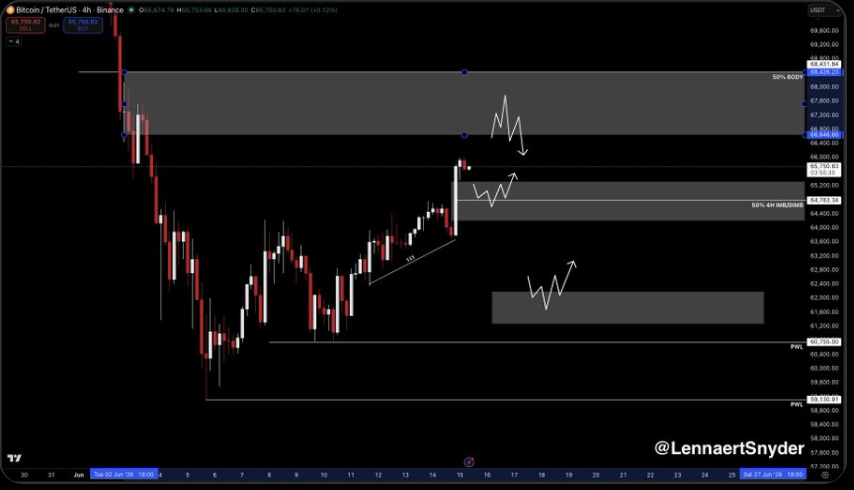
Analyst Lennaert Snyder highlighted one level in particular that traders should keep an eye on.
According to Snyder, Bitcoin needs to maintain support around $64,800 to preserve its short-term bullish structure. Holding above that zone would strengthen the case for continued upside momentum and potentially open the door for a test of higher resistance levels.
Lose it, however, and sentiment could shift quickly.
That’s why the next few days may prove especially important. Bitcoin has reclaimed momentum, but it has not yet completely escaped uncertainty.
A Market Caught Between Optimism and Caution
Bitcoin’s push toward $67,000 has undoubtedly improved sentiment after weeks of volatility. Yet the market remains caught between two competing narratives.
On one side, geopolitical optimism, resilient holders, and improving price action are fueling hopes for further gains. On the other, analysts continue warning that true capitulation has not occurred and that macroeconomic risks remain very much alive.
For now, Bitcoin appears to be balancing somewhere in the middle.
The rally is real. The questions surrounding its durability are real too.
Disclaimer: BlockNews provides independent reporting on crypto, blockchain, and digital finance. All content is for informational purposes only and does not constitute financial advice. Readers should do their own research before making investment decisions. Some articles may use AI tools to assist in drafting, but every piece is reviewed and edited by our editorial team of experienced crypto writers and analysts before publication.






 English (US) ·