
 5 months ago
63
5 months ago
63
Key Takeaways
- A recent Google whitepaper reveals quantum computers could compromise Bitcoin transactions in approximately 9 minutes
- Breaking Bitcoin’s encryption requires just ~500,000 qubits — significantly lower than earlier projections by a factor of 20
- Approximately 6.9 million BTC face immediate vulnerability, with 1.7 million coins from Bitcoin’s earliest days at highest risk
- Financial analysts at Bernstein classify the threat as “real but manageable,” estimating a 3–5 year timeline for necessary upgrades
- The proposed BIP-360 soft-fork could mitigate quantum risks for Bitcoin network participants
A groundbreaking whitepaper from Google has sent shockwaves through the cryptocurrency community, revealing that quantum computing technology could compromise Bitcoin transaction security in as little as nine minutes. Published March 30 by Google’s Quantum AI division, the research provides a sobering timeline for when this theoretical threat could materialize into reality.
According to the findings, quantum machines would require under 500,000 qubits to defeat the 256-bit elliptic curve cryptography securing Bitcoin addresses and transfers. This represents a dramatic reduction from previous calculations, which estimated the requirement at approximately 10 million qubits.
The vulnerability stems from how Bitcoin transactions temporarily reveal public keys before network confirmation. A quantum computer with sufficient processing power could exploit this exposure window to derive the corresponding private key and redirect funds before the transaction finalizes on the blockchain.
Given Bitcoin’s average confirmation time of roughly 10 minutes, Google’s analysis suggests a quantum-based attack executed during this interval would achieve success rates approaching 41%.
The research identifies approximately 6.9 million Bitcoin units currently at risk. This figure encompasses roughly 1.7 million coins originating from Bitcoin’s genesis period under Satoshi Nakamoto, where architectural decisions resulted in default public key exposure.
Ironically, the 2021 Taproot protocol enhancement — designed to bolster privacy and transaction efficiency — may have inadvertently expanded the attack surface by also exposing public keys in its standard implementation. Google’s team highlighted this unintended consequence as potentially enlarging the pool of susceptible addresses.
By contrast, Ethereum and alternative cryptocurrencies featuring faster block confirmation times appear less vulnerable to this particular attack vector.
The Urgency of Protocol Evolution
Investment research firm Bernstein characterized the quantum computing challenge as “real but manageable” in recent client communications. The analysts noted that Bitcoin’s recent price volatility may already incorporate market recognition of this emerging risk.
 HUGE: QUANTUM RISK TO $BTC “NEITHER EXISTENTIAL, NOR NOVEL”
According to several Bernstein analysts speaking to DLNews, the quantum threat posed to Bitcoin is little more than a required technical upgrade for $BTC.
As DLNews wrote, it is “not a death sentence for Bitcoin”.… pic.twitter.com/E97B27J2AX
— BSCN (@BSCNews) April 9, 2026
Bernstein’s analysis projects a 3–5 year window before quantum systems achieve the computational threshold necessary to execute real attacks. This timeline provides the Bitcoin development community with a critical but finite period to orchestrate defensive measures.
Among the technical solutions under consideration, BIP-360 stands out as a leading candidate. This proposed soft-fork modification would implement a novel output structure that maintains public key confidentiality until coins are actually transferred. While Binance Research acknowledges BIP-360 doesn’t address every immediate vulnerability, the firm emphasized it would eliminate what they termed a “massive existential threat” to the network.
According to Bernstein’s assessment, the technical challenge of developing quantum-resistant algorithms is actually the simpler component. The greater hurdle involves coordinating millions of users to transition their holdings and achieving network-wide consensus in a fundamentally decentralized ecosystem.
Expert Perspectives
Chris Tam, who serves as president at quantum technology firm BTQ Technologies, shared with TheStreet that projections for quantum computing’s threat timeline have consistently shortened as the technology advances.
Tam emphasized that decentralized blockchain networks cannot implement updates instantaneously. Unlike centralized systems, network-wide protocol changes demand extensive coordination periods spanning months or potentially years.
BTQ Technologies is actively developing Bitcoin Quantum, an experimental fork incorporating quantum-resistant cryptographic primitives from inception.
Google disclosed that its own post-quantum cryptography migration initiatives launched in 2016, and strongly encouraged cryptocurrency projects to commence their transition planning immediately rather than waiting for the threat to materialize.
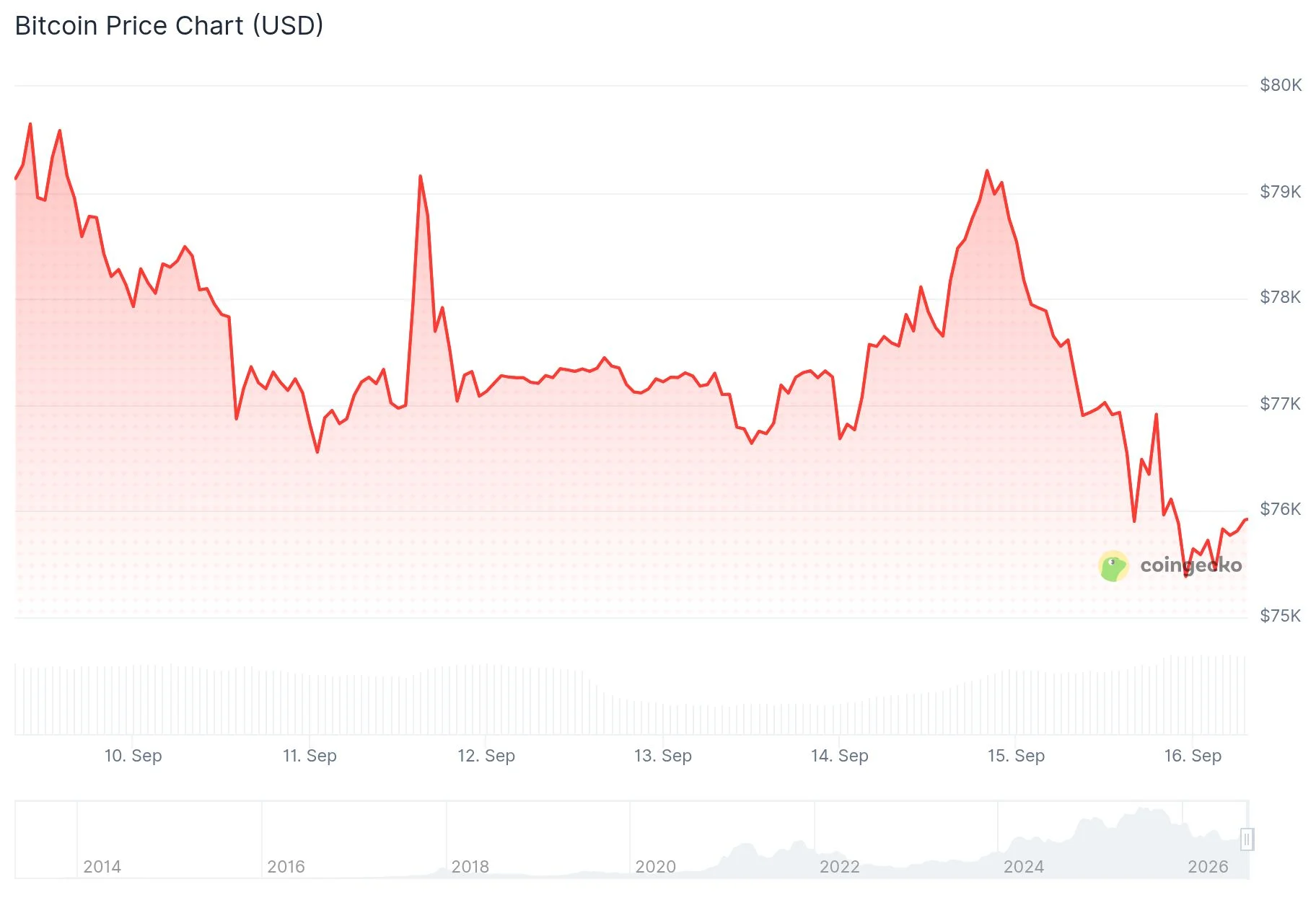
At press time, Bitcoin was valued at $68,073.72.
The post Bitcoin Faces Quantum Computing Threat Within 3-5 Years, Bernstein Warns appeared first on Blockonomi.





 English (US) ·