
 1 month ago
47
1 month ago
47
- Bitcoin continues to face pressure from geopolitical tensions, sticky inflation, and uncertain U.S. crypto regulation.
- Despite record ETF outflows, fresh institutional inflows suggest selling pressure may finally be easing.
- On-chain data shows buyers are accumulating between $60,000 and $63,000, although strong resistance remains above $77,000.
Bitcoin has regained some ground after slipping below the psychologically important $60,000 level, climbing back to around $64,100 at the time of writing. The recovery has helped calm nerves a little, but the market is far from comfortable.
According to CoinShares Head of Research James Butterfill, Bitcoin is still battling three major headwinds. Yet despite the uncertainty, he believes there are early signs that the market may be building a foundation for its next move higher.
Geopolitical and Economic Risks Continue to Weigh on Bitcoin
One of the biggest concerns remains the fragile ceasefire between Iran and Israel. While tensions have cooled compared to earlier weeks, investors are still worried that renewed conflict in the Middle East could quickly disrupt global markets.
Butterfill noted that markets don’t always recover because the news suddenly improves. More often, he argued, turning points happen once forced selling has largely run its course.
At the same time, the Federal Reserve continues to take a cautious stance on interest rates.
Minutes from the latest Fed meeting showed policymakers leaving rates unchanged between 3.50% and 3.75%. Inflation remains stubbornly above target, driven by factors including tariffs, supply risks surrounding the Strait of Hormuz, and continued demand fueled by artificial intelligence investments.
Core PCE inflation measured 3.3% in April and was expected to edge slightly higher in May. Meanwhile, the labor market has remained relatively healthy, with unemployment slipping from 4.3% in May to 4.2% in June. That combination gives the Fed little reason, at least for now, to begin cutting rates.
For risk assets like Bitcoin, higher interest rates generally create a more challenging environment.
ETF Flows Suggest Institutional Selling May Be Losing Steam
Despite the difficult backdrop, Butterfill believes some encouraging signals are beginning to emerge.
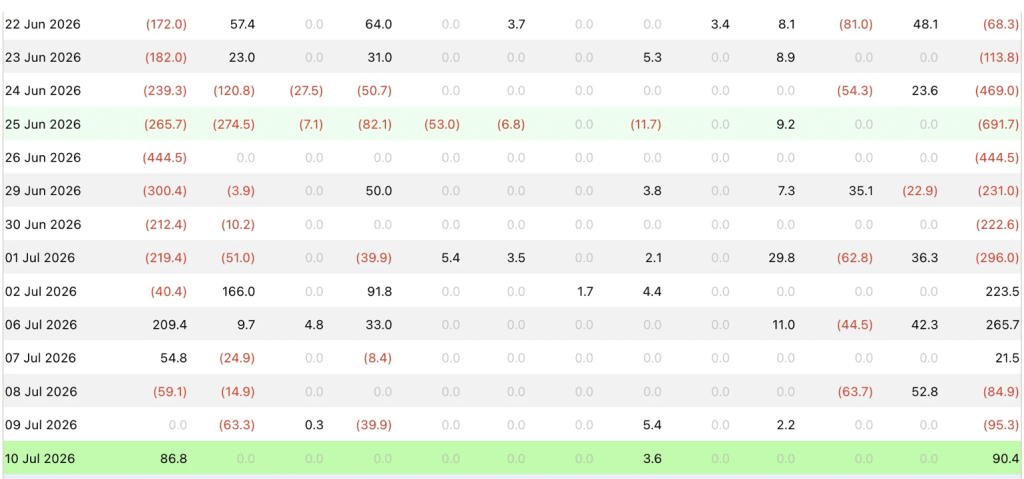
Spot Bitcoin ETFs recently experienced their longest streak of net withdrawals since launching, with roughly $8 billion leaving the funds over the past eight weeks. On the surface, that looks bearish.
But markets often shift before the headlines do.
Over the last three trading sessions, ETF inflows have turned positive again, hinting that institutional investors may be returning after an extended period of selling. It’s not enough to confirm a full trend reversal just yet—but it’s certainly worth watching.
Another encouraging development involves Strategy, the company formerly known as MicroStrategy.
Earlier this month, the firm sold approximately 3,588 BTC. Surprisingly, the market absorbed the sale with very little disruption, and Bitcoin eventually recovered toward the $63,800 area. That resilience suggests liquidity remains stronger than many expected.
Regulatory Optimism Has Faded, but It Hasn’t Disappeared
Regulation also continues to play an important role in Bitcoin’s outlook.
Butterfill pointed to slowing momentum behind the CLARITY Act, which is still awaiting a Senate floor vote. Many investors had hoped the legislation would provide clearer rules for the digital asset industry and potentially attract more institutional capital.
While expectations have cooled, approval of the bill could still act as a meaningful catalyst if lawmakers eventually move it forward.
As Butterfill summed it up, the market remains pressured—but it isn’t broken.
On-Chain Data Reveals Where Buyers and Sellers Are Positioned
Blockchain data paints a similarly mixed picture.
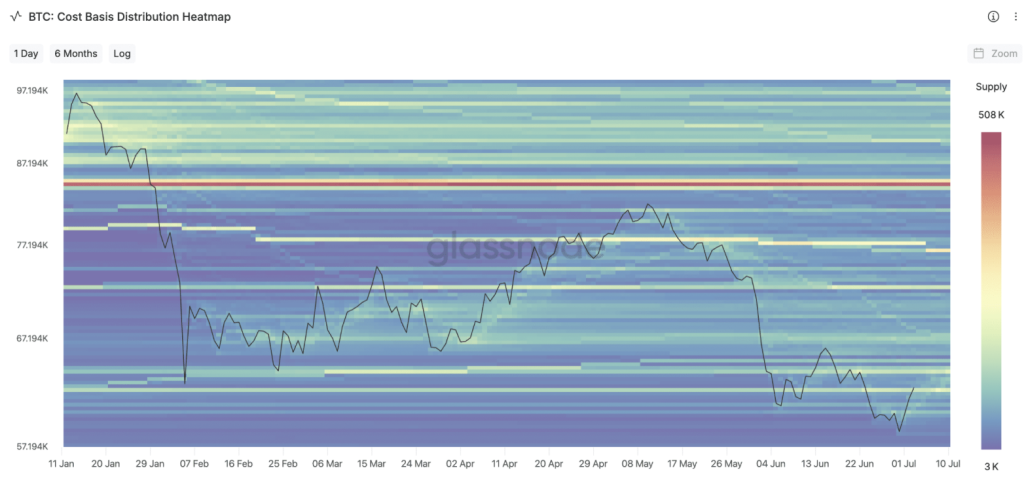
Glassnode’s Cost Basis Distribution Heatmap shows that the area around $77,000 has transformed into a major resistance zone. Earlier this year, that price level acted as support during April and May, but after Bitcoin fell below it, many holders are now sitting near break-even.
If prices return to that level, a portion of those investors may choose to sell, creating additional resistance.
An even larger concentration of coins sits between roughly $84,000 and $85,000, forming another potential supply wall that Bitcoin will eventually need to overcome.
On the positive side, fresh accumulation has appeared between $60,000 and $63,000. That suggests buyers are steadily building positions in the current range, helping establish what could become a stronger support zone if demand continues.
For now, Bitcoin remains below several key historical cost-basis levels. The market is showing resilience, but investors are still approaching the next move with caution rather than confidence.
Disclaimer: BlockNews provides independent reporting on crypto, blockchain, and digital finance. All content is for informational purposes only and does not constitute financial advice. Readers should do their own research before making investment decisions. Some articles may use AI tools to assist in drafting, but every piece is reviewed and edited by our editorial team of experienced crypto writers and analysts before publication.








 English (US) ·