
 3 months ago
66
3 months ago
66
Bitcoin’s Hash Ribbons indicator has flashed another buy signal, reviving a historically watched miner-capitulation setup. But according to crypto analyst Darkfost, the signal may require more caution this cycle as miner activity becomes increasingly exposed to energy shocks, geopolitical pressure and shrinking block rewards.
Hash Ribbons is designed to track stress in Bitcoin mining by comparing the 30-day moving average of hashrate with the 60-day moving average. When shorter-term hashrate falls below longer-term hashrate and later recovers, the model has often been interpreted as a sign that miner capitulation is ending and that conditions are improving for the network’s operators.
Bitcoin Buy Signal Returns, But Here’s The Catch
Darkfost framed the latest signal as potentially constructive, but not self-explanatory. “Hash Ribbons flashes a buy signal again: but should we trust it?” he wrote, describing the indicator as “a barometer of Bitcoin miners’ activity” that helps identify “genuine stress periods affecting BTC mining operations.”
The logic behind the indicator is straightforward. When miners face severe margin pressure, some operators shut down machines or sell BTC reserves to cover costs. That can reduce hashrate, lengthen block intervals and add near-term supply pressure to the market. Eventually, if enough hashrate leaves the network, mining difficulty adjusts lower. If Bitcoin’s price stabilizes or recovers during that same period, miners that remain online can see profitability improve quickly.
“That is where opportunity often emerges,” Darkfost argued. “Once enough difficulty resets out of the system, mining becomes more attractive again. Machines come back online, forced selling eases, and network conditions normalize.”
The signal matters because miner economics have become structurally more demanding. Bitcoin miners now receive 3.125 BTC per block before fees, down sharply from the 50 BTC rewards in the network’s early years. Although the dollar value of block rewards has grown over time, the subsidy continues to decline with each halving, forcing miners to operate with tighter discipline and more efficient infrastructure.
Darkfost pointed to several sources of pressure on mining profitability, including rising difficulty, the need for more powerful ASIC machines, volatile energy costs, fixed expenses such as rent and staffing, Bitcoin price swings and even weather-related disruptions. These variables can combine quickly, especially for operators with high electricity costs or less efficient fleets.
That is also why the analyst warned against treating every Hash Ribbons signal as equal. Earlier this year, he noted, an ice storm in the United States forced many miners to temporarily shut down operations, producing a signal that later looked misleading. Darkfost also cited false signals around the 2021 China mining ban and in June 2022, though he emphasized that the drivers were different in each case.
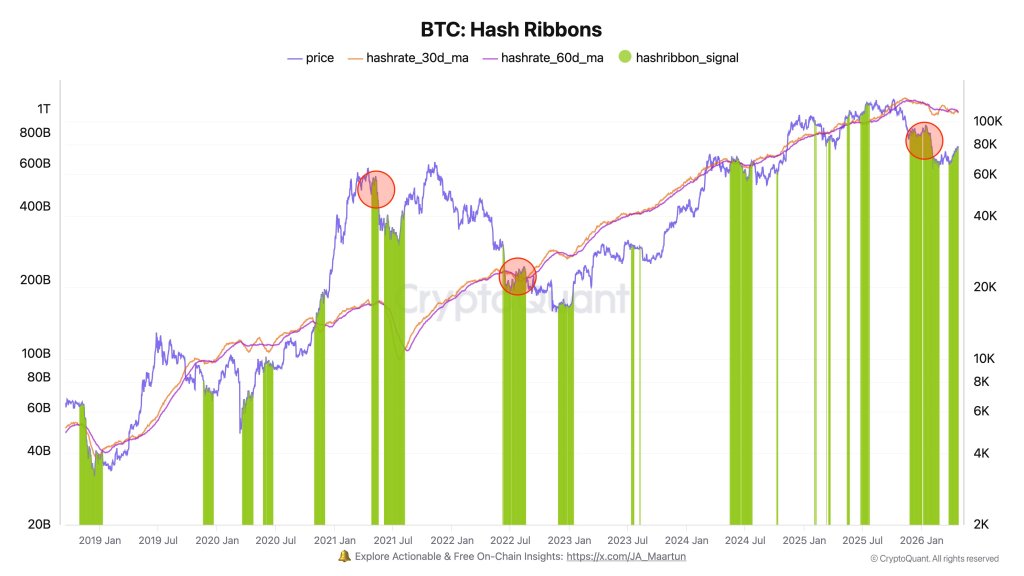
“Hash Ribbons still has a strong long term track record, but the context behind each signal matters more than ever,” he wrote. “These days, mining activity is becoming increasingly sensitive as block rewards shrink over time. Right now, ongoing geopolitical conflict is disrupting parts of the energy market and key shipping routes, both of which can affect miner activity in a way.”
That distinction is central to the current setup. A classic miner-capitulation signal can suggest that forced selling is easing and that weaker operators have already been flushed out. But if the hashrate decline was caused by temporary external disruption rather than deep financial stress across the mining sector, the signal may carry less information about market structure.
Darkfost’s conclusion was therefore measured rather than outright bullish. Hash Ribbons may again be pointing to improving conditions for Bitcoin miners, but the current macro and energy backdrop complicates the read.
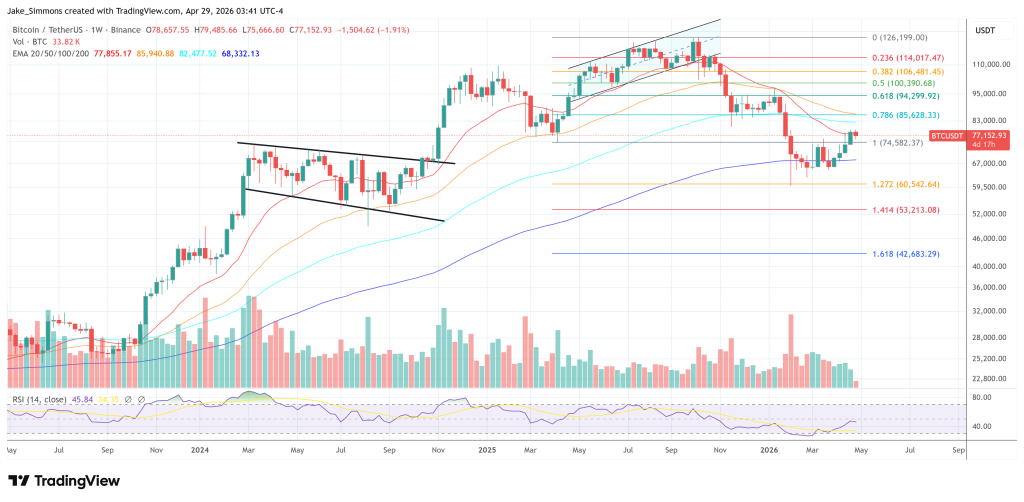
At press time, BTC traded at $77,152.


 English (US) ·