
 6 hours ago
7
6 hours ago
7
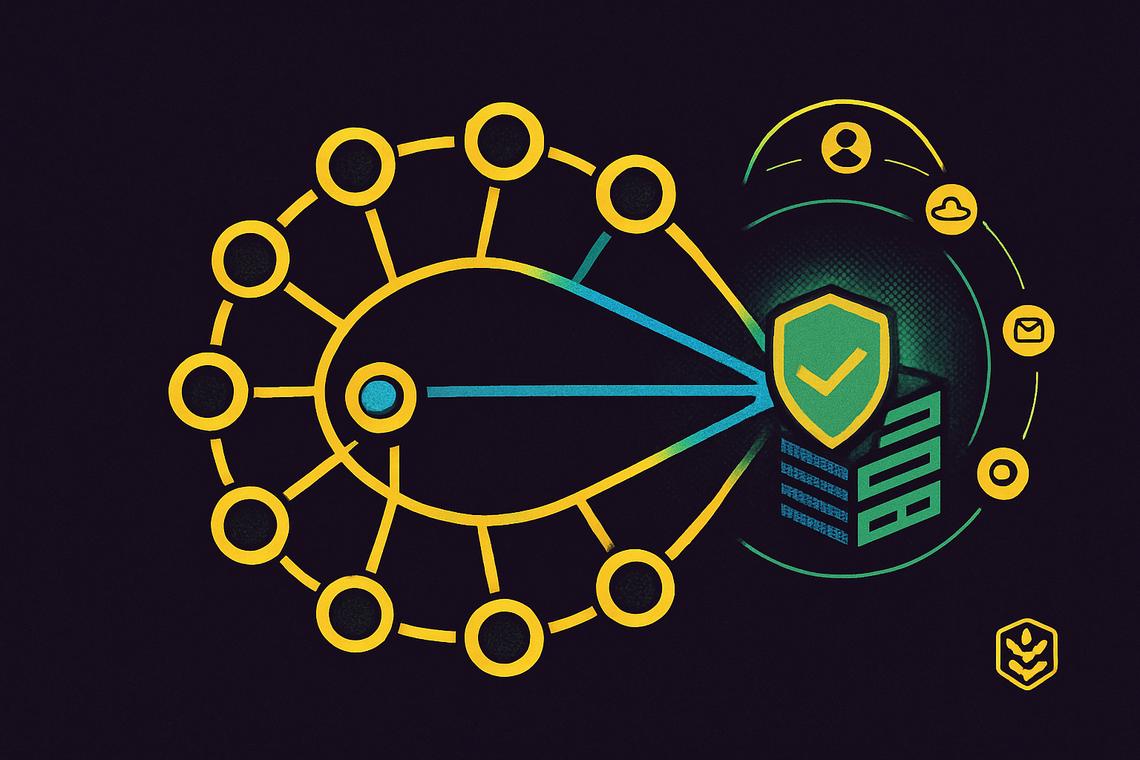
Bitcoin-native DeFi infrastructure just got a significant stress test. Alpen Labs announced that more than 21 integration partners have begun integrating on Testnet III, marking one of the more ambitious validation efforts yet seen for a project trying to bring lending, borrowing, and stablecoin minting to Bitcoin’s base layer. The scale of partner participation before mainnet signals something worth paying attention to.
Key takeaways
- More than 21 integration partners have begun integrating on Testnet III, Alpen’s latest testing environment built on Bitcoin Signet.
- The Strata bridge uses a 1-of-N trust model, requiring only one honest operator to keep the bridge secure — a lower trust assumption than traditional multi-sig bridges.
- Testnet III features the first publicly usable garbled circuit-based Bitcoin verifier, a novel cryptographic approach to privacy and computation verification.
- Bitcoin Dollar (BTD) is a BTC-backed stablecoin being developed with the Liquity team, the group behind the LUSD stablecoin on Ethereum.
- Alpen Labs was founded in 2022 by MIT alumni and has raised approximately $19.1 million from investors including Ribbit Capital and Castle Island Ventures.
Alpen Labs Launches Testnet III with Extensive Partner Integrations
Twenty-one-plus integration partners before a mainnet launch is not a small number for any project, let alone one building on Bitcoin. Alpen Labs has brought in bridge operators Stakely and Chainflow as live participants on Testnet III, with P2P.org expected to join shortly. The breadth of early participation suggests genuine ecosystem demand for what Alpen is building — a programmable financial layer sitting on top of Bitcoin itself.
The core purpose of Testnet III is stress-testing the Strata bridge, Alpen’s primary piece of infrastructure connecting Bitcoin to its execution environment. Every major DeFi ecosystem lives or dies by the reliability of its bridge, and history has shown that bridges are where exploits concentrate. Alpen’s approach attempts to fundamentally change that calculus.
Innovative Technology Behind Testnet III and the Strata Bridge
The Strata bridge runs on Bitcoin Signet, Bitcoin’s dedicated testing network, allowing the team and its partners to simulate real conditions without mainnet risk. But what distinguishes this bridge from most others in crypto is its underlying security architecture.
1-of-N Trust Model Enhances Bridge Security
Traditional multi-sig bridges require a majority of operators to remain honest for the system to hold. The Strata bridge flips that assumption entirely with its 1-of-N trust model: only a single honest operator in the full operator set is needed for the bridge to stay secure. That is a materially stronger guarantee, and it directly addresses the attack vectors that have drained hundreds of millions from crypto bridges over the past few years.
The strategic implications are clear. For partners like Stakely and Chainflow evaluating where to build, a bridge that doesn’t require trusting a supermajority of unknown counterparties is a qualitatively different risk proposition. It’s the kind of architecture that shifts the security conversation from “how many keys are held honestly” to “is at least one operator honest” — a far more defensible baseline.
Garbled Circuit-Based Bitcoin Verifier for Privacy and Security
Testnet III also introduces what Alpen describes as the first publicly usable garbled circuit-based Bitcoin verifier. Garbled circuits are a cryptographic technique that allows computation to be verified without exposing the underlying data. Applied to Bitcoin verification, this approach enables stronger privacy and security guarantees than traditional verification methods — a meaningful technical leap for a network that was never designed with programmability in mind.
Hybrid Optimistic-ZK Approach and BitVM2 Research
Alpen’s verification layer uses a hybrid optimistic-ZK approach, combining the efficiency of optimistic rollup assumptions with zero-knowledge proofs for finality guarantees. The design draws directly from research conducted by the BitVM2 initiative, developed in collaboration with the BitVM Alliance. That academic and community grounding gives the architecture more credibility than a proprietary black-box design would.
Alpen Labs’ Bitcoin-Native DeFi Products and Strategic Partnerships
The broader vision behind all of this infrastructure is Bitcoin-native DeFi — a system where users can lend, borrow, and mint stablecoins without bridging assets off Bitcoin or trusting wrapped token intermediaries. That has been a missing piece in Bitcoin’s financial stack for years, and it’s the gap Alpen is explicitly trying to fill.
Bitcoin Dollar Stablecoin Partnership with Liquity
The most commercially visible product on Alpen’s roadmap is Bitcoin Dollar (BTD), a BTC-backed stablecoin being developed in partnership with the Liquity team — the same group that built the LUSD stablecoin on Ethereum. Liquity’s track record with decentralized, overcollateralized stablecoin design brings meaningful credibility to BTD’s development. A BTC-backed stablecoin that operates natively within Bitcoin’s ecosystem, rather than relying on Ethereum’s infrastructure, would represent a genuinely new instrument for Bitcoin holders.
Company Background and Leadership
Alpen Labs was founded in 2022 by a team of MIT alumni and emerged from stealth in April 2024 after closing a $10.6 million seed round led by Ribbit Capital, with participation from Castle Island Ventures and Stillmark. Total funding stands at approximately $19.1 million. The company is led by CEO Simanta Gautam.
The investor roster matters here. Ribbit Capital and Castle Island Ventures are not generalist crypto funds — they specialize in financial infrastructure and have a track record of backing projects with genuine technical differentiation. Their presence in Alpen’s cap table reflects a thesis that Bitcoin’s programmability gap is a structural opportunity, not a niche experiment.
What Testnet III ultimately represents is a proof-of-ecosystem moment: partners are willing to build before mainnet exists, a verifiable bridge security model is live on a public network, and a novel cryptographic verifier is accessible to anyone who wants to test it. Whether that translates into a Bitcoin DeFi layer that can hold up under real economic pressure is the question the mainnet will eventually have to answer.
FAQ
What is Alpen Labs’ Testnet III?
Testnet III is Alpen Labs’ latest testing environment running on Bitcoin Signet, with more than 21 integration partners onboarded to stress-test the Strata bridge infrastructure.
How does the Strata bridge enhance security in Bitcoin DeFi?
The Strata bridge uses a 1-of-N trust model, meaning only one honest operator in the entire operator set is required for the bridge to remain secure. This lowers the trust assumption significantly compared to traditional multi-sig bridges, which require a majority of operators to remain honest.
What is unique about Testnet III’s Bitcoin verification?
Testnet III features the first publicly usable garbled circuit-based Bitcoin verifier. Garbled circuits allow computation to be verified without revealing the underlying data, enabling stronger privacy and security guarantees than conventional verification approaches.
What is the Bitcoin Dollar stablecoin?
Bitcoin Dollar (BTD) is a BTC-backed stablecoin being developed by Alpen Labs in partnership with the Liquity team, the group behind the LUSD stablecoin on Ethereum. It is designed to operate natively within Bitcoin’s ecosystem.
Article produced with the assistance of artificial intelligence and reviewed by the editorial team.








 English (US) ·