
 1 month ago
52
1 month ago
52
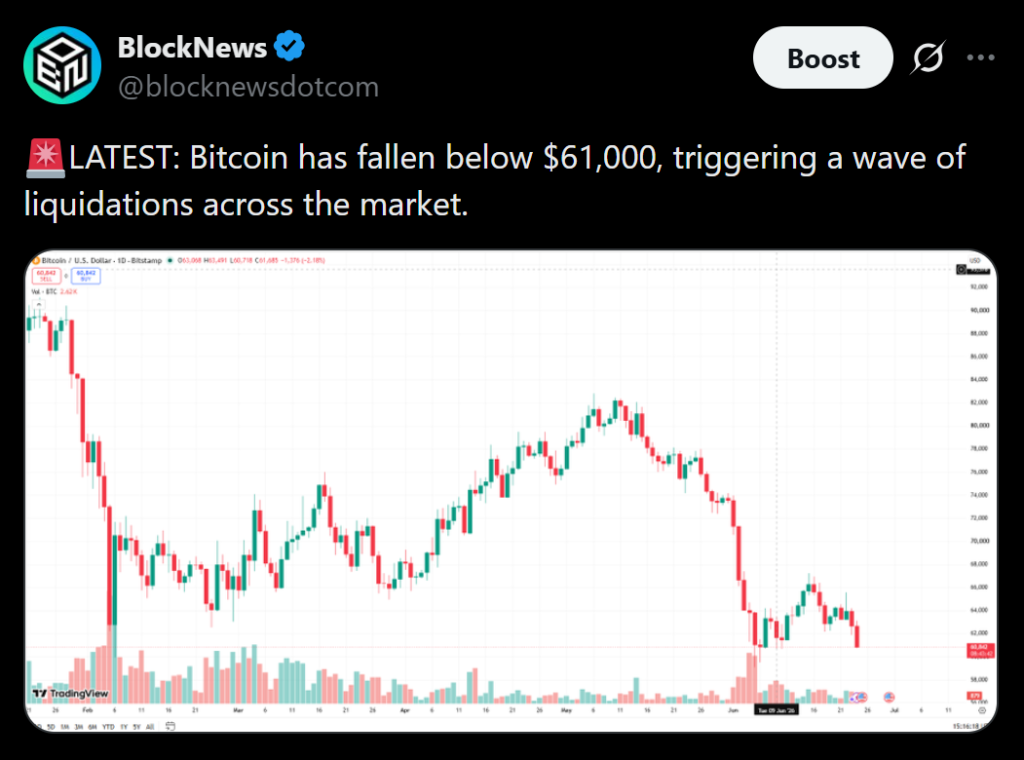
- Bitcoin has fallen more than 7% over the last week and is hovering near the critical $60,000 support level.
- A sharp Nasdaq decline driven by AI stock concerns has spilled into the crypto market.
- The Crypto Fear & Greed Index remains deep in “Extreme Fear” territory at 17.
Bitcoin is once again under pressure as a broader technology stock selloff continues to ripple through risk assets. The world’s largest cryptocurrency has dropped more than 7% over the past week, bringing it dangerously close to the psychologically important $60,000 level.
While U.S. equities managed a modest rebound during midweek trading, crypto markets failed to participate in the recovery. Instead, Bitcoin and major altcoins continued drifting lower, reinforcing concerns that digital assets remain tightly linked to broader risk sentiment.
Bitcoin Slides as Fear Grips the Market
Bitcoin fell roughly 3% over the last 24 hours and is now trading just above the $60,000 mark. Although the decline is not extreme by crypto standards, the steady selling pressure has investors questioning whether further downside could be ahead.
Ethereum also struggled, slipping below $1,620, while Solana dropped near $67. XRP was not spared either, falling toward the $1.06 level as weakness spread across the broader market.
The persistent decline comes as investor confidence continues deteriorating. The Crypto Fear & Greed Index currently sits at 17, firmly within “Extreme Fear” territory. Just one week ago the reading stood at 22, meaning sentiment has become even more pessimistic despite already depressed conditions.
AI Stock Weakness Is Spilling Into Crypto
The latest crypto downturn is not being driven by blockchain-specific developments.
Instead, concerns surrounding AI-related stocks appear to be at the center of the recent volatility. Investors have begun questioning whether some technology companies deserve the lofty valuations they achieved during the artificial intelligence boom.
That reassessment triggered a sharp two-day decline in the Nasdaq, wiping out roughly 4% and sending shockwaves across risk markets.
As institutional investors reduce exposure to growth-focused assets, cryptocurrencies have once again found themselves grouped alongside high-risk technology investments.
Despite frequent claims that Bitcoin serves as an independent asset class, recent price action suggests many large investors still treat crypto as part of the broader risk-on trade.
Crypto Missed the Stock Market Recovery
One of the more concerning developments for crypto bulls is the market’s inability to follow stocks higher during Wednesday’s rebound.
While major equity indices recovered some losses, cryptocurrencies remained weak. That divergence raises questions about whether crypto is experiencing its own unique selling pressure on top of broader macroeconomic concerns.

If digital assets continue underperforming equities, it could indicate additional factors weighing on the market, including fund outflows, miner selling, leveraged liquidations, or institutional profit-taking.
For investors hoping crypto would decouple from traditional markets, the recent performance has been disappointing.
Why the $60,000 Level Matters
Bitcoin’s current position near $60,000 carries significant technical importance.
The level has historically served as a major area of support and resistance, attracting substantial trading activity during previous market cycles. A decisive break below that zone could trigger additional selling as traders exit positions and stop-loss orders activate.
At the same time, if buyers successfully defend the area, Bitcoin could stage a relief rally similar to previous recoveries from major support levels.
The next few trading sessions may determine which scenario unfolds.
Investors Are Watching for Signs of Stabilization
Despite the bearish sentiment, some market observers believe extreme fear readings can eventually create attractive long-term opportunities.
Historically, periods of maximum pessimism have often appeared near major bottoms. However, fear alone does not guarantee a recovery, especially when macroeconomic uncertainty remains elevated.
Another development worth watching is the relative strength of decentralized finance projects. While most sectors suffered losses over the past week, DeFi managed to remain essentially flat. That resilience could indicate that some investors are quietly rotating capital within crypto rather than abandoning the asset class altogether.
For now, Bitcoin’s ability to hold above $60,000 remains the most important signal for traders and investors alike. A successful defense could restore confidence, while a breakdown may open the door for another wave of volatility.
Disclaimer: BlockNews provides independent reporting on crypto, blockchain, and digital finance. All content is for informational purposes only and does not constitute financial advice. Readers should do their own research before making investment decisions. Some articles may use AI tools to assist in drafting, but every piece is reviewed and edited by our editorial team of experienced crypto writers and analysts before publication.







 English (US) ·