
 1 hour ago
7
1 hour ago
7
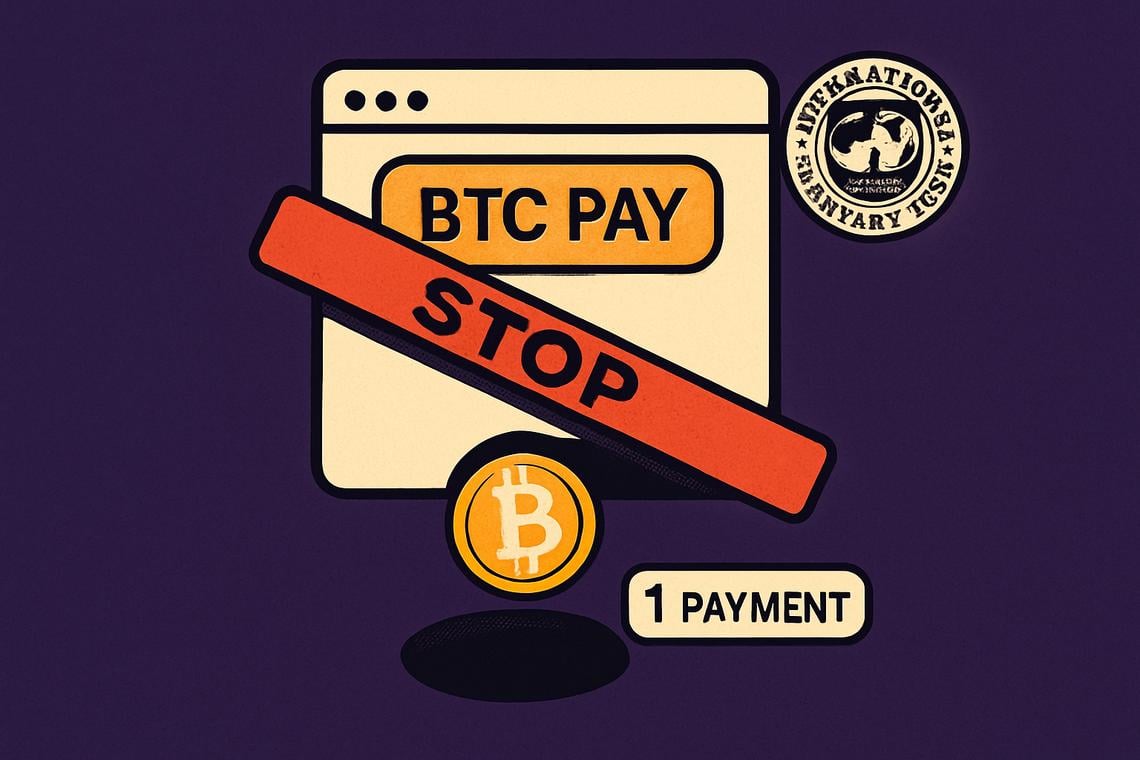
A restaurant tucked into El Zonte, the coastal village known worldwide as Bitcoin Beach, reportedly took in just one Bitcoin payment during the entire month of August 2026. That single transaction, made by a customer buying lunch, has become the latest data point in a much larger story about fading Bitcoin payments in El Salvador, the first country to make the cryptocurrency legal tender back in 2021.
Key takeaways
- A restaurant in El Zonte reportedly recorded only one Bitcoin payment during August 2026, according to Bitcoin Core contributor Jon Atack.
- Atack said staff described Bitcoin payments as having become “practically non-existent” at the restaurant level.
- A Universidad Centroamericana survey found just 8.1% of Salvadorans used Bitcoin for purchases in 2024, down from 25.7% in 2021.
- El Salvador made private-sector Bitcoin acceptance voluntary after revising its Bitcoin Law under a $1.4 billion IMF agreement signed in February 2025.
- IMF documentation says the government’s overall Bitcoin holdings stayed unchanged even as onchain data showed movement between wallets.
Bitcoin Payments Decline in El Zonte’s Bitcoin Beach
The clearest recent snapshot of weakening Bitcoin payments in El Salvador comes from a single merchant account, not a nationwide audit. Jon Atack, a Bitcoin Core contributor who has lived in the country since 2022, reported on Aug. 23 that a restaurant in El Zonte received its first Bitcoin payment of the month when he paid for his own lunch with the asset.
Anecdotal Evidence from Local Restaurant
Atack said restaurant staff told him Bitcoin payments used to be common at the location but had since become “practically non-existent.” He was upfront that his experience was anecdotal, meaning it can’t be used to prove a broader trend across El Zonte or the rest of the country on its own. Still, the detail is notable given the restaurant’s location inside the very community that helped inspire El Salvador’s national embrace of Bitcoin as legal tender.
Variation in Merchant Bitcoin Acceptance
According to Atack’s account, most customers at the restaurant now pay by card. One worker reportedly turned down a tip offered in satoshis because she had forgotten how to operate her Bitcoin wallet app. But the picture isn’t uniform. Another visitor who weighed in on the discussion said she had recently paid with Bitcoin in the same area and had seen signage advertising Bitcoin acceptance at other businesses nearby. That suggests payment infrastructure is still available in pockets of El Zonte, even if it’s used less often. Merchant activity can shift depending on the customer base, the season, and even which staff happen to be working a given shift — and no comprehensive August transaction data for the town has been made public to settle the question either way.
National Trends Show Falling Bitcoin Usage for Transactions
Beyond one restaurant’s counter, survey data confirms that Bitcoin usage for everyday transactions has been sliding across El Salvador for years. The restaurant account fits neatly into a pattern researchers have already documented at the national level.
Survey Data from Universidad Centroamericana and Universidad Francisco Gavidia
A Universidad Centroamericana survey found that only 8.1% of Salvadorans said they used Bitcoin to buy or pay for something during 2024. That figure has dropped steadily since the country adopted the cryptocurrency as legal tender: usage fell from 25.7% in 2021 to 21% in 2022, then to 12% in 2023, before settling at 8.1% in 2024. The 2024 survey polled 1,266 people with a 95% confidence level and a margin of error of 2.75 percentage points.
A separate poll from Universidad Francisco Gavidia produced a similar conclusion, finding that 92% of respondents did not use Bitcoin for transactions in 2024, while only 7.5% said they did.
Possible Reasons Behind Declining Consumer Bitcoin Transactions
These are self-reported figures rather than direct merchant transaction counts, so they don’t perfectly mirror point-of-sale activity. Even so, they offer a far wider lens than any single restaurant visit and reinforce that everyday Bitcoin spending had already been shrinking well before this latest Bitcoin Beach report surfaced. One likely factor is that many holders prefer to keep their Bitcoin rather than spend it, betting on future price gains instead of using it for lunch or groceries. Price swings and unfamiliar wallet interfaces may also play a role in discouraging routine use, though no survey pinpoints exactly which factor matters most.
Regulatory Changes Following IMF Agreement
Why does this matter for the future of Bitcoin payments in El Salvador? Because the legal framework that once pushed merchants toward accepting Bitcoin no longer requires them to do so. El Salvador adopted Bitcoin as legal tender in September 2021, with its original law generally requiring businesses with the necessary technology to accept it, backed by government-supported dollar conversion through the Chivo wallet and the Fidebitcoin trust.
Law Amendments Making Bitcoin Acceptance Voluntary
That mandate has since been rolled back. El Salvador revised its Bitcoin Law before securing a 40-month, $1.4 billion Extended Fund Facility from the IMF in February 2025. Under the terms confirmed by the IMF, private-sector Bitcoin acceptance became voluntary, and taxes must now be paid in U.S. dollars.
IMF Conditions on Currency Use and Government Bitcoin Roles
The detailed IMF program also removed the government’s obligation to guarantee conversions between Bitcoin and dollars. In practical terms, merchants can now simply stop accepting Bitcoin whenever customer demand or the operational hassle no longer justifies keeping the option available — a shift that helps explain why acceptance appears patchy rather than universal. The IMF’s December 2025 update noted that negotiations to sell the government’s stake in the Chivo wallet were advanced, though it stopped short of confirming the sale had closed.
Government Bitcoin Reserve Movements and Oversight
Retail spending habits and government reserve strategy are two separate stories, even though they’re often lumped together. El Salvador’s government has continued to show apparent additions to its publicly tracked Bitcoin reserve, but that alone doesn’t mean residents are spending Bitcoin more often.
Onchain Movements Contrasted with IMF Reports
Onchain figures previously indicated El Salvador added 240 BTC to its holdings after signing the IMF agreement, continuing an earlier pattern that had produced roughly 20 BTC of apparent growth within a single week. Yet later IMF documentation stated that the public sector had not voluntarily accumulated new Bitcoin after the program’s approval, and that total government-controlled holdings remained unchanged. That means the wallet movements that looked like fresh purchases may simply reflect transfers between addresses the government already controlled.
Implications for Retail Bitcoin Usage
The IMF’s first program review called on El Salvador to keep its aggregate Bitcoin holdings steady, scale back public involvement in Chivo, and tighten oversight of crypto assets more broadly. None of that changes what’s happening at the counter in El Zonte, where fewer customers appear to be reaching for satoshis. What happens next will hinge on fresh merchant data, an updated nationwide usage survey, and how the Chivo divestment process ultimately plays out. For now, the restaurant account adds a fresh, if narrow, data point to a trend the surveys had already flagged — evidence of softer adoption, but not proof that Bitcoin payments have vanished from the country altogether.
FAQ
How active are Bitcoin payments currently at El Salvador’s Bitcoin Beach?
According to Bitcoin Core contributor Jon Atack, a restaurant in El Zonte recorded only one Bitcoin payment during August 2026, indicating payments have become practically non-existent at that location, though the report remains anecdotal.
What do recent surveys say about Bitcoin usage for purchases in El Salvador?
A 2024 survey by Universidad Centroamericana showed that only 8.1% of Salvadorans reported using Bitcoin to purchase goods or services, down from 25.7% in 2021, with a similar decline reflected in a separate Universidad Francisco Gavidia poll.
What impact did the IMF agreement have on El Salvador’s Bitcoin regulations?
El Salvador revised its Bitcoin Law to make private-sector acceptance voluntary and required taxes to be paid in U.S. dollars as part of the conditions attached to the IMF’s 40-month, $1.4 billion Extended Fund Facility approved in February 2025.
Has the El Salvador government increased its Bitcoin reserves since the IMF deal?
Onchain data showed apparent increases in tracked government wallets, but IMF reports state the government’s total Bitcoin holdings remained unchanged after the program’s approval, suggesting the movements reflect internal transfers rather than new purchases.
Article produced with the assistance of artificial intelligence and reviewed by the editorial team.


 English (US) ·