
 3 weeks ago
23
3 weeks ago
23
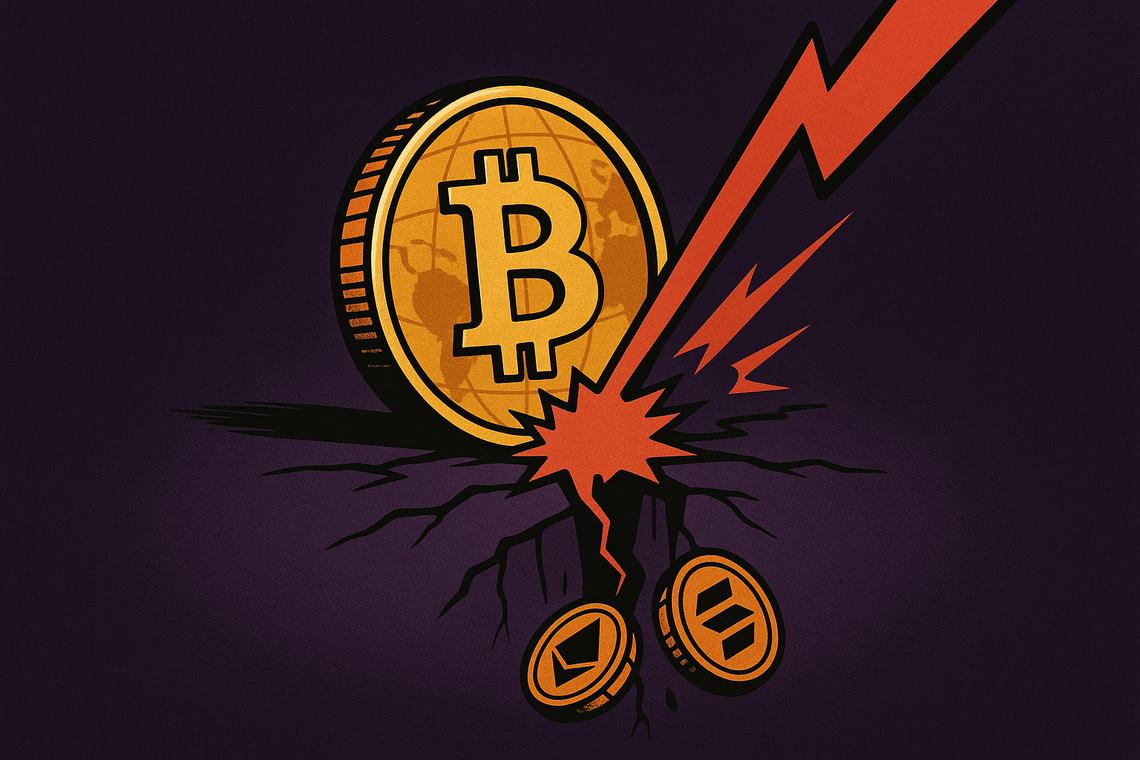
Bitcoin’s price decline accelerated sharply after President Donald Trump declared the tentative ceasefire with Iran was over, sending the world’s largest cryptocurrency tumbling more than 3% to below $62,000 during early London trading. The move rattled crypto markets broadly, with Ether and Solana also sliding as investors rapidly reassessed their appetite for risk.
Key takeaways
- Bitcoin fell more than 3% to below $62,000 in early London trading following Trump’s Iran remarks.
- Donald Trump declared the tentative US-Iran ceasefire was over, raising the prospect of renewed military conflict.
- Ether and Solana also declined alongside Bitcoin as risk appetite across crypto markets weakened.
- Strategy Inc.’s Bitcoin sale earlier in the week did not heavily impact prices — the geopolitical shock was the dominant driver.
- Bitcoin had posted a recovery in July after a nearly 18% drop in June, making this reversal particularly sharp in timing.
Bitcoin Price Drops Amid Renewed US-Iran Tensions
The sell-off was swift and broad. Bitcoin had been showing signs of stabilization after a punishing nearly 18% drop in June, with the token gaining some ground as July began. That recovery narrative collapsed quickly once geopolitical uncertainty returned to center stage.
The drop below the $62,000 level represented one of the sharper single-session moves in recent weeks, and it came during London hours — a period when liquidity can be thinner and price swings more pronounced. The speed of the reaction underscored just how closely crypto markets now track macro and geopolitical risk signals.
Ether and Solana also pulled lower
The pressure wasn’t limited to Bitcoin. Ether and Solana both declined in tandem, confirming that the sell-off reflected a broad retreat from risk assets rather than any Bitcoin-specific issue. When geopolitical fear spikes, crypto markets tend to move together — and this was no exception.
Trump’s Iran Remarks and the Market Reaction
The trigger was direct. Trump declared the tentative ceasefire with Iran over, immediately raising the prospect of renewed military conflict between the two countries. For markets already navigating an uncertain macro environment, the statement landed hard.
Crypto is increasingly treated as a barometer of global risk appetite. When the threat of military escalation enters the picture, the reflex among traders is to reduce exposure to volatile assets — and Bitcoin, despite its growing institutional profile, still sits firmly in that category during moments of acute fear.
Why geopolitical shocks hit crypto markets so fast
What makes events like this particularly revealing is the speed of transmission. Unlike equities, crypto trades around the clock, meaning geopolitical headlines translate into price moves almost instantaneously, without the buffer of a market open. Renewed US-Iran tensions didn’t need to filter through earnings revisions or analyst downgrades — they hit sentiment directly, and the price adjusted in real time.
That dynamic is a double-edged reality for crypto investors. The same always-on liquidity that enables fast recoveries also means there’s nowhere to hide when fear takes over.
Strategy Inc.’s Sale: A Non-Event by Comparison
Earlier in the week, Strategy Inc. had sold Bitcoin — a move that, under different circumstances, might have dominated market discussion. Instead, it barely registered. The sale did not heavily impact the price, a detail that actually says something meaningful about market depth and institutional confidence at that point.
The contrast is instructive. A corporate Bitcoin sale was absorbed without significant disruption, while a single geopolitical statement from a sitting president sent the token down more than 3% within hours. It reinforces the view that macro and geopolitical forces — not corporate flows — remain the most powerful short-term drivers of Bitcoin’s price.
For investors watching the broader picture, that distinction matters. Bitcoin’s sensitivity to geopolitical risk is not a bug or an anomaly — it’s a structural feature of an asset class that has become deeply integrated into global risk-on, risk-off dynamics. The question hanging over the market now is how prolonged the US-Iran tension proves to be, and whether crypto’s partial July recovery can survive another round of geopolitical turbulence.
FAQ
What caused the recent drop in Bitcoin prices?
The drop was triggered by renewed geopolitical tensions between the US and Iran, specifically after President Trump declared the tentative ceasefire was over. The statement raised the prospect of renewed military conflict, which weighed heavily on market risk appetite and pushed Bitcoin below $62,000.
Did other cryptocurrencies experience similar price declines?
Yes. Ether and Solana both declined alongside Bitcoin, indicating the sell-off was a broad market reaction to the geopolitical news rather than a Bitcoin-specific move.
Did Strategy Inc.’s sale of Bitcoin influence the price drop?
No. Strategy Inc.’s Bitcoin sale earlier in the week did not heavily impact the price. The decline was driven primarily by the geopolitical tensions following Trump’s Iran remarks, not by that corporate transaction.
How did Trump’s remarks affect market sentiment?
Trump’s declaration that the tentative ceasefire with Iran was over immediately raised fears of renewed military conflict. That raised the perceived risk across financial markets, prompting traders to reduce exposure to volatile assets like cryptocurrencies, which sent prices sharply lower.
Article produced with the assistance of artificial intelligence and reviewed by the editorial team.






 English (US) ·