
 3 months ago
57
3 months ago
57
- Bitcoin offers strong long-term returns but comes with high volatility
- Small allocations may improve portfolio performance without major risk
- Best used as a minor addition, not a core retirement investment strategy
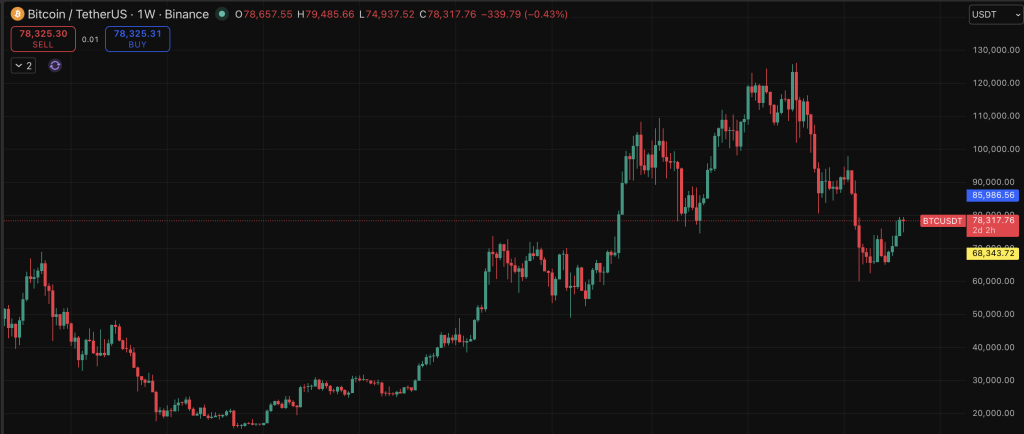
Bitcoin has had an almost strange track record, if you step back and really look at it. It’s been the top-performing asset in 11 out of the last 15 years, which is… kind of hard to ignore, yet since its peak in October 2025, it’s dropped nearly 40%. That kind of swing is exactly what makes long-term investors pause, especially those thinking about retirement decades down the line. The question becomes pretty simple, but not easy, does something this volatile really belong in a retirement portfolio?
Scarcity Narrative Still Drives Long-Term Appeal
At its core, Bitcoin is often treated as a scarce asset, almost like digital gold, though not everyone agrees with that comparison. The supply is capped, and new coins enter circulation at a slowing pace due to mining mechanics, which, in theory at least, supports price over time. There’s no guarantee it will always go up, obviously, but the structure leans in that direction over long periods. That’s part of why institutional players have been warming up to it, even if cautiously.
Research from Fidelity Digital Assets adds an interesting layer here. According to their findings, even a tiny allocation, like moving from 0% to just 1% Bitcoin in a traditional 60/40 portfolio, can noticeably improve returns. The boost was around 2% annually, while the added downside risk stayed relatively small, only nudging maximum drawdowns slightly higher. It’s not a massive shift, but it’s meaningful enough to get attention.
The Hidden Cost of Volatility
That said, Bitcoin’s risk doesn’t scale in a neat, predictable way. It ramps up quickly, and sometimes faster than expected. A 1% allocation might contribute a manageable slice of volatility, but bump that up to 5%, and suddenly it accounts for a much larger portion of the portfolio’s overall swings, enough to make even experienced investors a bit uneasy, if not outright stressed.
This is where positioning really matters. Keeping Bitcoin between 1% and 5% seems to be the general guideline, though leaning closer to 1% makes more sense if retirement isn’t that far off. The longer your time horizon, the more room you have to recover from those sharp drawdowns, which, historically, have ranged anywhere from 40% to even 80% during certain cycles.
A Supporting Asset, Not the Core Strategy
One thing that’s pretty clear, Bitcoin isn’t meant to replace the fundamentals of a retirement portfolio. It’s not a substitute for index funds, bonds, or other core holdings that provide stability and steady growth over time. Instead, it works better as a small addition, something that sits on the side and adds a bit of upside potential without overwhelming the entire portfolio.
In that sense, it’s less about going all in, and more about careful exposure. Enough to benefit if things go well, but not so much that a downturn throws everything off balance. And honestly, that balance is probably the hardest part to get right.
Disclaimer: BlockNews provides independent reporting on crypto, blockchain, and digital finance. All content is for informational purposes only and does not constitute financial advice. Readers should do their own research before making investment decisions. Some articles may use AI tools to assist in drafting, but every piece is reviewed and edited by our editorial team of experienced crypto writers and analysts before publication.







 English (US) ·