
 3 weeks ago
24
3 weeks ago
24
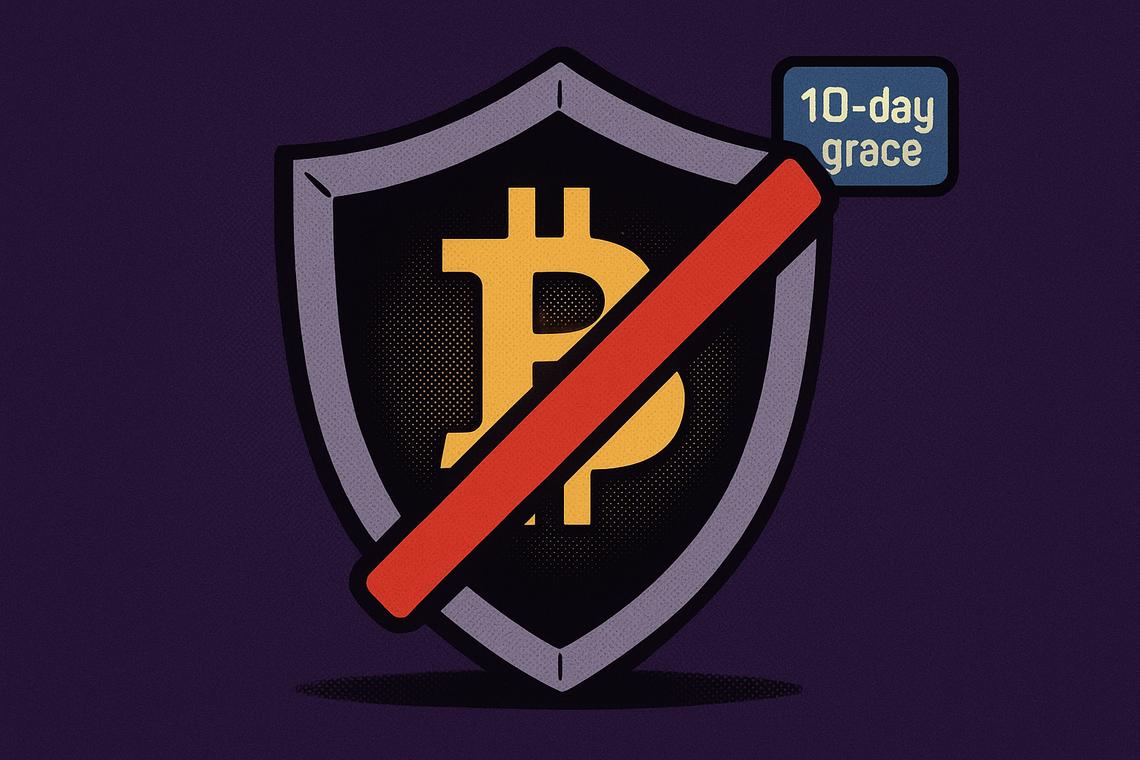
Strike rolled out bitcoin volatility-proof loans on July 7, offering borrowers a product that strips out every price-triggered liquidation mechanism — no margin calls, no automatic sell-offs, no matter how far bitcoin falls. It’s a direct answer to one of the most persistent complaints about crypto lending: the forced liquidation that punishes holders during the exact market crashes when they most need liquidity.
Key takeaways
- Strike launched volatility-proof bitcoin loans on July 7, eliminating all price-triggered liquidations for the loan’s life.
- Collateral stays untouched as long as payments are made; missed payments trigger a 10-day grace period before partial liquidation can occur.
- Initial LTV is capped at 45%, term length is six months, and interest rates run roughly 2.95 percentage points higher than Strike’s standard product.
- The product is not available in California, New York, or Texas.
- CEO Jack Mallers described it as “volatility-proof,” not “liquidation-proof” — repayment risk remains fully on the borrower.
Strike’s Launch of Volatility-Proof Bitcoin Loans
The timing is pointed. Bitcoin has been through a bruising stretch — dropping 54% from its all-time high to around $58,190 in late June — and Strike’s standard loan product, launched in May 2025, triggered numerous liquidations during that drawdown. On-chain analyst Willy Woo publicly called out CEO Jack Mallers over the risk baked into that original structure. The new product is, in part, a response to that criticism and to broad customer feedback.
Mallers framed the launch bluntly on X: “No margin calls. No price liquidations. No matter how far bitcoin falls, your bitcoin doesn’t move. Volatility is inevitable. Liquidation isn’t. Borrow dollars. Keep the bitcoin.”
Key Features of Volatility-Proof Loans
What the new product actually removes is concrete. Strike’s standard bitcoin loan carries a 65% LTV warning threshold, a 70% margin call trigger, and an 85% automatic partial liquidation mechanism. All three are gone from the volatility-proof structure. As long as borrowers keep making payments, their bitcoin collateral sits untouched regardless of where the price goes.
That’s a meaningful structural shift for holders who want dollar liquidity but don’t want a bad week in the market to wipe out their position. Bitcoin investor Fred Krueger said the product “could eliminate one of Bitcoin’s biggest structural problems: forced selling during market crashes,” adding that defaults under this model would be driven by borrowers’ inability to service debt rather than by temporary price swings.
Availability and Market Context
The product is available for term loans in most U.S. states — but not in California, New York, or Texas, three of the country’s largest markets. It applies to new loans, refinancing, and consolidation, and can be taken out under personal or business names. Minimum loan amounts vary by state, with personal loans starting at $10,000 and certain business loans available from $5,000.
The geographic exclusions are a real constraint. Locking out California, New York, and Texas limits the addressable market substantially, and depending on how regulatory pressure evolves in those states, the reach of this product could remain narrow for some time.
Borrower Responsibilities and Risks
Missed Payments and Grace Period
The protection is conditional. Miss an interest payment or fail to repay at maturity, and the clock starts immediately. Borrowers have a 10-day grace period to either make the payment or contact Strike to explain their situation. After that window closes, Strike can begin partially liquidating collateral to cover what’s owed.
Mallers was direct about it: “If we don’t hear from you for a few weeks, then I may have no choice but to sell off some of the Bitcoin because it seems like you’re doing a hit-and-run.”
Repayment Risk vs Market Risk
This is the distinction Mallers drew most carefully. The product removes market risk — the scenario where a price crash triggers automatic action on a performing loan. It does not remove repayment risk. “That’s why we call it ‘volatility-proof,’ not ‘liquidation-proof,'” he said. A borrower who stops paying still faces consequences; the product only protects those who service their debt consistently.
That framing matters for how borrowers should evaluate this. It’s not a free pass. It’s a structural shift that rewards disciplined borrowers while penalizing those who treat the grace period as optional.
Loan Terms and Trade-Offs
Loan-to-Value Caps and Interest Rates
The protection comes with a clear price. The initial LTV cap is 45%, compared to 50% on Strike’s standard product. On a $100,000 bitcoin position, that means $45,000 available rather than $50,000 — a smaller gap in absolute terms, but meaningful at scale. Rates carry a roughly 2.95-percentage-point premium over Strike’s standard 7.49% to 11.25% APR range, putting volatility-proof loan rates somewhere between approximately 10.7% and 14.2%.
Rob Topping, executive chairman at Vibes Capital Management, called it a “great product for those who need near-term liquidity and don’t want to risk liquidation” — but acknowledged the 14% APR was expensive. Mallers explained the pricing rationale directly: “The secret sauce is that we’re taking the extra charge that we’re giving you guys and we’re putting it on extra hedges in the market to protect all of us.”
Term Length and Usage Restrictions
The term shrinks to six months, half the twelve-month window on standard loans. That compression forces faster decision-making and repayment planning. Adding to the inflexibility: borrowers cannot retrieve collateral mid-term and cannot convert a loan into or out of the volatility-proof structure once it’s originated. Whatever structure a borrower chooses at the start, they’re locked into it for the full term.
Together, the lower LTV, higher rate, shorter term, and restricted flexibility represent a significant set of trade-offs. Whether those trade-offs are worth it depends entirely on a borrower’s risk tolerance and confidence in their ability to service debt through a volatile period — which is precisely when these loans are most likely to be sought.
What This Signals for Cryptocurrency Lending
The broader context gives Strike’s move more weight than a single product announcement. A June report from crypto lending platform Ledn found that while 88% of surveyed crypto investors said they would consider a crypto-backed loan, only 14% actually use them — a gap Ledn attributed largely to confidence issues and market volatility. Bitcoin has dropped 30% or more in ten of the past twelve years and has experienced drawdowns of 50% or more four times since 2014.
That confidence gap is exactly the problem Strike is trying to price. Competitors including Binance, Coinbase, Nexo, and Xapo Bank offer bitcoin-backed loans, but none have yet publicly moved to strip out price-liquidation triggers in the same way. If the product gains traction, it could pressure others to offer similar structures — or expose why the trade-offs make it commercially difficult to replicate at scale. The real test comes the next time bitcoin falls sharply and borrowers find out whether the promise holds.
FAQ
What makes Strike’s volatility-proof bitcoin loans different from standard loans?
Volatility-proof loans remove all price-triggered liquidations — including the 65% LTV warning, 70% margin call, and 85% automatic partial liquidation — that apply to Strike’s standard bitcoin loan. Collateral remains intact as long as payments are kept current, regardless of how far bitcoin’s price falls.
What happens if a borrower misses a payment on a volatility-proof loan?
The borrower has a 10-day grace period to make the payment or communicate with Strike about their financial situation. If Strike does not hear from the borrower within that window, it may begin partially liquidating collateral to cover the overdue amount.
Are volatility-proof loans available everywhere in the U.S.?
No. They are offered only in select U.S. states and are not available in California, New York, or Texas. The loans apply to term loans only, not lines of credit.
What are the main trade-offs for borrowers choosing volatility-proof loans?
Borrowers face a lower initial LTV cap of 45% versus the standard 50%, a shorter six-month term rather than twelve months, interest rates approximately 2.95 percentage points higher than Strike’s standard 7.49%–11.25% APR range, and no ability to retrieve collateral mid-term or convert the loan structure once originated.
Article produced with the assistance of artificial intelligence and reviewed by the editorial team.





 English (US) ·