
 1 month ago
41
1 month ago
41
- TAO dropped 38% but network activity and staking remain strong
- Institutional interest is rising, with ETF filings and fund allocations increasing
- Long-term concerns around emissions, costs, and value distribution still persist
Bittensor is in a strange spot right now… almost split in two directions. On one side, you’ve got critics saying the model doesn’t really hold up long term. On the other, the network keeps growing, quietly, and even pulling in institutional attention.
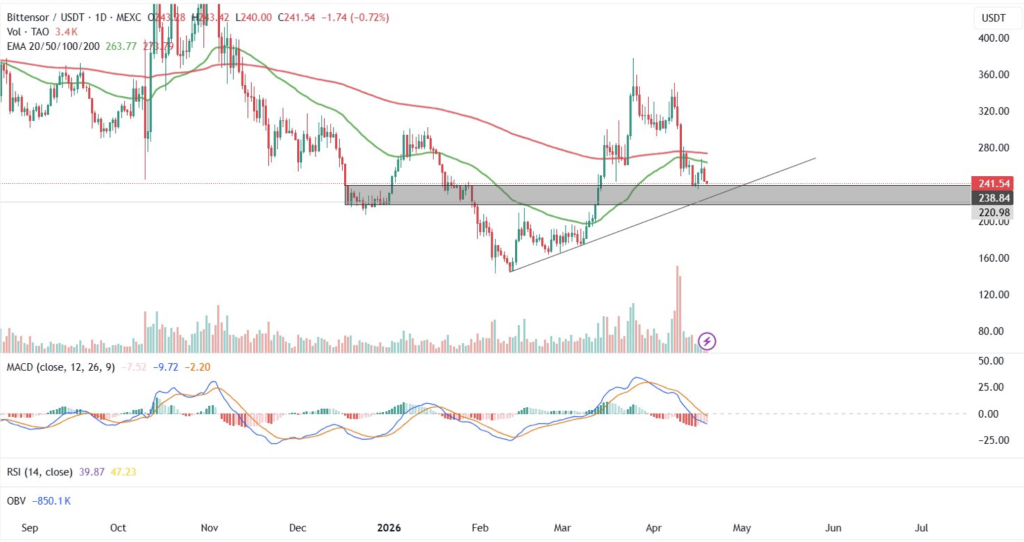
After a sharp 38% drop, TAO isn’t looking great on the chart. But if you zoom out a bit, the story feels more complicated than just “price down, sentiment bad.”
Network Shock… But No Collapse
The recent Covenant issue hit three major subnets, and yeah—it shook confidence for a moment. That kind of disruption usually causes systems to stall, or at least slow down.
But that’s not what happened here.
Instead, miners from the community stepped in and restarted those subnets using open-source code. No central authority. No official rescue. The network just… kept going. That’s actually a big deal, even if it didn’t reflect immediately in price.
It suggests the system might be more resilient than some expected.
Holders Stay Put While Institutions Lean In
Even with the drop, around 70% of TAO supply remains staked. That’s not what panic looks like. Large holders didn’t rush for the exits, which hints at a level of underlying confidence—maybe cautious, but still there.
Then there’s the institutional angle.
Grayscale increased TAO’s weight in its AI fund to over 43%, which is not a small adjustment. Around the same time, both Grayscale and Bitwise filed for TAO-related ETFs. Timing matters here… because these moves happened right before the crash.
So clearly, they’re not reacting to short-term price swings. They’re betting on something bigger, longer term.
New Mechanics Try to Fix Old Concerns
Inside the protocol, changes are also rolling out. One of the more notable ones is the “Conviction Mechanism,” which basically rewards participants who lock their tokens for longer periods. The longer you commit, the more influence you gain within subnets.
It’s an attempt to address some criticisms—like short-term behavior or concerns around decentralization being more surface-level than real.
At the same time, new subnets keep launching. Some are even generating revenue already. So despite the noise, the ecosystem isn’t shrinking… it’s still expanding.
Critics Aren’t Backing Down
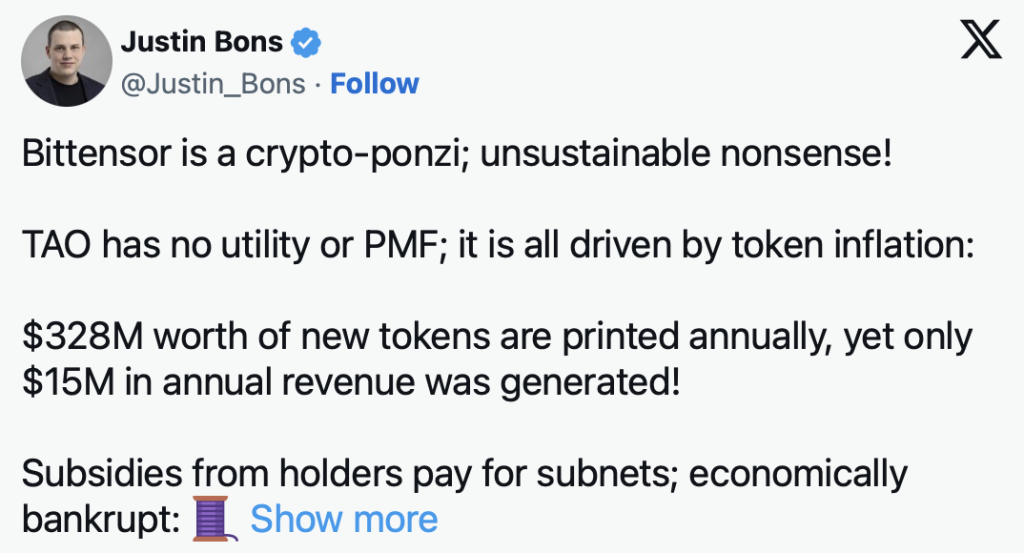
But the pushback is getting louder too. Some analysts argue that TAO relies heavily on token emissions—that new tokens are constantly introduced to keep the system running, while actual revenue doesn’t scale at the same pace.
There’s also the cost issue. Running AI workloads on Bittensor can be more expensive than using centralized alternatives, which raises questions about competitiveness.
And then there’s value distribution. Critics say subnet operators capture most of the earnings, while token holders deal with dilution. That’s not exactly a small concern.
Two Narratives, One Outcome Still Unknown
So right now, Bittensor is caught between two narratives. One sees a network that just passed a real stress test, kept growing, and is attracting serious institutional interest. The other sees structural flaws that could become bigger problems over time.
The next few months will probably settle that debate.
If ETF momentum builds and the new mechanisms work as intended, TAO could recover quickly—maybe even faster than expected. But if doubts around sustainability keep growing… the pressure might stick around longer than people think.
For now, it’s not a clear story. It’s a developing one. And the market is still deciding which version to believe.
Disclaimer: BlockNews provides independent reporting on crypto, blockchain, and digital finance. All content is for informational purposes only and does not constitute financial advice. Readers should do their own research before making investment decisions. Some articles may use AI tools to assist in drafting, but every piece is reviewed and edited by our editorial team of experienced crypto writers and analysts before publication.






 English (US) ·