
 2 months ago
63
2 months ago
63
- On-chain researchers point to growing infrastructure overlap between BlackRock-backed initiatives and Ripple’s ecosystem.
- Ripple’s RLUSD stablecoin is now integrated with Wormhole, the interoperability protocol also supporting BlackRock’s tokenized asset operations.
- The development strengthens discussions around XRP Ledger tokenization and the future of real-world assets on blockchain networks.
The long-running speculation surrounding BlackRock and XRP has resurfaced following new attention on Wormhole, a blockchain interoperability protocol that now connects key components of both ecosystems. While there remains no evidence that BlackRock directly owns or endorses XRP, the infrastructure supporting some of its tokenization efforts is increasingly overlapping with Ripple-related technologies.
The discussion gained momentum after on-chain researcher SMQKE highlighted a documented connection involving Wormhole, BlackRock’s tokenized asset initiatives, and Ripple’s RLUSD stablecoin. The findings have renewed debate about how institutional finance and blockchain infrastructure may be converging behind the scenes.
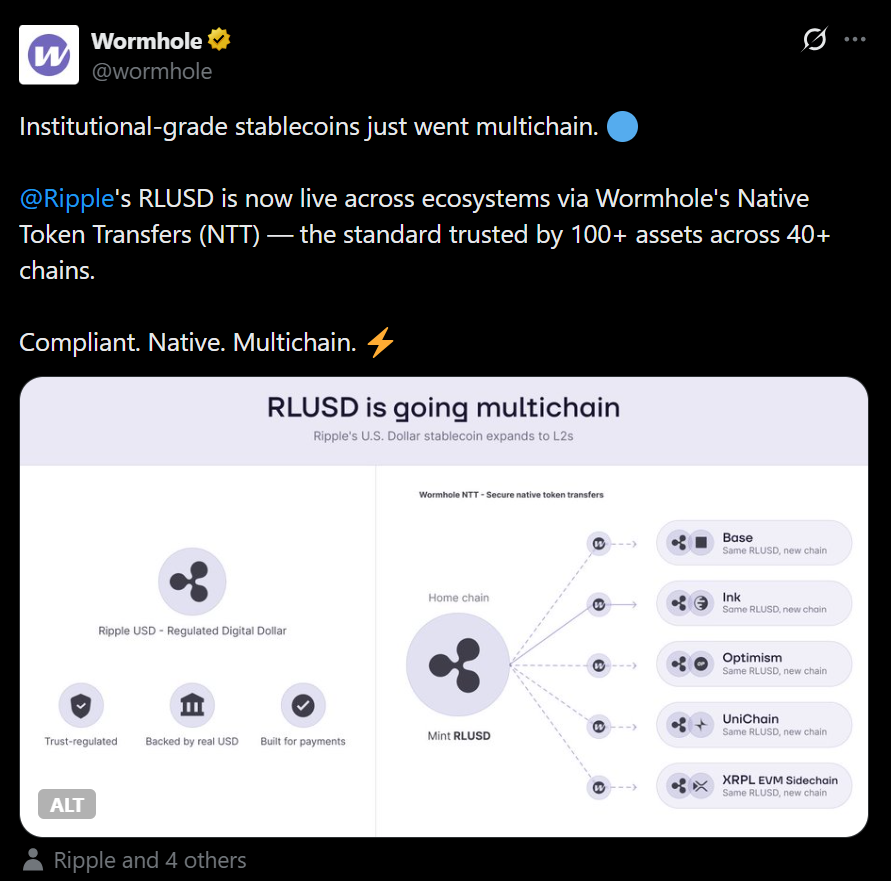
Wormhole Connects Two Major Ecosystems
The latest development centers on Ripple’s RLUSD stablecoin, which has been integrated into Wormhole’s Native Token Transfers (NTT) framework. This allows RLUSD to move natively across more than 40 blockchain networks and interact with approximately 100 digital assets.
Wormhole already plays an important role in institutional blockchain infrastructure. The protocol serves as a core interoperability layer for BlackRock’s tokenization activities and powers cross-chain capabilities used by Securitize, one of the largest tokenized asset platforms in the market.
With RLUSD now operating through the same infrastructure, both ecosystems are effectively utilizing shared rails, even though they remain separate entities.
RLUSD’s Growing Role in Tokenized Finance
Ripple’s RLUSD stablecoin is becoming increasingly relevant within the tokenized asset sector. The stablecoin is designed to facilitate liquidity, settlement, and redemptions across blockchain-based financial products.
Within the broader real-world asset ecosystem, RLUSD is positioned as a transaction layer connecting various tokenized financial products. As institutional adoption of tokenization grows, stablecoins capable of supporting compliant settlement become increasingly important.
This dynamic has fueled continued interest in the BlackRock and XRP narrative. While BlackRock has never announced direct involvement with XRP, some analysts argue that institutional adoption often begins at the infrastructure level before expanding elsewhere.
The Bigger Tokenization Picture
Beyond Wormhole and RLUSD, investors are also watching developments involving tokenized securities and real-world assets. Industry forecasts suggest that trillions of dollars worth of traditional assets could eventually migrate onto blockchain networks through tokenization initiatives.
Discussions surrounding the Depository Trust & Clearing Corporation (DTCC), blockchain settlement technologies, and tokenized financial products have further fueled interest in networks such as XRP Ledger and Stellar. Both platforms have long positioned themselves as infrastructure solutions for cross-border payments and asset transfers.
As institutions continue exploring blockchain-based settlement systems, networks focused on efficiency, compliance, and scalability may see increasing attention.
What This Means for XRP
It is important to separate infrastructure adoption from direct token investment. At this stage, there is no indication that BlackRock holds XRP or plans to launch XRP-related investment products. The firm’s digital asset exposure remains focused primarily on Bitcoin and Ethereum through regulated investment vehicles.
However, the growing overlap between institutional tokenization platforms, interoperability networks, and Ripple’s ecosystem highlights a trend that many investors are beginning to notice. The future of blockchain adoption may depend less on individual token endorsements and more on the infrastructure connecting financial institutions, stablecoins, and tokenized assets.
As tokenization continues expanding, the conversation around BlackRock and XRP may increasingly revolve around shared infrastructure rather than direct ownership. For many market participants, that distinction could become just as important as any headline announcement.
Disclaimer: BlockNews provides independent reporting on crypto, blockchain, and digital finance. All content is for informational purposes only and does not constitute financial advice. Readers should do their own research before making investment decisions. Some articles may use AI tools to assist in drafting, but every piece is reviewed and edited by our editorial team of experienced crypto writers and analysts before publication.




 English (US) ·