
 4 months ago
57
4 months ago
57
- Larry Fink warns sustained $150 oil could trigger global recession
- Energy shock may delay rate cuts and tighten global liquidity
- Crypto could react faster than traditional markets to macro stress
Larry Fink doesn’t usually deal in extremes, which is why this warning stands out. His message is pretty direct: if oil climbs toward $150 and stays there, the outcome isn’t just slower growth, it’s a global recession. The key isn’t the spike itself, it’s how long prices stay elevated. Short-term volatility can be absorbed. Prolonged pressure… that’s where things start to break.
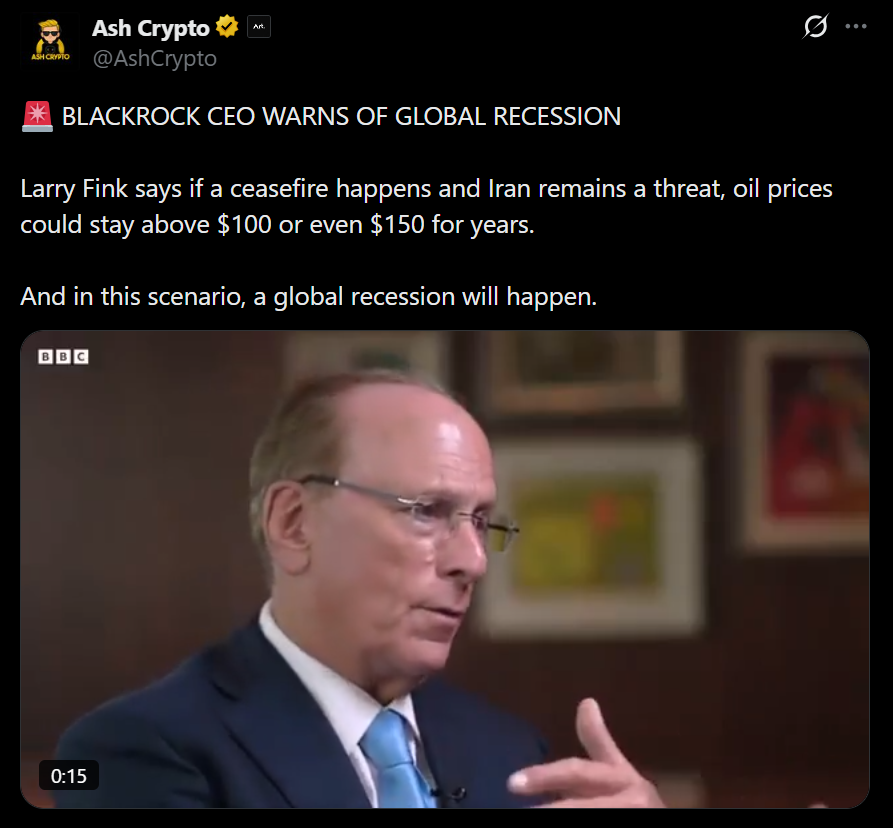
And right now, that scenario doesn’t feel as far-fetched as it once did.
Energy Is Becoming the Core Risk
What makes this situation different is how central energy has become to the broader macro picture. The Strait of Hormuz alone handles roughly a fifth of global oil supply, and disruptions there ripple across everything, transport, manufacturing, food prices, you name it.
Once energy costs rise and stay high, inflation follows. That squeezes consumers, compresses corporate margins, and slows growth across the board. It’s not a niche issue, it’s systemic. And unlike previous cycles, central banks don’t have an easy way to offset supply-driven inflation.
Markets May Be Underestimating the Impact
Fink’s warning suggests that markets aren’t fully pricing in how fragile growth is under sustained energy pressure. There’s still a sense that things will normalize, that shocks will fade.
But if oil remains elevated for months, or longer, that assumption starts to weaken. Rate cuts get pushed further out, liquidity tightens, and risk assets face a more challenging environment than expected.
Crypto Reacts Faster Than Traditional Markets
This is where crypto becomes particularly interesting. Bitcoin, especially, has started behaving more like a real-time macro asset. It reacts quickly to changes in liquidity expectations, geopolitical tension, and shifts in risk sentiment.

If traditional markets are slow to adjust, crypto often moves first. That can mean sharper volatility, both up and down, as traders reposition ahead of broader market recognition.
A Double-Edged Setup for Bitcoin
A prolonged energy shock creates mixed conditions for crypto. On one side, tighter liquidity and delayed rate cuts can pressure prices. On the other, systemic stress can strengthen Bitcoin’s narrative as an alternative store of value.
That tension doesn’t resolve cleanly. It creates a market that’s reactive, sometimes unpredictable, but increasingly tied to global macro forces.
The Scenario Markets Can’t Ignore
Fink isn’t presenting a fringe case, he’s outlining a path that becomes more likely if current tensions persist. And if oil does push higher and stay there, the impact won’t be gradual.
It tends to cascade. From energy to inflation, from inflation to policy, and from policy to markets. Crypto just happens to sit at the intersection of all of it, reacting faster than most.
Disclaimer: BlockNews provides independent reporting on crypto, blockchain, and digital finance. All content is for informational purposes only and does not constitute financial advice. Readers should do their own research before making investment decisions. Some articles may use AI tools to assist in drafting, but every piece is reviewed and edited by our editorial team of experienced crypto writers and analysts before publication.





 English (US) ·