
 3 weeks ago
46
3 weeks ago
46
The 2026 FIFA World Cup has done something few sporting events manage: it turned a regulatory battleground into a gold rush. Prediction markets are recording volumes that would have seemed implausible a year ago, with Kalshi posting nearly $9.4 billion in trading volume in June 2026 — a record high, up from about $5.3 billion in May. The tournament, now expanded to 48 teams for the first time in its history, is proving to be the single biggest driver of prediction market activity ever recorded.
Key takeaways
- Kalshi hit a record nearly $9.4 billion in trading volume in June 2026, a roughly 77% jump from May’s $5.3 billion, according to DefiLlama data.
- Polymarket’s international platform climbed to roughly $4.3 billion in June, up from about $3.5 billion in May, reversing a prior downtrend.
- The expanded 48-team FIFA World Cup, which kicked off June 11, is the primary catalyst behind the surge.
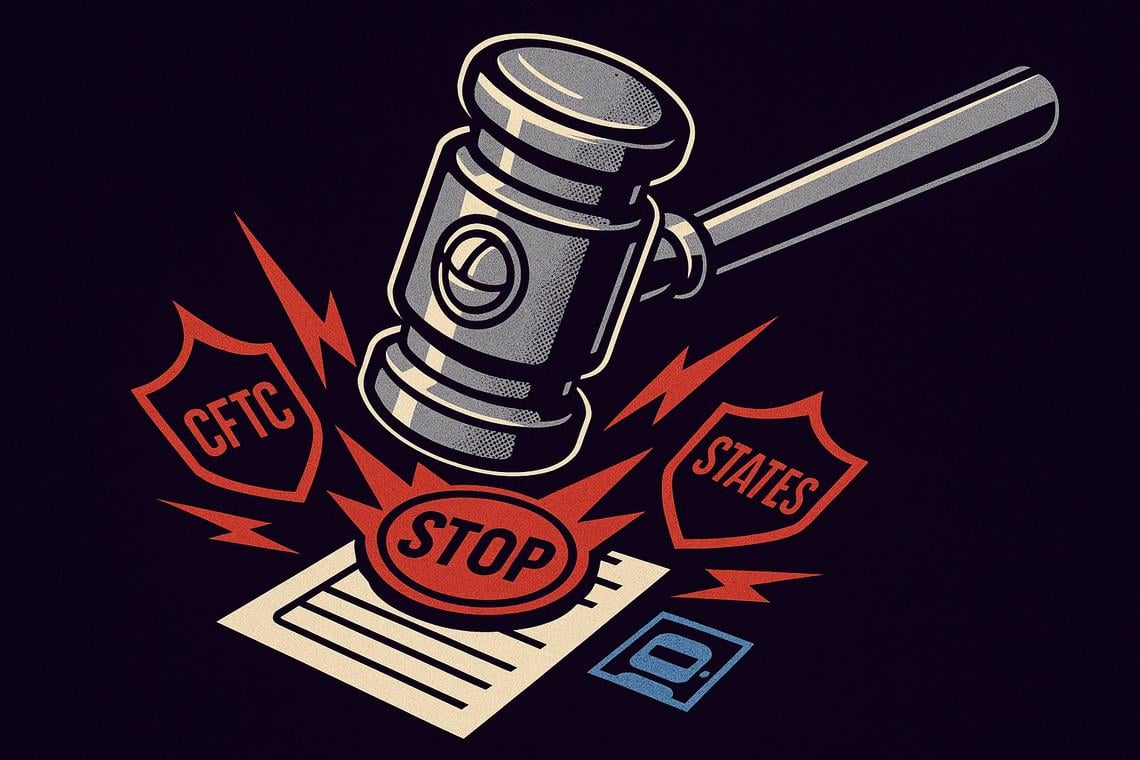
- Nearly a dozen US states have taken legal action against prediction market companies, while CFTC Chair Michael Selig insists federal regulators hold sole authority over these markets.
- The European Securities and Markets Authority has reminded firms that many event contracts may already fall under existing binary options restrictions.
Record Trading Volumes Fueled by the 2026 FIFA World Cup
The numbers from June are striking enough to reframe how seriously Wall Street and Washington need to take this industry. According to DefiLlama data, Kalshi’s notional trading volume exceeded $31 billion for the full month across all contracts, with the platform consistently clearing more than $1 billion in daily volume since the tournament kicked off on June 11. That’s not a spike — that’s a structural shift in participation.
Polymarket’s international exchange set its own record. Notional trading on Polymarket’s international platform surpassed $10.8 billion in June, reversing a downtrend that had persisted through April and May. Polymarket’s US platform also climbed, posting over $3.5 billion in notional volume, up from $1.77 billion in May.
A new entrant also made its debut during the surge. Rothera — a joint venture between Susquehanna International Group and Robinhood that launched in June — recorded more than $2 billion in notional trading volume in its first full month. Robinhood began routing certain World Cup contracts through the platform at launch. According to Bank of America, Rothera now accounts for roughly 7% of US prediction market volume.
Why the 48-Team Expansion Changed the Math
Previous World Cups featured 32 teams. The jump to 48 doesn’t just mean more matches — it means more markets, more bets, more time on platform, and more opportunities for traders to take positions. The tournament’s group stage alone generated a dramatically larger volume of event contracts than prior editions, and the knockout rounds are where things get intense.
Canada’s Round of 16 match against Morocco drew over $48 million in trading on Kalshi and more than $26.8 million on Polymarket. The US Round of 16 clash generated over $2.1 million on Kalshi and around $1.6 million on Polymarket. Meanwhile, more than $64 million on Kalshi and $122 million on Polymarket had been traded on whether the US would win the entire tournament — even as odds sat at just 4.3% and 3% on each platform, respectively.
The platforms leaned in aggressively. Polymarket launched a competition offering up to $2 million to whoever builds a perfect knockout bracket. Kalshi promoted “Trade the World Cup” prominently in its App Store listing. Open interest — the total number of live, unsettled contracts — tells a similar story: Kalshi’s open interest crossed $1 billion, while Polymarket’s international platform sits just under $400 million.
A Pressure Test That Markets Passed — For Now
Asaf Meir, CEO of Solidus Labs, a market integrity firm with a partnership with Kalshi, framed the moment clearly: outside observers are asking whether prediction markets are “safe enough,” “mature enough,” and whether they have “enough volume.” The World Cup, Meir said, is “such a huge pressure test to see whether indeed prediction markets are able to deliver their word on maintaining a level playing field for all investors for a long period of time in a sustained high-volume environment.”
The fact that platforms handled the surge without major visible disruptions matters more than the raw numbers. Institutional investors and regulators watching from the sidelines are gauging operational reliability, not just enthusiasm.
Escalating Legal Battles Over US Prediction Markets
Record volumes are arriving at the worst possible regulatory moment. By March 2026, nearly a dozen US states had already moved against prediction market companies including Kalshi and Polymarket, with some seeking to halt operations and others pushing to bring them under existing gambling laws and state tax frameworks.
Federal CFTC’s Assertion of Exclusive Authority
The federal response has been unambiguous — and combative. CFTC Chair Michael Selig accused states of pursuing “illegal enforcement actions” against federally regulated exchanges, arguing that Congress granted the agency sole authority over commodity derivatives markets, which includes prediction markets. “To any state that seeks to nullify federal law and seize authority over these markets,” Selig said, “we will see you in court.”
That’s not a diplomatic statement — it’s a declaration of jurisdictional war. The CFTC’s posture signals that federal regulators are not willing to cede ground, even as state attorneys general and gaming commissions argue that sports-related event contracts look more like gambling products than commodity derivatives. The legal conflict is heading toward federal courts, and its outcome will likely define what US prediction markets can and cannot offer for years.
Lobbying Efforts to Amend the Digital Asset Market CLARITY Act
The political dimension is equally volatile. Casino operators, tribal organizations, and labor groups have urged Congress to strip sports-event contracts from the CFTC’s authority altogether through an amendment to the Digital Asset Market CLARITY Act. Their argument: these contracts belong under state gambling laws and existing gaming oversight, not federal commodities regulation.
That coalition is not a fringe group. Tribal gaming operations hold significant political weight in several states, and commercial casino operators have the lobbying resources to sustain a prolonged campaign. If the amendment gains traction, it could fundamentally alter the competitive terrain for platforms like Kalshi and Polymarket that have built their US sports contract business under CFTC oversight.
European Regulatory Perspective on Event Contracts
Across the Atlantic, regulators are taking a different route — but the message is still cautionary. The European Securities and Markets Authority (ESMA) reminded firms that many event contracts may already fall under existing restrictions on binary options. Crucially, ESMA’s position is that whether a product is regulated depends on its actual characteristics, not on the “event contract” label a platform attaches to it.
That distinction matters. European platforms cannot simply rebrand a binary-outcome contract as an “event contract” to sidestep binary options rules. The regulatory burden shifts to product structure rather than product naming — a more technically demanding standard that could complicate how prediction market operators design and market their offerings in EU jurisdictions.
The contrast between US and European approaches reflects a broader divergence. In the US, the fight is over which regulator gets to oversee these markets at all. In Europe, the question is whether existing financial product rules already capture them. Neither framework is prediction-market-friendly by default — but the European approach may offer more regulatory clarity, even if that clarity means more restrictions.
What the World Cup Boom Actually Reveals
The June surge is more than a sports story. It demonstrates that FIFA World Cup prediction markets can drive sustained, high-volume trading — not just one-off spikes — and that platforms can scale to meet that demand. That’s the operational proof of concept the industry needed.
But the record volumes are also arriving at a moment when the industry’s legal foundation in the US remains genuinely unsettled. Every billion dollars in new trading volume is also a billion dollars of exposure to regulatory outcomes that could reshape the market overnight. The CFTC-vs-states battle, the CLARITY Act lobbying push, and ESMA’s binary options reminder are all moving simultaneously — and none of them are resolved.
The World Cup ends. The regulation doesn’t.
FAQ
What caused the recent spike in prediction market trading volumes?
The 2026 FIFA World Cup, expanded to 48 teams for the first time, drove a sharp increase in trading on prediction market platforms during June 2026. Kalshi recorded nearly $9.4 billion in trading volume and Polymarket’s international platform set a new monthly record, with the tournament identified as the primary catalyst behind both platforms’ growth.
How are US regulators responding to the growth of prediction markets?
Nearly a dozen US states took legal action against companies including Kalshi and Polymarket by March 2026. However, CFTC Chair Michael Selig has rejected those efforts, arguing that federal regulators hold sole authority over prediction markets and accusing states of pursuing “illegal enforcement actions” against federally regulated exchanges.
What efforts exist to change the regulatory framework for sports-event contracts in the US?
Casino operators, tribal organizations, and labor groups have lobbied Congress to amend the Digital Asset Market CLARITY Act in a way that would remove sports-event contracts from CFTC jurisdiction and bring them under state gambling laws instead. The effort reflects broader industry resistance to federal commodities oversight of sports-related markets.
How does European regulation differ regarding prediction markets and event contracts?
The European Securities and Markets Authority has taken a product-characteristics approach, noting that many event contracts may already be subject to existing binary options restrictions. Under ESMA’s framework, what matters is how a product is structured, not what label a platform uses — meaning the “event contract” designation does not automatically exempt a product from existing financial regulations.
Article produced with the assistance of artificial intelligence and reviewed by the editorial team.








 English (US) ·