
 2 months ago
42
2 months ago
42
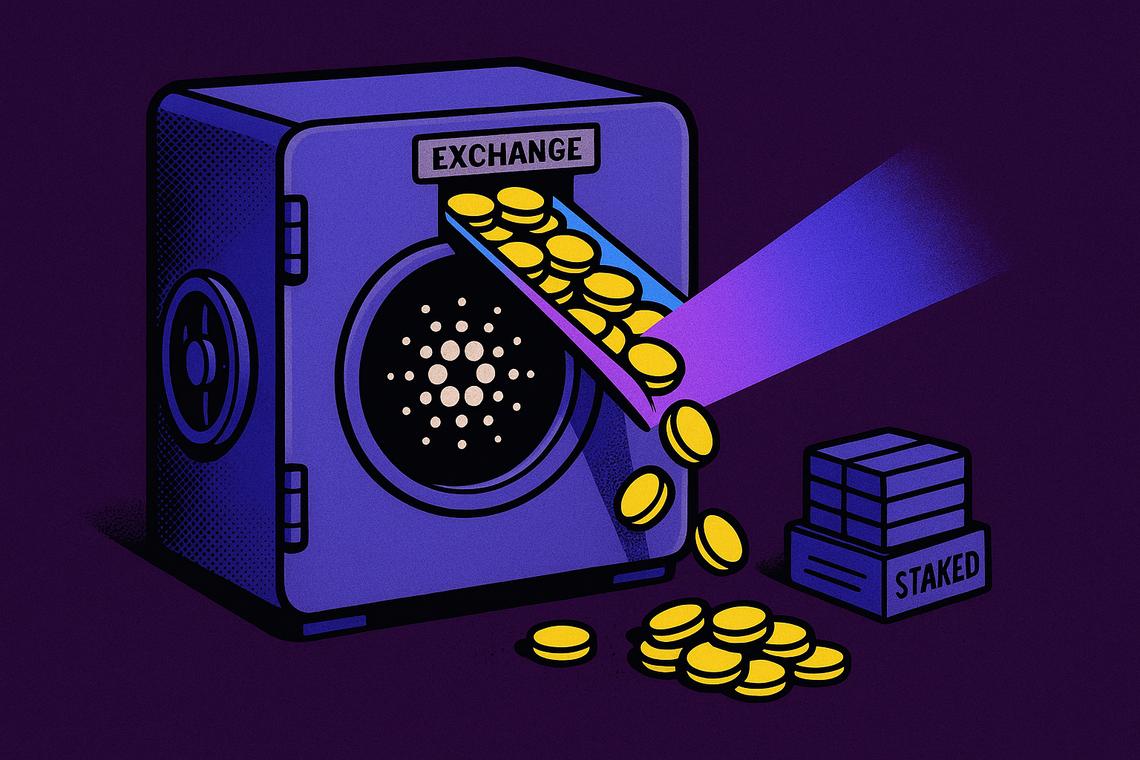
Talk of a Cardano ADA supply shock is back, not because the price is surging, but because the market has gone quiet enough for bigger holders to tighten their grip while everyone else looks away.
That contrast stands out right now. ADA has spent months drifting sideways even as much of the broader crypto market recovered, and at around $0.25 it remains nearly 89% below its all-time high. For smaller traders, that can feel like dead money. For whales, analysts say, it may look more like an opportunity.
Fresh on-chain analysis is now fueling the idea that Cardano’s calm could be hiding a more important shift underneath: less liquid ADA available to trade, more coins concentrated in large wallets, and a huge share of supply already sitting in staking.
Why analysts think a Cardano ADA supply shock may be building
The core of the Cardano ADA supply shock thesis comes from wallet concentration.
Santiment data shows that wallets holding at least one million ADA control roughly 25.09 billion tokens. That amounts to about 67.47% of the circulating supply, which is a striking share for a network that has spent much of this cycle out of the spotlight.
A Cheeky Crypto Unfiltered analyst said that whale concentration is the highest seen on Cardano since 2020. The same analyst described the current setup as a kind of “psychological accumulation trap,” with weak price action wearing down retail interest while larger players continue building positions.
Why this matters is simple. When a huge portion of supply sits with large holders, fewer coins may be actively circulating in the market. That does not guarantee a move, however, it can change how price responds if demand later picks up.
ADA whale accumulation is quietly reducing liquid supply
The supply picture looks tighter when recent accumulation and exchange outflows are added in.
Whale wallets reportedly absorbed another 454.7 million ADA between late 2025 and early 2026. On top of that, nearly 67.9 million ADA was reportedly withdrawn from Coinbase into private wallets, a shift that points to coins leaving exchange liquidity behind.
That matters because exchange balances often shape how easily traders can buy or sell size without moving the market. When coins move into private wallets, they are often less available for immediate trading.
In practice, analysts watching ADA whale accumulation are focused on two signals at once:
- more tokens ending up in large wallets
- fewer tokens apparently sitting on exchanges
Together, those trends help explain why some market watchers keep returning to the Cardano ADA supply shock narrative even while the chart itself looks uneventful.
Cardano staking and ADA ETF speculation add to the squeeze
Another major part of the setup is Cardano staking.
About 58% of circulating ADA, roughly 21 billion tokens, is actively staked across pools. That is a substantial portion of supply already committed to network participation rather than daily trading activity.
According to the article, Cardano allows users to stake without lockup periods or slashing risks, which helps make staking more attractive for long-term holders. In effect, that can encourage investors to keep ADA parked and earning rather than moving it back onto exchanges.
This is one of the clearest reasons the supply story matters. If whales are accumulating while a large share of circulating supply is also staked, the pool of truly liquid ADA can become much smaller than the headline circulating supply suggests.
At the same time, ADA ETF speculation is building after CME Cardano futures launched. Firms including VanEck, Bitwise Asset Management, 21Shares, and Grayscale Investments have been linked to ADA-related products, keeping institutional-access questions in the background even as spot demand remains muted.
Why the Cardano ADA supply shock debate is getting attention now
Right now, the market is defined more by boredom than excitement. ADA is still trading far below its peak, and that has left plenty of investors unconvinced.
But quiet markets can hide structural changes.
If large holders continue absorbing supply, if exchange outflows persist, and if Cardano staking remains high, then the market could be setting up for a tighter tradable float than price action alone suggests. That is the strategic case behind the current Cardano ADA supply shock debate.
The key point is not that a breakout is guaranteed. It is that the ingredients analysts are watching all point in the same direction: concentrated ownership, reduced liquid supply, and a token that remains deeply discounted from its all-time high.
That combination helps explain why Cardano is drawing fresh attention again. For now, the chart looks sleepy. Underneath, the supply story looks much more active.





 English (US) ·