
 2 months ago
60
2 months ago
60
- Cathie Wood clarified Binance did not directly trigger the October 2025 crypto crash
- The original comments blamed a Binance software glitch for $28 billion in liquidations
- CZ reacted quickly online, fueling even more speculation across the crypto community
Cathie Wood is now partially walking back one of the most controversial crypto claims she made earlier this year, and Binance founder Changpeng “CZ” Zhao noticed almost immediately. Back in January, Wood said during a Fox Business appearance that a Binance software glitch helped trigger the massive October 10, 2025 crypto flash crash that caused roughly $28 billion in forced liquidations across the market.

That event became the largest single-day deleveraging collapse in crypto history, so placing even partial blame on Binance carried serious weight. Especially coming from someone whose investment firm remains deeply tied to Bitcoin and broader crypto adoption narratives.
The Original Comments Spread Fast
Wood’s remarks quickly circulated throughout the crypto industry and triggered heavy debate around what actually caused the October crash. She described the event as something that created lasting damage across the market for months afterward, slowing momentum well into early 2026.
Other industry figures piled on almost immediately. OKX CEO Star Xu publicly argued the effects of the crash had been underestimated and accused a major unnamed company of prioritizing profits over broader market stability while controlling the narrative through influencers and media pressure.
Nobody explicitly needed to say Binance’s name at that point. The implication already felt obvious to most of the market watching the discussion unfold online.
Meanwhile, Binance strongly denied responsibility and argued the crash was driven by broader macroeconomic pressures, including Donald Trump’s Truth Social tariff comments, leveraged positioning, market-maker reactions, and Ethereum network congestion during peak volatility.
What Cathie Wood Is Saying Now
Wood has since clarified her position, drawing an important distinction between Binance experiencing technical issues and Binance actually causing the market collapse itself. According to the updated explanation, a software glitch may have occurred during the event, but it was not the direct trigger behind the broader systemic liquidation cascade.
That clarification matters a lot because the original framing placed enormous reputational pressure on Binance during an already fragile market environment. Walking that back now doesn’t fully erase the earlier narrative, but it does shift the conversation significantly.
And honestly, the revised version aligns more closely with what many analysts concluded shortly after the crash happened. The initial trigger appeared tied more directly to macroeconomic panic after Trump threatened 100% tariffs on Chinese imports, which rapidly destabilized leveraged crypto markets already stretched thin.
Within hours, more than $19 billion in leveraged positions were reportedly liquidated as panic spread across exchanges. Binance may have suffered operational strain during the chaos, but proving it directly caused the collapse is an entirely different claim.
CZ’s Social Media Moves Added Fuel
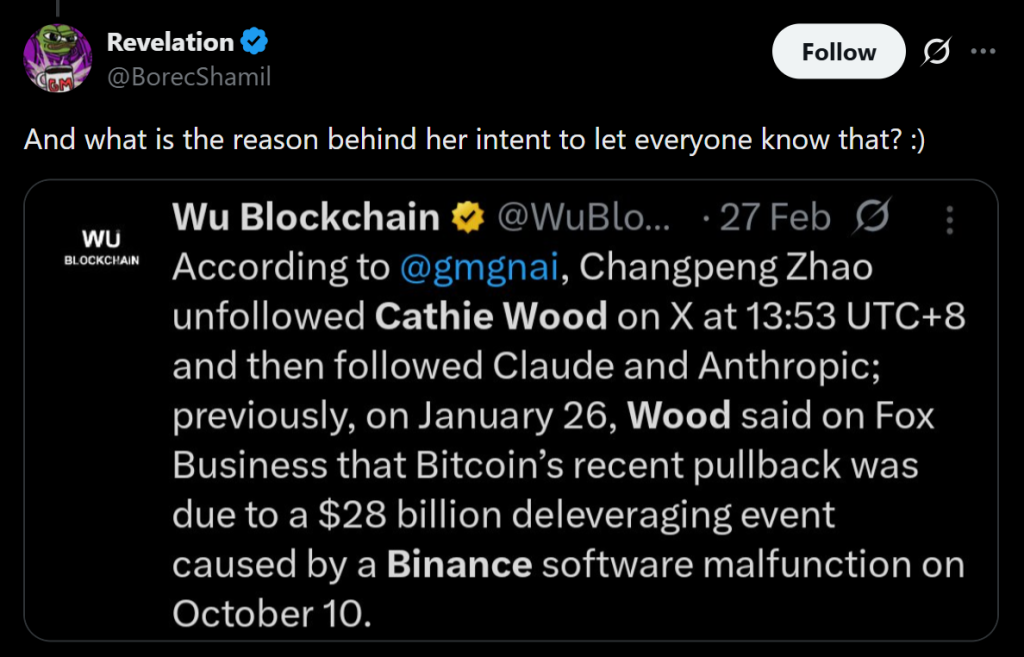
Of course, crypto wouldn’t be crypto without a little extra online drama layered on top. Shortly after Wood’s original comments circulated publicly, CZ reportedly unfollowed her on X. Then, almost immediately afterward, he followed Claude and AI company Anthropic instead.
That sequence became its own weird subplot online, with users endlessly speculating about whether the move was intentional, symbolic, passive-aggressive, or honestly just random. Crypto Twitter can turn almost anything into a conspiracy thread if given enough time.
Some viewed it as CZ quietly distancing himself from public crypto feuds altogether. Others joked he simply trusted AI more than market commentators now. Either way, people definitely noticed.
Crypto Still Lacks Real Post-Mortems
One thing the entire situation highlighted again is how little formal transparency exists after major crypto market breakdowns. In traditional finance, systemic crashes usually trigger lengthy investigations, public hearings, and detailed institutional post-mortems explaining exactly what happened and why.
Crypto rarely gets that level of structured accountability. Instead, narratives form quickly online, competing theories spread across social media, and responsibility often stays blurry long after billions disappear in liquidations.
Until regulators or independent investigators conduct a full breakdown of the October 10 collapse, much of the blame game will probably remain unresolved. And honestly, that uncertainty may be part of why the industry still struggles with trust during periods of extreme volatility.
Disclaimer: BlockNews provides independent reporting on crypto, blockchain, and digital finance. All content is for informational purposes only and does not constitute financial advice. Readers should do their own research before making investment decisions. Some articles may use AI tools to assist in drafting, but every piece is reviewed and edited by our editorial team of experienced crypto writers and analysts before publication.








 English (US) ·