
 3 months ago
49
3 months ago
49
- Chainlink CCIP enables secure cross-chain transfers using decentralized oracle networks
- Dual-layer decentralization improves security across observation and verification
- Built-in risk controls and compliance tools support institutional-grade usage
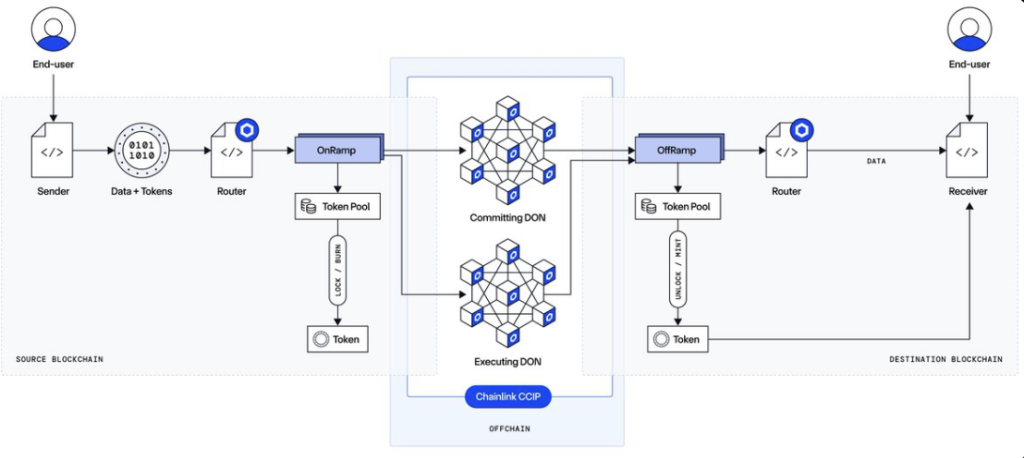
Chainlink’s Cross-Chain Interoperability Protocol, or CCIP, is starting to stand out in a space that’s honestly still figuring itself out. At its core, the protocol is designed to move both data and value across different blockchains, which sounds simple, but isn’t really. It relies on a decentralized oracle network made up of 16 independent node operators, all working together to validate cross-chain activity, not just one entity calling the shots.
Each of these operators goes through security checks before joining, which adds another layer of trust to the system. The idea is straightforward, spread responsibility across multiple parties so no single point can break everything. It’s not flashy, but it’s the kind of structure that matters when real value is moving across chains.

A System Built on True Decentralization
What makes CCIP a bit different is how it handles its architecture. It splits the process into two parts, observation and verification. Observation figures out what actually happened on the source chain, while verification checks whether that event should trigger something on the destination chain. Both layers are decentralized, which, interestingly, isn’t always the case with other bridges.
Some systems claim decentralization but rely heavily on a centralized observation layer underneath, which kind of defeats the purpose. CCIP avoids that by distributing both functions across independent operators. It’s a more balanced setup, and probably a more secure one, even if it’s less talked about.
There’s also a focus on infrastructure diversity. Node operators don’t all run the same setup, some use on-premise hardware, others rely on cloud systems across different regions. That mix actually proved useful during the AWS outage back in October 2025, when CCIP kept running while some other cross-chain systems struggled.
Built-In Controls Add Another Layer of Security
Beyond decentralization, CCIP includes a set of controls that give asset issuers more say over how things operate. For example, rate limits can be set to control how much value moves at a given time, which helps prevent unexpected spikes or misuse. Then there are circuit breakers, which can pause activity if something goes wrong, stopping issues before they spread too far.
Token issuers also keep full ownership of their contracts through the Cross-Chain Token standard. That’s a subtle but important detail, because it removes dependency on specific CCIP tools or libraries. In other words, they’re not locked in, they stay in control.
More Transparency Through Verification and Compliance
Another interesting piece is developer attestation. Issuers can actively confirm events like token burns or locks before anything is minted or released on another chain. It’s an extra checkpoint, one that adds more confidence to the process, especially for larger transactions.
On top of that, CCIP includes built-in compliance tools. These allow protocols to add permission checks and policy rules before transactions even go through. So instead of reacting after something happens, the system tries to prevent issues upfront.
A Structured Approach to Cross-Chain Security
All of this comes together into something that feels… structured. Not overly complicated, but clearly designed with risk in mind. In a space where cross-chain bridges have had their share of problems, CCIP is trying to approach things a bit differently, focusing on layered security rather than quick solutions.
It’s still evolving, like most things in crypto, but the direction is clear. More control, more transparency, and fewer single points of failure. Whether that’s enough long-term, well, that’s something the market will decide.
Disclaimer: BlockNews provides independent reporting on crypto, blockchain, and digital finance. All content is for informational purposes only and does not constitute financial advice. Readers should do their own research before making investment decisions. Some articles may use AI tools to assist in drafting, but every piece is reviewed and edited by our editorial team of experienced crypto writers and analysts before publication.







 English (US) ·