
 1 month ago
84
1 month ago
84
China just posted its weakest month for crude oil imports since April 2026. April volumes dropped 20% compared to last year, landing at 38.5 million metric tons. That’s the lowest figure since July 2022.
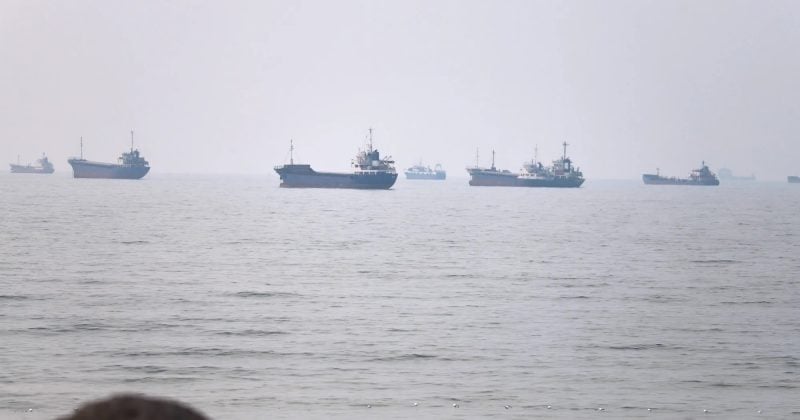
The culprit is geography and war. The Strait of Hormuz has been effectively choked off since early March 2026 following the military escalation involving Iran, the US, and Israel that began in late February. For China, which had been importing 1.0 to 1.4 million barrels per day of discounted Iranian crude, that’s roughly 12-13% of total crude imports vanishing from the supply chain.
What losing Iran means for Chinese refiners
China’s independent “teapot” refineries, scattered across Shandong province and beyond, built their entire business model around discounted Iranian supply. Without access to those barrels, their already-thin margins are getting squeezed further.
China has pivoted toward Russian crude to fill part of the gap, but overall imports have contracted by an estimated 3.6 million barrels per day in the months following the Strait of Hormuz closure. Beijing does have a buffer: China’s strategic petroleum reserves can sustain roughly 120 days of net imports, with additional floating storage of Iranian-origin crude providing further supply. But reserves buy time. They don’t solve the underlying supply problem.
The global oil price problem
Brent crude briefly spiked above $120 per barrel as the Hormuz disruption took hold. The strait handles roughly a fifth of global oil consumption on a normal day.
Iran’s position is equally precarious. China was buying 80-90% of Iran’s total oil exports. Iran has long used Bitcoin mining as a workaround for being cut off from the traditional banking system, with historical estimates suggesting the country accounted for 4-4.5% of global Bitcoin mining, converting subsidized electricity into a sanctions-resistant revenue stream.
What this means for investors
Companies that process or trade Iranian crude, particularly those linked to China’s teapot refinery network, are staring at margin compression. The shift toward Russian supply introduces its own geopolitical risk premium, given ongoing Western sanctions on Russian energy.
At 4-4.5% of global hashrate, Iran is a meaningful but not dominant player in Bitcoin mining. Any further disruption to Iran’s energy infrastructure could reduce its mining capacity, marginally affecting global hashrate distribution.
For traders watching energy-crypto correlations, the key variable is whether China begins drawing down strategic reserves aggressively. That decision would signal Beijing’s assessment of how long the Hormuz disruption will last.
Disclosure: This article was edited by Editorial Team. For more information on how we create and review content, see our Editorial Policy.






 English (US) ·