
 5 months ago
60
5 months ago
60
Circle CEO Jeremy Allaire pushed back on concerns that USDC could be used for Iran’s crypto transit tolls at the Strait of Hormuz.
Allaire made the remarks at a press conference in Seoul on the afternoon of April 13, where BeInCrypto East Asia Editor-In-Chief, Oihyun Kim, was present. Allaire is visiting South Korea this week to meet exchanges, banks, and regulators.
Hormuz Tolls: ‘Highly Unlikely’ for USDC
A reporter asked whether Iran’s Revolutionary Guards might accept USDC for Hormuz passage fees. Allaire dismissed the idea.
“Circle operates a highly compliant infrastructure,” he said.
He noted that the company works closely with law enforcement and sanctions authorities.
Allaire pointed to public research from the United Nations and forensic firms. That data shows sanctioned actors tend to favor other stablecoins over USDC. He did not name specific tokens.
“It’s highly unlikely that a regime under sanctions would attempt something where the likelihood of the assets being immediately frozen is extremely high,” he said.
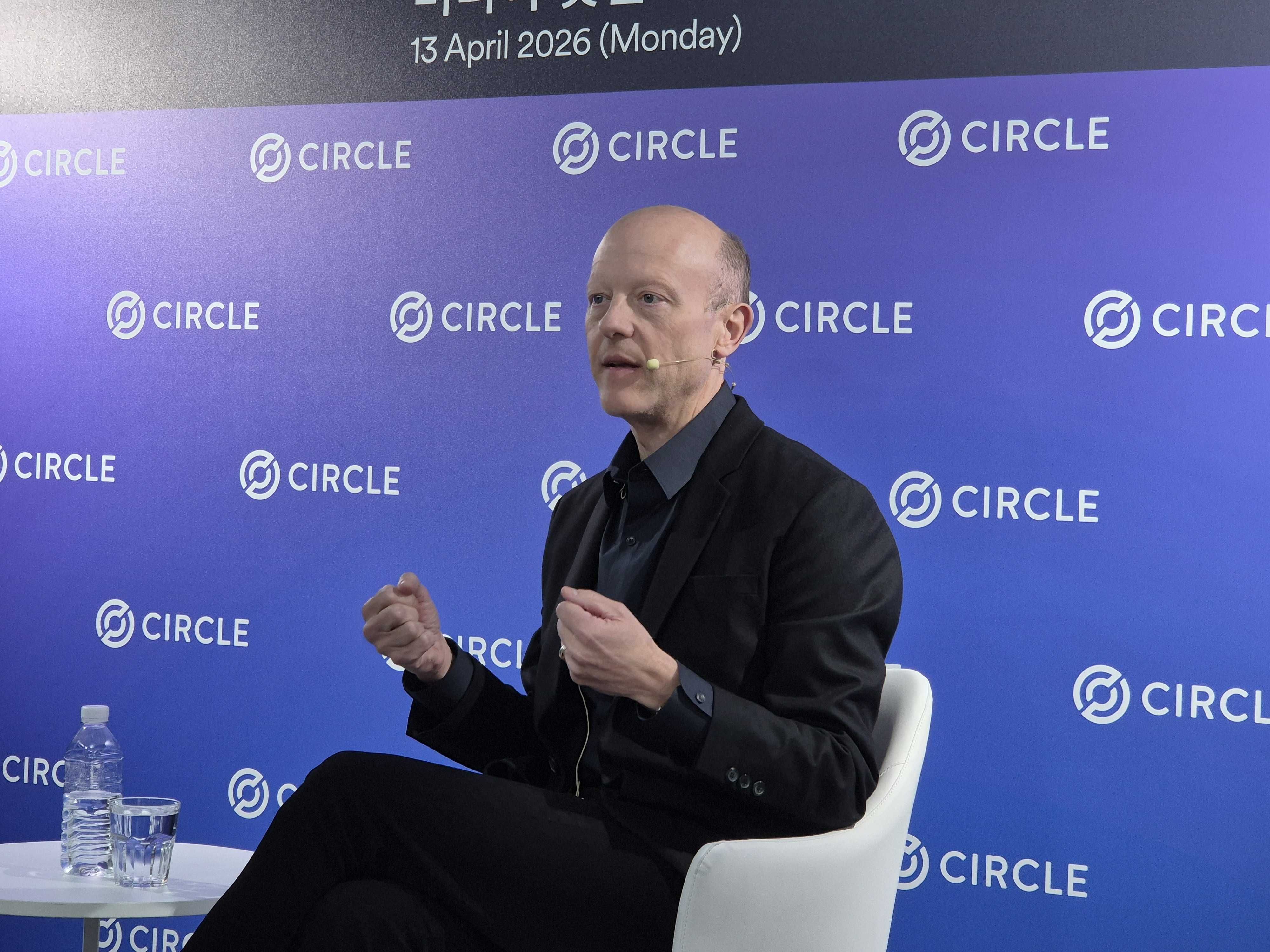 Circle CEO Jeremy Allaire at a Press Conference in Seoul. Source: BeInCrypto
Drift Hack: Circle Defends Freeze Delay
The $285 million Drift Protocol exploit on April 1 drew sharp criticism of Circle. Attackers bridged over $230 million in stolen USDC from Solana to Ethereum over six hours. Circle took no action to freeze the funds during that window.
Allaire said the company follows strict legal obligations. Circle can only freeze wallets at the direction of law enforcement or courts.
“We do not as a company decide what is the right path,” he said. He warned that letting a private firm make those calls creates a “very significant moral quandary.”
He acknowledged the gap in the current framework. Circle is pushing for the CLARITY Act to include “safe harbors” that would let issuers freeze funds preemptively under extreme circumstances.
“We need that to be in the law, not just what we decide on our own,” he said.
Clarity Act: Yield Ban Won’t Hurt Circle
Allaire also addressed the CLARITY Act’s proposed ban on passive stablecoin yield. The bill would bar platforms from paying interest simply for holding stablecoins.
He said the change does not affect Circle directly. The GENIUS Act already forbids stablecoin issuers from paying interest to holders.
The real impact falls on distributors like exchanges and wallets. They can still offer activity-based rewards, but cannot market stablecoin holdings as bank deposit substitutes.
Allaire called the yield debate “overblown.” He noted that the vast majority of stablecoin holders worldwide receive no rewards at all. About half of the $120 trillion global M2 money supply sits in physical cash or non-interest-bearing accounts.
Korea Visit: Exchanges, Banks, and Regulation
Allaire spent several days in Seoul meeting major exchanges, financial groups, and regulators. Upbit operator Dunamu and Bithumb both signed MOUs with Circle on the same day. He also met executives from Shinhan, Hana, and KB Financial.
He said Circle does not plan to issue a Korean won stablecoin itself.
Korean law will likely require domestic bank-led consortiums for that role. Circle would instead offer its technology stack to local issuers.
The post Circle CEO Says Crypto Tolls at Hormuz Strait Unlikely To Use USDC appeared first on BeInCrypto.




 English (US) ·