
 1 month ago
76
1 month ago
76
TLDR:
- The Clarity Act faces a Senate delay as Democrats demand stronger ethics restrictions covering presidential crypto profits and enforcement.
- Republicans need at least seven Democratic votes, making bipartisan support essential before the digital asset bill can reach the president.
- Critics say the draft may let Trump retain indirect crypto interests while his children continue operating separate digital asset ventures.
- Stablecoin reward rules, bank deposit risks, campaign spending, and weaker prediction market odds add pressure to the ethics dispute.
The Clarity Act faces a new Senate roadblock as Donald Trump’s family crypto interests intensify an ethics dispute. Bloomberg reports that Democrats want stronger limits before supporting the digital asset bill. They argue the current proposal may let Trump and his relatives keep earning from memecoins and World Liberty Financial.
Republicans need at least seven Democratic votes to move the legislation through the Senate. Negotiators now view ethics rules as the central issue, alongside consumer safeguards and illicit finance controls. The dispute has reduced expectations for passage before the August recess and weakened market confidence in a deal this year.
Clarity Act Ethics Dispute Tests Bipartisan Senate Support
Senate Republicans released revised language this week to revive negotiations after months of delay. Democrats and watchdog groups rejected the offer, saying its ethics protections leave gaps. Their concern centers on whether the Clarity Act would restrict presidential profits from regulated crypto markets.
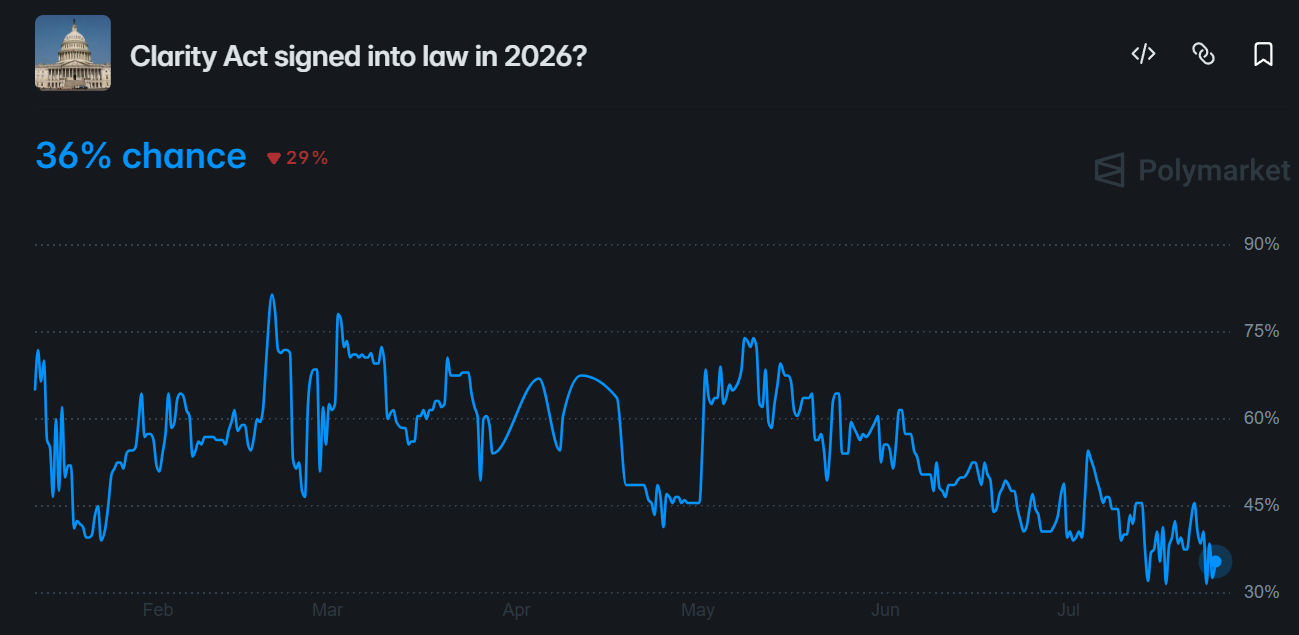 Clarity Act Passage Odds: Polymarket
The proposal would allow Trump to divest his stake or place assets in a blind trust. It does not require a full sale. Critics question language covering officials with a direct interest in digital assets. Trump holds exposure to World Liberty Financial through DT Marks DEFI LLC, which owns about 38% of the venture. That structure could complicate enforcement under the proposed standard.
The draft excludes the children of government officials. Donald Trump Jr. and Eric Trump could therefore continue their crypto business activities. The measure would not recover income already generated from token and memecoin ventures. Watchdogs argue those limits weaken the bill’s ability to address existing conflicts.
Democrats oppose giving the Justice Department primary authority over the new ethics rules. The framework would block state attorneys general from acting as an independent enforcement channel. Senator Angela Alsobrooks has described ethics as the decisive issue in negotiations. Senators Ruben Gallego and Thom Tillis are developing a possible compromise for the White House.
Timing now adds pressure. Senate Majority Leader John Thune does not expect the Clarity Act to pass before the August recess. Negotiators still need agreement on consumer protection and illicit finance measures. Without changes, Democrats may withhold the votes Republicans need for swift passage.
Trump Crypto Business Deepens Wider Regulatory Divisions
Ethics is not the only obstacle facing the Clarity Act. Banks want tighter limits on stablecoin rewards, fearing deposits could move into yield-bearing crypto accounts. That shift could reduce lending capacity and pressure banking profits. Tillis has discussed circuit-breaker powers for the Federal Deposit Insurance Corporation or other regulators if deposits fall sharply.
Senator Cynthia Lummis opposes that approach. She is one of the digital asset bill’s strongest Republican supporters. The disagreement shows how the Trump crypto business controversy intersects with fights over market structure and banking competition.
Critics have challenged a provision ending the ethics rules on January 20, 2029. That date matches the inauguration of Trump’s successor. Opponents say the sunset could limit accountability after his term. Republicans argue the proposal creates restrictions beyond those accepted by previous presidents.
Political pressure may shape negotiations. Fairshake and two affiliated super PACs have raised $164 million for the midterm elections. Federal filings show they have spent $66.6 million. Crypto-friendly Democrats risk industry opposition if talks collapse, while progressives could attack any compromise.
Senator Chris Murphy has urged Democrats to frame crypto corruption as a campaign issue. Other Democrats worry that rejecting the Clarity Act could direct industry spending against Senate candidates.
Prediction markets reflect the uncertainty. Polymarket traders placed the Clarity Act’s passage odds near one in three. That level is roughly half the probability recorded after a Senate committee backed an earlier version on May 14. The Trump crypto business dispute now sits at the center of falling expectations.
The post Clarity Act Faces Senate Resistance Over Trump Crypto Profits appeared first on Blockonomi.




 English (US) ·