
 3 weeks ago
45
3 weeks ago
45
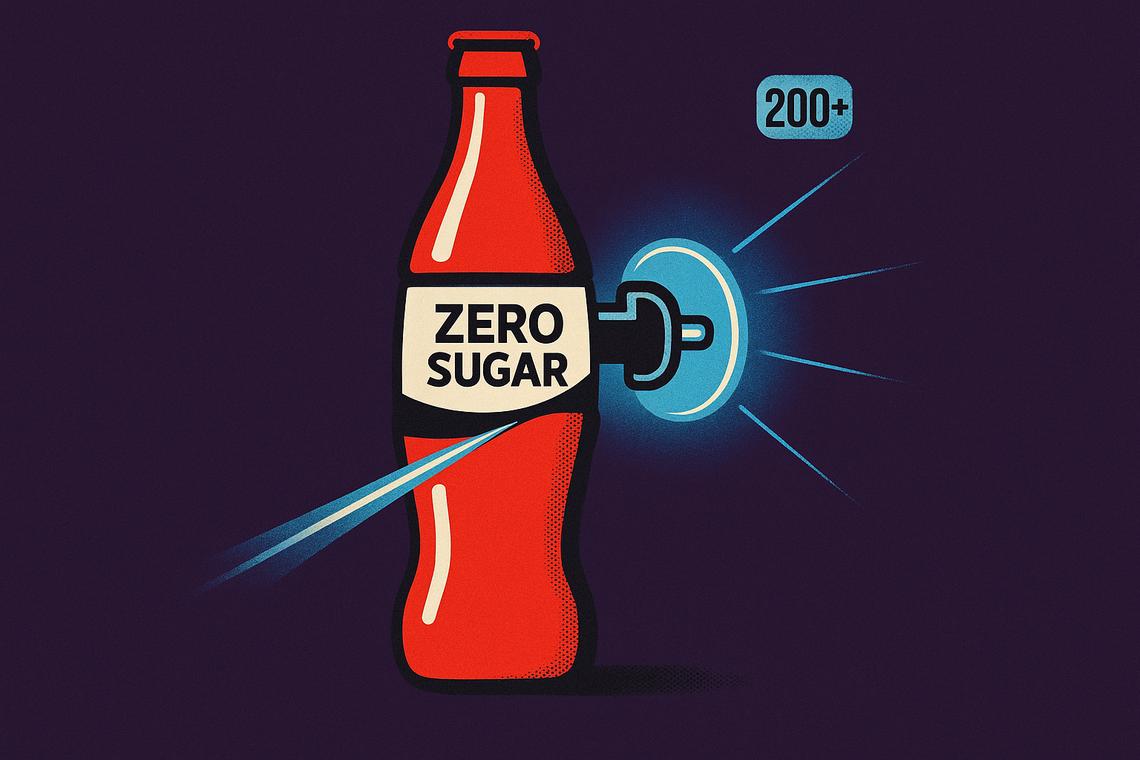
Coca-Cola didn’t redesign itself. It doubled down on what it already was — and it used artificial intelligence to do it. On July 20, 2026, the beverage giant unveiled a sweeping Coca-Cola AI rebrand built around machine-assisted design tools, leaning into its most recognized visual assets rather than walking away from them. The market noticed: shares of KO closed at $82.12, up 0.69% on the day.
Key takeaways
- Coca-Cola launched a new AI-driven global brand identity on July 20, 2026, covering more than 200 markets.
- The rebrand amplifies existing assets — the red and white palette, the Dynamic Ribbon, and the Spencerian script — rather than replacing them.
- Zero Sugar packaging gets a sharper visual identity: larger “Zero Sugar” text, a black Dynamic Ribbon on cans, and a black bottle cap on PET bottles.
- KO stock rose 0.69% to close at $82.12 following the announcement.
- The rollout begins in Europe, the Middle East, and India, with Latin America and Asia to follow through 2027.
Making Coca-Cola More Coca-Cola
The company’s stated ambition was deliberately circular: make Coca-Cola more Coca-Cola. That framing says a lot about the strategic logic here. Rather than chasing a fresh visual direction, the rebrand increases the visual weight of assets consumers have recognized for decades — the red and white palette, the Spencerian script, the Dynamic Ribbon, and the Arden Square symbol. These elements now appear with greater prominence across packaging, retail displays, and digital platforms.
It’s a move that bets on familiarity as a competitive advantage. In a fragmented media environment where attention is scarce, consistent brand recognition can function as a pricing signal — a shorthand for quality that lets a product command more shelf space and more margin.
Geographic Rollout Timeline
The rollout is already underway in parts of Europe, the Middle East, and India. Latin America and Asia are scheduled to follow through 2027, making this a multi-year implementation rather than a single global switch. The phased approach reflects the complexity of coordinating brand changes across retail, food service, and digital channels in different regulatory and cultural contexts.
AI Branding Tools and the Zero Sugar Push
Behind the visual refresh sits a new brand center paired with AI-powered design tools that serve both internal teams and external agencies. The system’s core purpose is standardization — ensuring that creative output stays consistent across more than 200 markets without requiring a lengthy manual approval chain. Speed and coherence at scale are exactly the kind of operational problems AI tools are well-suited to solve.
That’s not a cosmetic upgrade. Brand consistency across 200-plus markets has historically required enormous human coordination. AI design tools compress that process, reduce variance, and free up resources that can be redirected elsewhere. It also means the visual identity can evolve faster if needed, without losing coherence.
Zero Sugar Packaging Refresh
The sharpest visual change lands on Coca-Cola Zero Sugar. The refresh adds larger “Zero Sugar” text, a black Dynamic Ribbon on cans, and a black bottle cap on PET bottles. The intent is to make the zero-sugar variant more immediately legible on shelf — easier to find, easier to choose.
Analysts read that as a deliberate push toward Coca-Cola’s higher-margin lineup. Demand has been shifting away from full-sugar sodas for years, and the zero-sugar category represents a strategic priority. Refreshing that packaging ahead of an earnings report signals that management wants investors to see the zero-sugar bet as an active, well-supported one — not a background trend.
Market Reaction and the Earnings Test Ahead
KO’s 0.69% gain to $82.12 on the day of the announcement was a measured but positive response. Investors appeared to interpret the rebrand as a coherent strategy rather than brand noise — particularly given its explicit connection to the higher-margin zero-sugar lineup heading into earnings season.
Earnings Season Context and Expectations
The wider market context is complicated. Wall Street sentiment is mixed across sectors, with Jim Cramer flagging caution ahead of results from Intel, Tesla, and Alphabet. JPMorgan CEO Jamie Dimon has expressed reservations about broad market exposure. Kioxia shares dropped despite bullish analyst coverage. SpaceX stock slid following a launch delay — a reminder that operational signals can move prices as forcefully as financial ones.
Against that backdrop, Coca-Cola’s rebrand offers investors something relatively rare during earnings season: a qualitative signal to evaluate before the numbers arrive. The earnings report due July 28 will be the real test. A rebrand alone doesn’t move sales figures. What it can do is reinforce pricing power, tighten brand recognition, and signal to the market that management is actively working the zero-sugar opportunity rather than waiting for the category to grow on its own.
Whether AI-assisted consistency translates into measurable financial performance is the question Wall Street will answer in eight days.
FAQ
What is the key focus of Coca-Cola’s new rebranding effort?
The rebrand emphasizes existing visual assets — the red and white palette, the Dynamic Ribbon, and the Spencerian script — while giving the Zero Sugar lineup a sharper, more prominent packaging identity designed to drive recognition and support premium pricing.
How does Coca-Cola use AI in its new brand identity?
AI-powered design tools standardize creative output across more than 200 markets and speed up internal approvals for both Coca-Cola’s in-house teams and its external agencies.
What was the market reaction to Coca-Cola’s rebrand announcement?
Coca-Cola’s stock rose 0.69% to close at $82.12 on July 20, 2026, following the rebrand announcement.
Why is the upcoming earnings report important for Coca-Cola’s rebrand?
The earnings report scheduled for July 28 will reveal whether the rebrand and the company’s focus on the higher-margin zero-sugar lineup are beginning to show up in actual financial performance.
Article produced with the assistance of artificial intelligence and reviewed by the editorial team.





 English (US) ·