
 5 months ago
83
5 months ago
83
Key Takeaways
- Larry Fink, BlackRock’s CEO, cautions that oil reaching $150 per barrel may precipitate a worldwide economic downturn
- According to the IEA, the conflict involving Iran has created the largest oil supply crisis in history
- Exxon Mobil’s top economist indicates recessions typically require several simultaneous economic pressures
- Rising unemployment remains the most reliable predictor of an imminent recession
- Crude prices fell approximately 4% following news of a potential US-Iran ceasefire agreement
Larry Fink, who leads BlackRock as CEO, has issued a stark warning that crude oil could surge to $150 per barrel, potentially triggering a worldwide economic recession if Iran maintains its threat to critical shipping lanes beyond the conclusion of current hostilities.
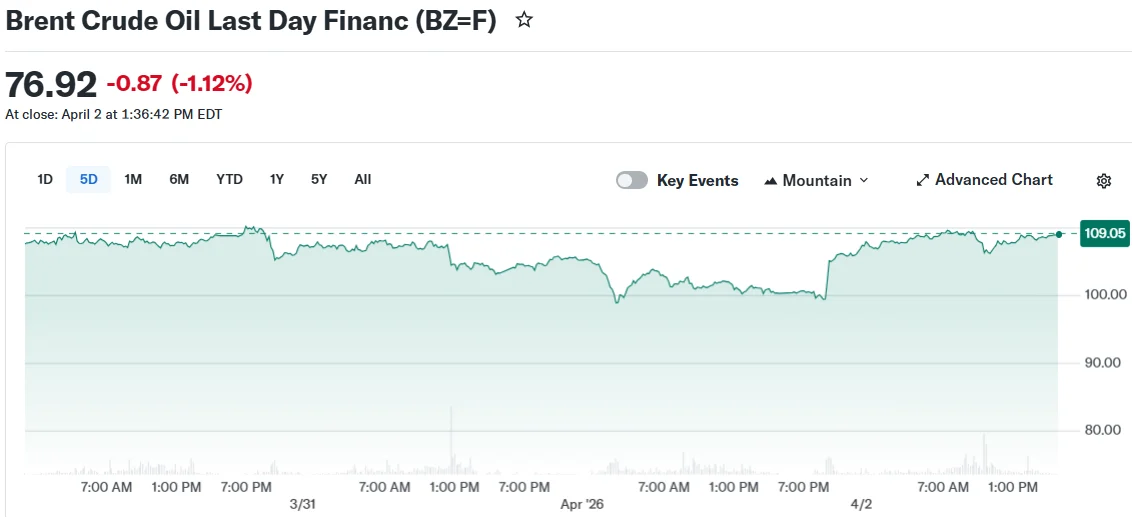 Brent Crude Oil Last Day Financ (BZ=F)
Fink shared these concerns during an appearance on the BBC’s Big Boss Interview podcast, released on March 25. He emphasized that sustained oil prices exceeding $100 per barrel over multiple years would inflict substantial damage on worldwide economic growth.
“We will have global recession,” Fink stated unequivocally when questioned about the economic impact of oil maintaining $150 per barrel levels.
The ongoing military operations involving the US and Israel against Iran have already created significant turbulence in energy markets. The confrontation has brought oil and liquefied natural gas shipments through the Strait of Hormuz to a near standstill—a critical passage that typically handles approximately 20% of global crude oil and gas transportation.
The International Energy Agency has designated this situation as the most severe oil supply disruption ever recorded.
Oil prices experienced a decline of roughly 4% on March 25 after news emerged that the United States had transmitted a 15-point ceasefire framework to Iran. This development provided markets with brief respite from escalating tensions.
Historical Perspective on Energy Price Disruptions
Tyler Goodspeed, serving as chief economist at Exxon Mobil and holding advanced degrees from Harvard and Cambridge in economic history, argues that isolated economic shocks seldom trigger recessions on their own.
He maintains that economic downturns generally demand multiple concurrent economic stresses. He references the energy crisis of the 1970s as an example where several adverse factors converged simultaneously.
Goodspeed asserts that the current global economy possesses stronger defenses compared to the 1970s era. Core OPEC member production represents a reduced portion of worldwide output. Producers outside OPEC possess greater capacity to increase production quickly. Additionally, strategic petroleum reserves now exist to serve as emergency cushions during short-term disruptions.
Nevertheless, he acknowledges that energy price volatility continues to rank among the most frequent catalysts for recessions throughout the past four hundred years.
Google search data reveals that queries for “recession odds” have surged 90% across the United States this year. Goodspeed observes that comparable search pattern increases occurred immediately preceding both the 2008 financial crisis and the 2020 pandemic recession.
The Most Reliable Recession Warning Signal
Goodspeed identifies the unemployment rate as the most transparent indicator of an approaching economic contraction. He advises monitoring for abrupt, steep increases in joblessness rather than gradual upward trends.
He clarifies that such patterns typically emerge from employers reducing hiring activity rather than conducting widespread terminations. Consequently, workers face extended periods of unemployment and encounter greater difficulty securing new positions.
He also highlighted China’s threatened export controls on 17 periodic table elements as an additional, meaningful risk factor. These proposed restrictions currently remain on hold until October 2026.
Goodspeed released his book examining this subject, titled Recession, on March 12, 2026.
The post Could Oil Hit $150? BlackRock CEO Warns of Global Recession Risk in 2026 appeared first on Blockonomi.




 English (US) ·