
 3 weeks ago
50
3 weeks ago
50
Key Takeaways
- Brent crude declined more than 1% to approximately $93 per barrel following a two-week rally
- U.S. Treasury Secretary Scott Bessent will announce unprecedented sanctions targeting Iran on Monday
- Tehran permitted select Iraqi oil tankers to navigate the Strait of Hormuz following diplomatic appeals from Baghdad
- Iran’s National Security Council threatened complete oil blockade through Hormuz if economic warfare persists
- Crude prices have surged over 50% in 2026 amid ongoing U.S.-Iran conflict disrupting worldwide energy flows
Crude oil markets experienced a downturn Monday as traders evaluated conflicting developments from the Strait of Hormuz while preparing for Washington’s latest sanctions offensive targeting Iran.
Brent crude futures decreased approximately 1.4% to reach $93.09 per barrel. West Texas Intermediate slipped 1.6% to settle at $85.65. The two international benchmarks had climbed more than 5% during the preceding fortnight.
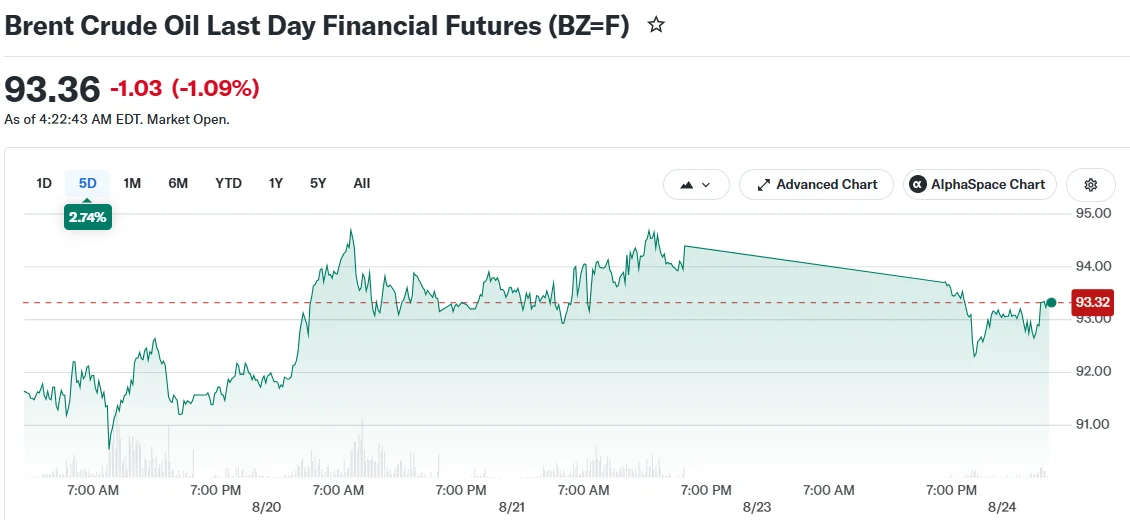 Brent Crude Oil Last Day Financial Futures (BZ=F)
The price retreat followed reports from Iranian state media indicating Tehran granted passage to several Iraqi oil tankers through Hormuz after receiving diplomatic overtures from Baghdad. This development temporarily alleviated immediate concerns about supply availability.
While the precise number of vessels and cargo volumes remained unverified, this partial corridor reopening proved sufficient to drive prices downward during morning trading sessions.
Treasury Chief Promises ‘Economic D-Day’ for Tehran
Treasury Secretary Scott Bessent declared an “economic D-Day” awaits Iran in a commentary published through the Financial Times. His department scheduled a briefing for 2:00 PM Eastern Time Monday to unveil comprehensive details.
Bessent’s piece cautioned that Iran’s “enablers” involved in purchasing and shipping its petroleum “would do well to consider the consequences.” This rhetoric clearly targets nations including China, which remains the primary purchaser of Iranian crude exports.
Chris Weston, research director at Pepperstone Group, characterized the editorial as conveying an uncompromising stance. He observed that any strategy aimed at disrupting Iranian petroleum imports involves “execution and reaction risk.”
Iran responded immediately. Mohsen Rezaee, Secretary of Iran’s National Security Council, declared that zero oil would flow through Hormuz or anywhere within the Persian Gulf should the economic warfare continue.
Iranian authorities additionally cautioned neighboring Gulf nations against aligning with Washington’s policies.
Energy Distribution Challenges Extend Past Hormuz
The confrontation has expanded beyond Hormuz boundaries. Saudi Arabia has redirected petroleum shipments away from the Red Sea toward an extended northern passage after Iran-aligned Houthi forces attacked vessels traversing the Bab el-Mandeb strait.
Crude prices have climbed more than 50% year-to-date in 2026. The U.S.-Iran confrontation, currently in its sixth month, has severely constrained worldwide crude oil and refined petroleum product availability.
The Hormuz waterway previously handled approximately 20% of global oil distribution before hostilities began. Current traffic volumes through the strategic passage remain substantially below pre-conflict levels.
Chinese refining giant Sinopec disclosed that gasoline demand decreased nearly 8% while diesel consumption plunged 12% during 2026’s first half. The corporation attributed these declines to elevated prices combined with accelerating electric vehicle adoption.
Russia independently rejected Ukraine’s proposed ceasefire concerning Black Sea agricultural transport. Moscow demanded assurances against attacks on its energy facilities before considering any agreement.
Energy markets remain highly volatile awaiting Bessent’s complete sanctions disclosure scheduled for later Monday.
The post Crude Oil Retreats Over 1% Ahead of Historic U.S. Sanctions on Iran appeared first on Blockonomi.



 English (US) ·