
 4 months ago
73
4 months ago
73
- Fannie Mae to accept Bitcoin and crypto in mortgage down payments
- Buyers can use crypto without selling into US dollars
- Move could expand homeownership access for younger crypto investors
Crypto is starting to cross into one of the most traditional sectors out there, housing. Fannie Mae, one of the largest mortgage giants in the US, is preparing to allow Bitcoin and other digital assets to be used as part of down payments. It’s a shift that feels overdue in some ways, especially as more wealth is being stored in crypto rather than cash.
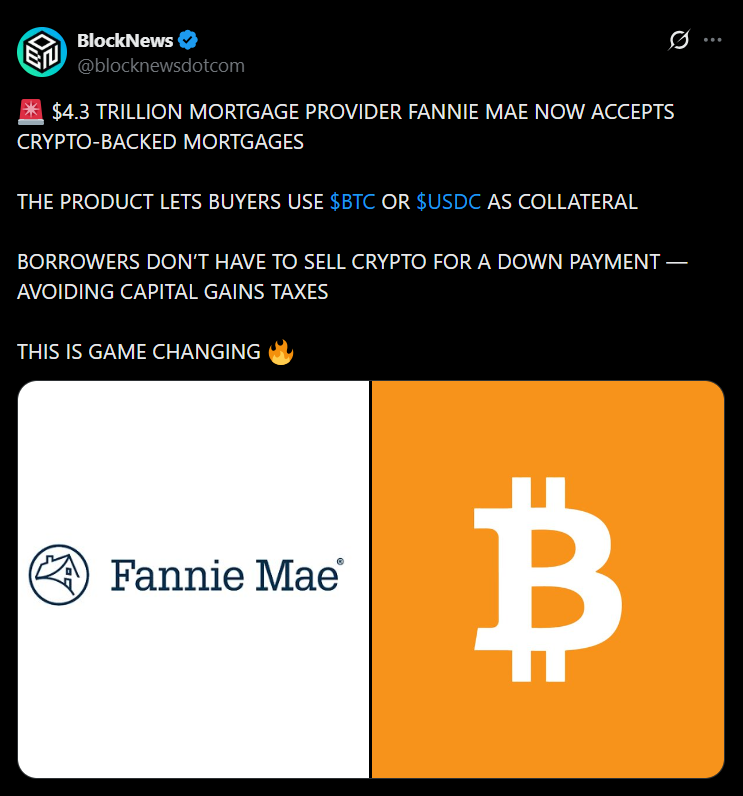
Instead of forcing buyers to liquidate their holdings into dollars, the new approach allows them to pledge crypto directly. That alone changes the dynamic quite a bit. Selling crypto can trigger taxes, timing risks, and missed upside, so being able to keep exposure while still accessing a mortgage… that’s a pretty big deal for a certain type of buyer.
Crypto Is Forcing Mortgage Rules to Evolve
This move didn’t come out of nowhere. The Federal Housing Finance Agency (FHFA) has already directed Fannie Mae and Freddie Mac to explore how crypto assets could be integrated into mortgage underwriting. The idea is to modernize the system without forcing everything back into traditional rails.
Younger generations are a big part of this shift. Many are building wealth through crypto instead of stocks or savings accounts, but the housing system hasn’t really adapted to that reality yet. As affordability issues grow and ownership rates stay low, pressure is building to rethink how financial qualifications actually work.
New Partnerships Bring Crypto Into Real Estate
The rollout is being developed in partnership with Coinbase and Better Home & Finance, two players that bridge crypto and traditional finance in different ways. Their involvement suggests this isn’t just a concept, it’s something being actively built and tested.
Other lenders are already moving in a similar direction. Newrez, for example, has started accepting certain crypto holdings as part of mortgage qualifications. That creates a broader trend, not just a one-off experiment, where digital assets are slowly being recognized as legitimate financial backing.
A New Path to Homeownership
For many potential buyers, especially younger investors, this could open doors that were previously closed. Instead of waiting to convert crypto into fiat or build traditional savings, they can leverage what they already hold. That changes access, and maybe even behavior, over time.
Of course, there are still questions around volatility, risk management, and how these assets are valued in underwriting models. But the direction is clear. Crypto is no longer sitting outside the system, it’s starting to plug directly into it.
Housing Meets Crypto in a Bigger Shift
This isn’t just about buying homes with Bitcoin. It’s about financial systems adjusting to where wealth actually lives today. As digital assets continue to grow, ignoring them becomes less practical, even for institutions that historically moved slowly.
Fannie Mae’s move signals that crypto is beginning to integrate into core financial infrastructure. And if this trend continues, the line between traditional finance and digital assets may become a lot less visible than it is now.
Disclaimer: BlockNews provides independent reporting on crypto, blockchain, and digital finance. All content is for informational purposes only and does not constitute financial advice. Readers should do their own research before making investment decisions. Some articles may use AI tools to assist in drafting, but every piece is reviewed and edited by our editorial team of experienced crypto writers and analysts before publication.






 English (US) ·