
 3 weeks ago
31
3 weeks ago
31
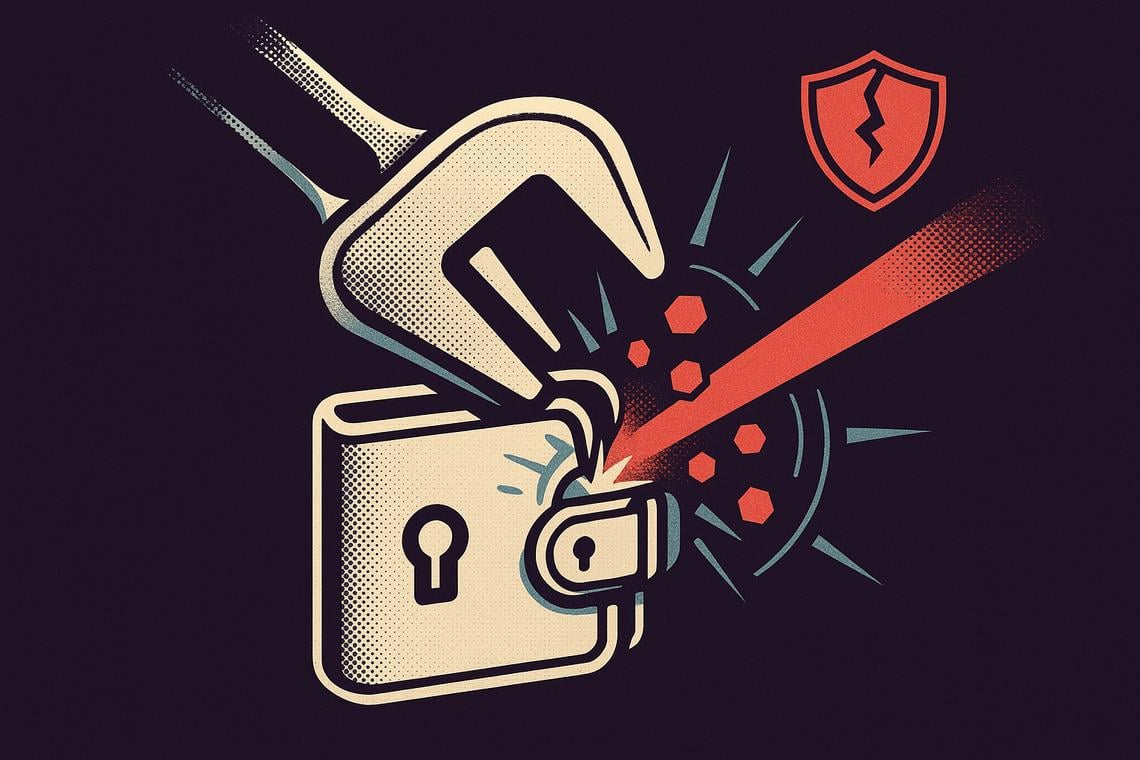
Something shifted in the first half of 2026 that no hardware wallet or cold storage setup can fix. Crypto wrench attacks — physical assaults and coercion used to force victims into surrendering their digital assets — jumped 33.3% year over year, with security firm CertiK verifying 52 incidents globally in the first six months of 2026, up from 39 during the same period in 2025. The numbers alone are striking. What they reveal about how criminals are evolving their methods is more unsettling.
Key takeaways
- CertiK verified 52 crypto wrench attacks worldwide in H1 2026, a 33.3% increase from H1 2025.
- Home invasions surged from just 1 incident in H1 2025 to 20 in H1 2026, becoming the most common attack type.
- Financial exposure linked to these attacks reached approximately $124.1 million, up from $10.5 million a year earlier.
- France accounted for 33 of the 52 verified incidents — nearly two-thirds of the global total.
- French authorities recorded 77 crypto-related kidnappings and extortion cases in H1 2026 alone, surpassing all of 2025’s total of 45.
Rising Trend of Crypto Wrench Attacks Globally
The defining tactical shift this year is not just the volume of attacks — it’s where they’re happening. Criminals are no longer primarily targeting victims in the street or staging robberies in public. They’re going to their homes.
Home Invasions Take Over as the Dominant Attack Type
According to CertiK’s report, home invasions tied to crypto holdings skyrocketed from just one publicly reported incident in H1 2025 to 20 in H1 2026. That is a category that barely existed in the data a year ago. At the same time, kidnappings climbed from 12 to 16 incidents, while traditional street robberies dropped sharply, from 5 to just 1.
The implication is clear: attackers are moving toward more controlled, private environments. A home invasion offers longer windows of coercion, less chance of intervention, and direct access to devices, seed phrases, and family members who can be used as leverage. For crypto holders who believed physical distance from exchanges was enough protection, this pattern should prompt a serious rethink.
France as the Epicenter of Crypto Crime
France is not just a heavily affected country — it is the dominant national hotspot in CertiK’s dataset, and the gap between it and the rest of the world is significant.
Geographic Concentration and What It Signals
Of the 52 verified incidents, Europe accounted for 39. France alone was responsible for 33 incidents — nearly two-thirds of the global total. CertiK attributes part of this concentration to France’s more visible crypto ecosystem, where data breaches and publicly available information have reportedly linked real identities and home addresses to perceived crypto wealth. That kind of exposure effectively hands criminals a targeting list.
It’s worth noting that CertiK’s methodology counts only independently verifiable, publicly reported incidents — a narrower standard than what French authorities track. That means the actual scale of the problem could be considerably larger.
French Authorities Sound the Alarm
The official numbers from the French government paint an even grimmer picture. French Interior Minister Laurent Nuñez stated on July 2 that authorities had recorded 77 crypto-linked kidnappings, extortion cases, and attempted extortions in just the first half of 2026 — already surpassing the 45 cases recorded across all of 2025, according to the French Interior Ministry.
In response, French authorities launched a dedicated prevention platform and a rapid-alert system for crypto holders and industry professionals. The emergency measures have so far resulted in 200 arrests. Whether that enforcement activity will meaningfully suppress the trend in the second half of the year remains to be seen.
Financial Impact and What Security Needs to Look Like Now
The Financial Exposure Behind the Headlines
The recorded financial exposure linked to H1 2026 wrench attacks reached approximately $124.1 million, compared to $10.5 million over the same period in 2025 — a more than tenfold increase. That figure encompasses ransom demands, confirmed thefts, victim transfers, and frozen or recovered assets, meaning it reflects the total scope of attempted extraction rather than confirmed losses alone.
Still, the scale underscores something that pure digital-security metrics tend to obscure: physical coercion has become a high-value criminal enterprise. When a single incident can generate a ransom demand in the millions, the calculus for organized crime groups changes entirely.
Challenges to Conventional Crypto Custody Security
The surge in home invasions targeting crypto holders directly challenges the foundational logic of self-custody. The standard advice — hold your own keys, use a hardware wallet, stay off centralized exchanges — offers strong protection against remote hackers. It offers almost none against someone standing in your living room at 2 a.m.
CertiK frames this as an established threat vector that the industry has been slow to take seriously at a structural level. The firm also points to the role of information exposure: when on-chain data, social media activity, or data breaches connect a real person’s identity and address to significant crypto holdings, physical targeting becomes straightforward for motivated attackers. Limiting that public information trail is, in CertiK’s assessment, one of the most important steps a holder can take.
Recommended Mitigation Strategies
CertiK’s recommendations go beyond digital hygiene. The firm advises crypto holders to adopt:
- Multisignature or multiparty computation wallets, so that no single person can authorize a transfer under duress
- Withdrawal delays and spending limits that make it impossible to move large sums instantly
- Geographically separated signers, preventing a single coerced individual from releasing all available assets
- Stronger home security measures and pre-prepared emergency plans that include family members
- Keeping sensitive accounts off devices carried while traveling
The logic behind these measures is that physical coercion only works if one person holds complete, immediate access. Distributing control architecturally — across people, devices, and locations — forces attackers to coordinate across multiple targets simultaneously, which significantly raises the cost and complexity of any attack.
The broader question the industry now faces is whether the standard narrative around self-custody will evolve fast enough. As long as crypto wealth remains publicly traceable and identity-linked in ways that traditional bank account balances are not, the gap between digital security and physical vulnerability will keep generating targets. France’s crisis-level response may be an early warning for jurisdictions that haven’t yet confronted how visible their crypto holders have become.
FAQ
What are crypto wrench attacks?
Crypto wrench attacks involve physical assault or coercion to force victims to surrender access to their cryptocurrency assets, bypassing digital security measures entirely.
How has the frequency of crypto wrench attacks changed in 2026?
The total number of verified crypto wrench attacks worldwide increased to 52 in the first half of 2026, a 33.3% rise from 39 incidents recorded during the same period in 2025, according to CertiK.
Why is France a hotspot for crypto wrench attacks?
France accounted for 33 of the 52 verified global incidents in H1 2026. CertiK attributes this concentration partly to France’s more visible crypto ecosystem, where data breaches and publicly available information have linked real identities and home addresses to perceived crypto wealth, making individuals easier to target.
What measures does CertiK recommend to mitigate risks from physical coercion attacks?
CertiK recommends using multisignature or multiparty computation wallets, implementing withdrawal delays and spending limits, and ensuring that signers are geographically separate — so that no single person under duress can immediately transfer all available assets.
Article produced with the assistance of artificial intelligence and reviewed by the editorial team.



 English (US) ·