
 2 months ago
22
2 months ago
22

The year 2025 concluded as a complex and, in many ways, pivotal year for the cryptocurrency market. Following the enthusiasm built up in 2024, fueled by Bitcoin’s halving and the resurgence of institutional interest, the subsequent year brought the sector back to a more direct confrontation with reality.
It wasn’t a year of systemic crashes like 2022, nor of widespread significant gains. On the contrary, 2025 showcased a more mature yet demanding crypto market, where many historical certainties were challenged.
The macroeconomic context has had a significant impact. Monetary policies, although less aggressive compared to previous years, did not provide the stimulus many investors were expecting. Traditional markets have experienced fluctuating phases, and risk appetite has decreased, especially in the second half of the year.
In this scenario, cryptocurrencies in 2025 have struggled to find a dominant narrative capable of sustaining prices in the long term, despite the ongoing structural interest in blockchain technology remaining strong.
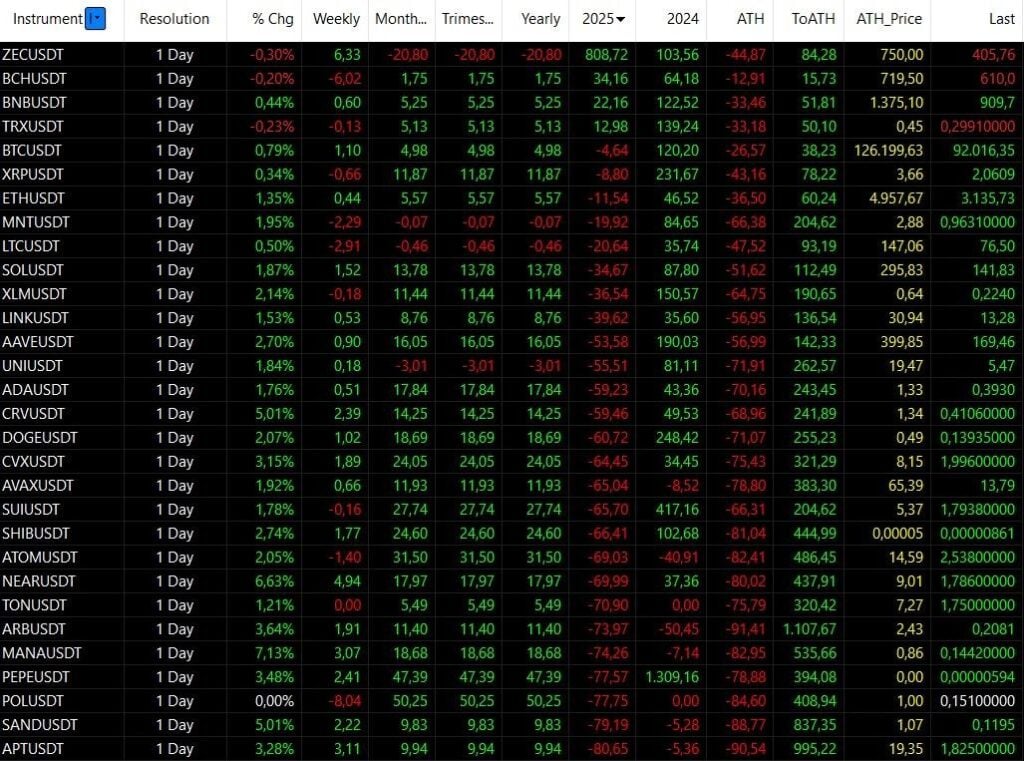
Figure 1 – Ranking of the main cryptocurrencies in 2025 by performance: Zcash leads with +808%, Bitcoin and Ethereum declining, BNB, TRX, and BCH performing well.
Bitcoin in 2025: Is the Myth of the Four-Year Cycle Over?
Bitcoin has maintained its role as the market’s focal point, but 2025 marked a significant departure from the past. Following the 2024 halving, many operators anticipated a strongly bullish year, in line with the historical pattern of the so-called four-year cycle.
In reality, the price of Bitcoin experienced an irregular trend: phases of strength during the year were not lacking, but they were followed by deep corrections that brought the quotations below the levels of early January.
The final outcome was a slightly negative annual return, a figure that surprised those who were counting on a repeat of previous cycles.
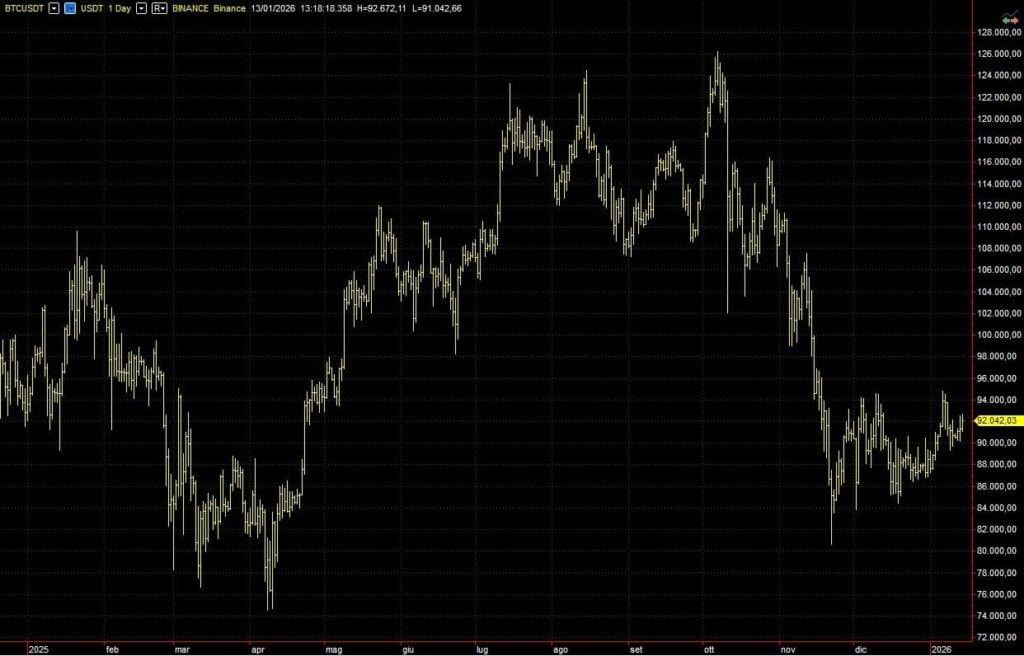
Figure 2 – Bitcoin Price Chart in 2025: Post-halving Trend and Impact on the Four-Year Cycle.
This trend has had a significant symbolic impact. The slight decline at the close of 2025 has seriously questioned the validity of Bitcoin’s four-year cycle as a reliable forecasting tool.
If in the past the year following the halving almost always coincided with strong gains, 2025 has shown that the market has changed. The increased capitalization, the presence of institutional investors, and the growing integration with traditional markets make Bitcoin less predictable and more sensitive to external factors. The four-year cycle can no longer be considered a rule, but at most a historical interpretative key, increasingly less binding.
Ethereum: Solid Fundamentals, Disappointing Performance
Ethereum experienced a similar 2025 in terms of returns, but with a different narrative. ETH also ended the year in the red, with a more pronounced loss compared to Bitcoin. From a fundamental perspective, however, the Ethereum ecosystem continued to strengthen. Layer 2 solutions expanded the network’s capacity, reducing transaction costs and improving scalability. Staking solidified ETH’s role as a productive asset, but these advancements did not translate into appreciation over the course of the year.
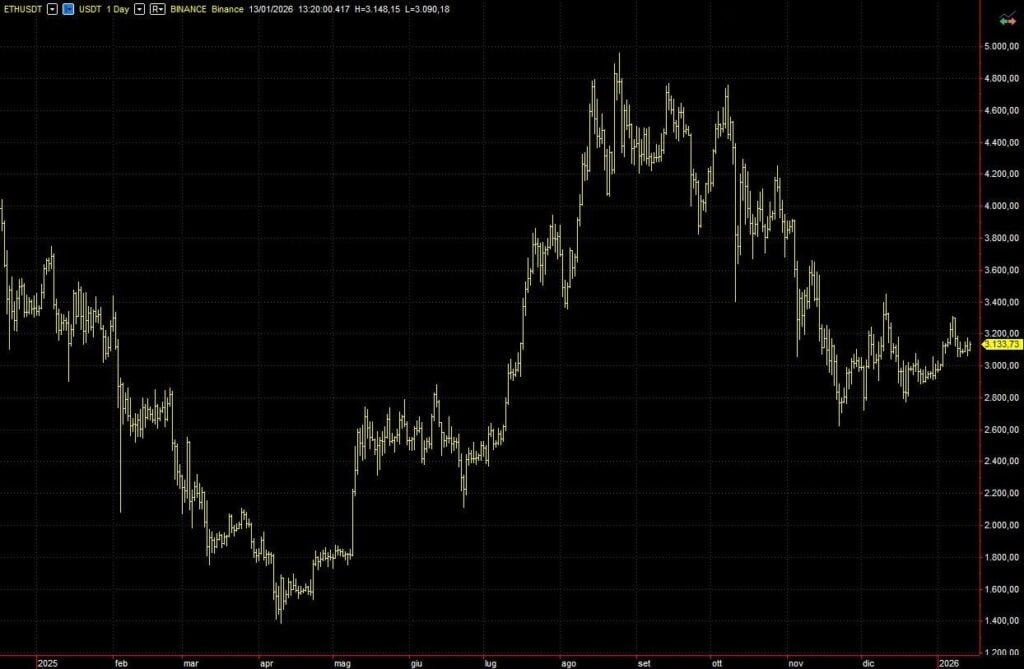
Figure 3 – Ethereum’s Performance in 2025: Price Decline Despite Structural Development.
This disconnect between fundamentals and performance has characterized much of the market. Many investors have increasingly begun to differentiate between technological development and financial returns, accepting the idea that the two do not necessarily coincide in the short term. The year 2025 taught that even solid infrastructures can experience prolonged phases of underperformance, especially in the absence of strong macro momentum or new capital inflows.
Altcoin: few exceptions in a sea of difficulties
The altcoin sector suffered even more noticeably, though with some noteworthy exceptions. While 2024 saw a fair spread of gains, in 2025 selectivity increased drastically, and the majority of tokens ended the year at a loss.
Among the cryptocurrencies with the largest market capitalization, however, BNB, TRX, and Bitcoin Cash managed to stand out as rare exceptions, closing 2025 in positive territory thanks to specific dynamics related to their respective ecosystems and greater price resilience.
Even more striking was the case of Zcash, which recorded an off-the-charts performance, with an increase of over 808% year-on-year. A movement that surprised the market and, despite starting from very depressed levels, demonstrated how even in an overall negative year, individual cases of extreme strength can emerge.
Overall, however, these examples remained isolated and were not sufficient to change the general picture of an altcoin market that, in 2025, severely tested less selective investors.
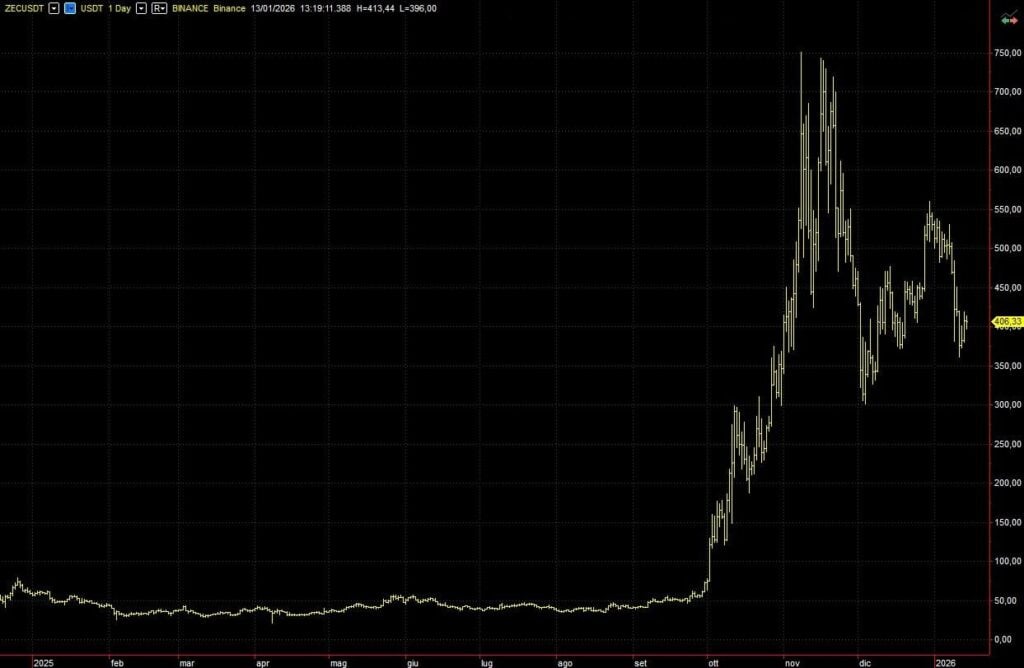
Figure 4 – Explosive growth of Zcash in 2025: +808% in a challenging year for the altcoin sector.
Tokenization and DeFi: Innovation Without Impact on Prices
One of the few areas that has continued to generate structural interest has been the tokenization of real assets. However, even in this case, the impact on crypto token prices has been limited. The year 2025 demonstrated that institutional adoption and technological experimentation do not automatically translate into returns for retail investors. Growth has been slower, less noisy, and long-term oriented.
Decentralized finance followed a similar path. After the excesses of previous years, in 2025 DeFi favored more conservative and sustainable models. The returns offered were more modest and, in many cases, insufficient to compensate for the overall market risk. This contributed to reducing the speculative appeal of the sector, but also fostered a more informed user base less inclined to chase unrealistic promises.
Conclusions: What 2025 Has Taught Us About Cryptocurrencies
In conclusion, 2025 was not a year of easy returns for the cryptocurrency market, but neither was it a year devoid of signals. The overall balance remained negative for Bitcoin and Ethereum and for most altcoins, but the exceptions carried significant symbolic weight. The cases of BNB, TRX, and Bitcoin Cash, which managed to end the year positively among the most capitalized cryptocurrencies, and especially the surge of Zcash with an increase of over 808%, demonstrated that even in a challenging context, selectivity can make a difference.
The year 2025 marked the end of simplistic narratives, such as the four-year Bitcoin cycle perceived as a guarantee of substantial gains, and reinforced the notion of an increasingly fragmented market driven by specific dynamics.
For investors, the lesson has been clear: it’s not enough to be exposed to the crypto sector, but it is increasingly necessary to understand where and why you are investing, accepting that future returns may be less uniform and more tied to individual value stories.
Until next time, and happy trading!
Andrea Unger








 English (US) ·