
 2 months ago
79
2 months ago
79
- Senator Cynthia Lummis called this “an important week for digital assets” as the CLARITY Act advances
- The bill’s Senate markup follows nearly a year of bipartisan negotiations around crypto regulation
- Lummis says the legislation could help position the US as a global center for financial innovation
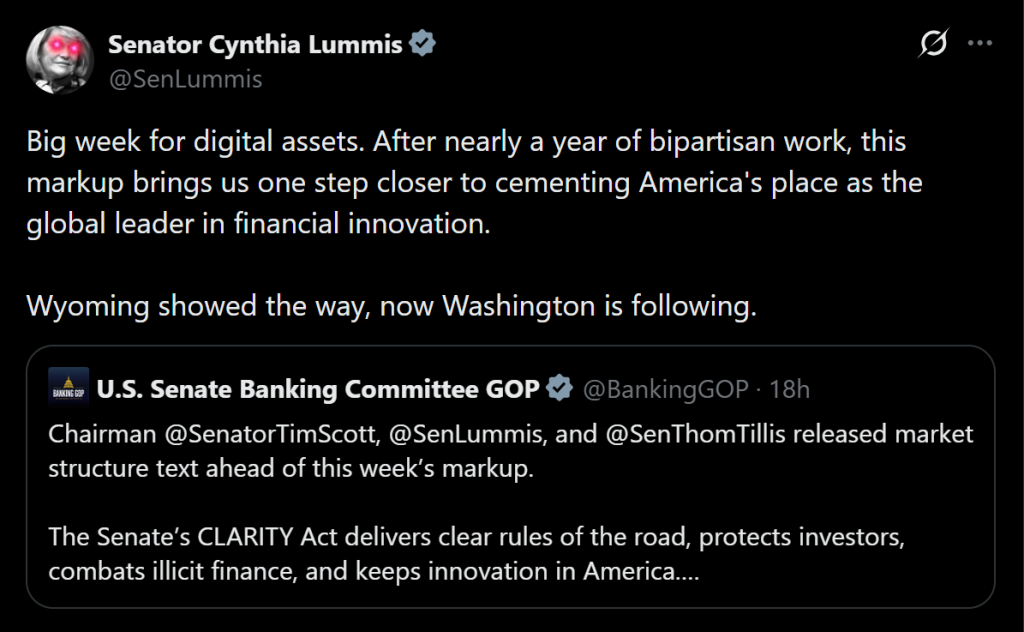
Senator Cynthia Lummis says the ongoing debate around the CLARITY Act represents a major turning point for digital asset regulation in the United States. In a post published on X on May 12, the Wyoming senator described the current Senate discussions as “an important week for digital assets” as lawmakers move closer toward formal crypto market structure legislation.
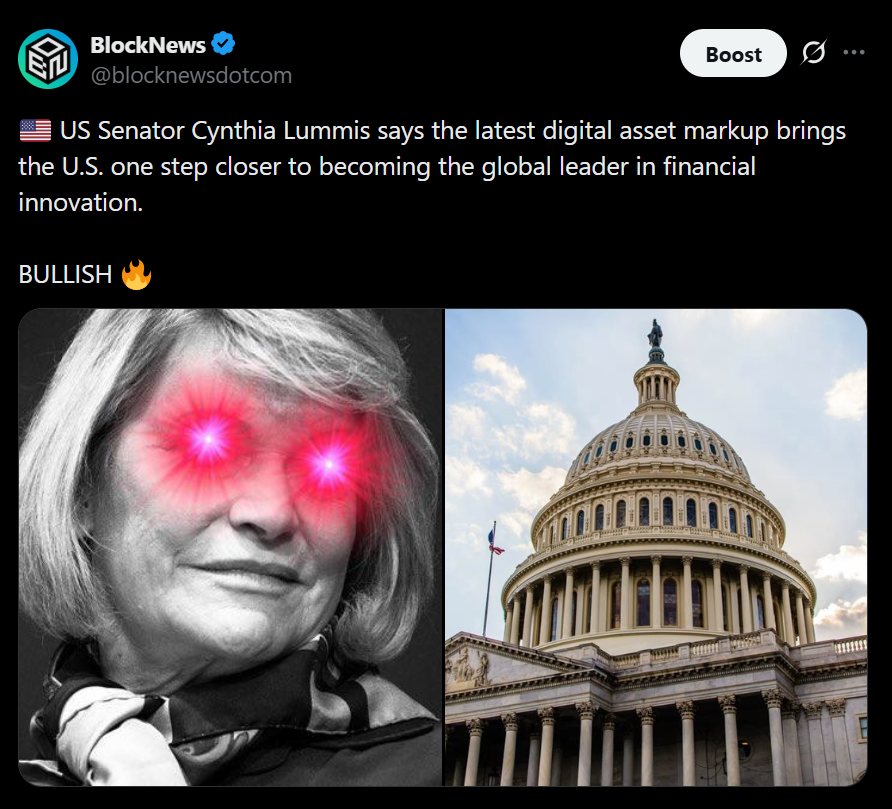
After nearly a year of bipartisan negotiations, the Senate Banking Committee’s markup of the CLARITY Act is now being viewed as one of the most serious attempts yet to establish clear federal rules for digital assets in the US.
Lummis Says Washington Is Catching Up
According to Lummis, the legislation could move the United States one step closer toward becoming a global hub for financial innovation and blockchain infrastructure.
She also pointed directly to Wyoming’s earlier crypto-friendly policies as proof that digital asset regulation can coexist with financial innovation. “Wyoming showed the way first, and now Washington is following,” she wrote.
Wyoming has spent years building one of the most crypto-supportive legal environments in the country, advancing frameworks tied to digital assets, DAOs, banking charters, and stablecoins long before federal lawmakers seriously engaged with the sector.
The CLARITY Act Is Gaining Momentum
The renewed focus on the CLARITY Act and stablecoin legislation has significantly increased expectations that crypto may finally move deeper into the US regulatory mainstream after years of uncertainty.
The bill is designed to establish clearer boundaries between the SEC and CFTC while creating formal legal definitions around digital commodities, token offerings, and secondary market trading.
For much of the industry, that framework would replace the SEC’s long-criticized “regulation-by-enforcement” approach with clearer rules companies can actually operate around.
Crypto Regulation Is Becoming A Political Priority
The growing bipartisan attention around the legislation also signals how much crypto regulation has evolved politically in Washington. What was once viewed as a niche industry issue is increasingly becoming part of broader conversations around financial competitiveness, innovation, and global technology leadership.
Lawmakers pushing the bill argue that clearer regulation could help prevent digital asset companies, developers, and capital from continuing to move overseas into jurisdictions with more established frameworks.
And honestly, the fact that Senate discussions around crypto market structure are now happening at this level probably says as much about crypto’s growing influence as the legislation itself does.
Disclaimer: BlockNews provides independent reporting on crypto, blockchain, and digital finance. All content is for informational purposes only and does not constitute financial advice. Readers should do their own research before making investment decisions. Some articles may use AI tools to assist in drafting, but every piece is reviewed and edited by our editorial team of experienced crypto writers and analysts before publication.








 English (US) ·