
 1 month ago
71
1 month ago
71
// News
Reading time: 8 min
Published: Jun 24, 2026 at 13:36
Updated: Jun 24, 2026 at 13:59

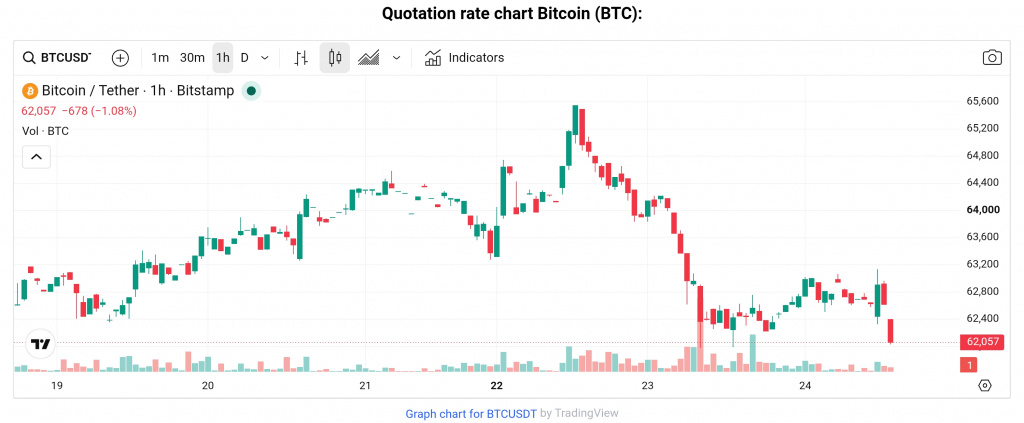
Is the crypto bear market officially back, or are crypto whales staging the ultimate trap for retail traders?
In this comprehensive crypto market news briefing from Coinidol.com, we dissect the brutal correlation between the Bitcoin price crash and the fading AI tech bubble.
From the hawkish shift in Fed interest rates under Kevin Warsh to the internal liquidity crisis rocking the Ethereum Foundation, this deep dive bypasses mainstream media noise. Utilizing advanced on-chain metrics and real-time Bitcoin price analysis, we reveal who is secretly buying the dip, how crypto regulation is shifting behind closed doors, and what the future holds for altcoins and RWA tokenization heading into the next market cycle.
The Kevin Warsh Factor: The Fed’s Hawkish Shock
The primary trigger for the market downturn is a fundamental shift in US interest rate expectations. While consensus forecasts from global agencies promised policy easing earlier this year, sentiment has now taken a radically hawkish turn. Following the first Federal Open Market Committee (FOMC) meeting chaired by newly installed Fed Chief Kevin Warsh, top-tier banking conglomerates have completely rewritten their economic models.
Notably, Bank of America and Deutsche Bank reversed their previous outlooks and now project three consecutive rate hikes of 25 basis points each before the end of the year, realigning the target matrix for September, October, and December. This aggressive stance aims to combat sticky structural inflation, threatening to push the benchmark interest rate into the 4.25%–4.50% bracket.
According to institutional prediction markets, the probability of aggressive policy tightening by December has plummeted from a mere 24% expectation to an overwhelming 77% consensus within a single month. High interest rates inherently bolster the US dollar DXY index, a dynamic that automatically drains capital liquidity from high-risk assets, a category where major institutions firmly place cryptocurrency.
For a detailed breakdown of how macroeconomic factors pressure the price of the premier cryptocurrency and keep it fluctuating at pivotal support levels, see the article by Coinidol.com on Bitcoin's movement above $60,000. This Bitcoin price analysis underscores how sensitive digital gold remains to global fiat liquidity flows.
Broken Correlations: Crypto Crumbles with AI Giants
For years, crypto advocates championed the narrative of Bitcoin’s decoupling from legacy financial systems. However, the mass influx of institutional capital via Wall Street's spot Bitcoin ETFs has linked the assets.
Today, BTC exhibits an almost 100% intraday correlation with the technology sector, leaving it highly vulnerable to the broader tech valuation correction.
As major tech portfolios face sudden liquidation, the shockwaves are rippling directly into the digital asset ecosystem. Growing skepticism over the immediate profitability of trillion-dollar artificial intelligence infrastructures has triggered a steep sell-off on Wall Street. A sharp 2.5% drop in Nasdaq 100 futures triggered automated liquidations across crypto derivatives markets. The broader picture of how the artificial intelligence boom hoards capital and slows down the crypto market is outlined in the CoinIdol feature on AI and the cryptocurrency lull.
Global Risk-Off Cascades
The macro sell-off has hit institutional balance sheets worldwide, dragging down tech conglomerates and plunging South Korea's Kospi index by 10%. When multi-strategy hedge funds liquidate equity positions to shore up capital or cover margin calls, highly liquid and volatile instruments, namely Bitcoin and altcoins, are always the first to be offloaded.
Internal Turmoil: Ethereum Foundation Trims Staff by 20%
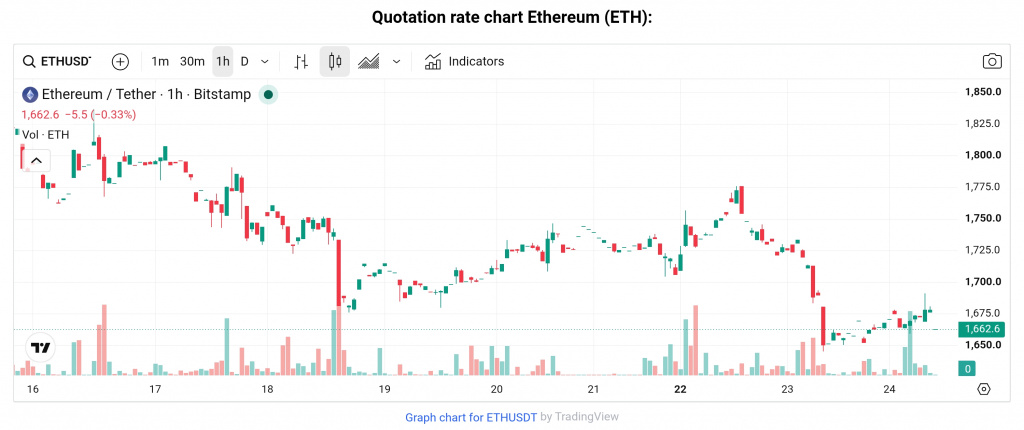
While Bitcoin struggles to defend its psychological support levels, the smart-contract pioneer and second-largest cryptocurrency by market cap — Ethereum — has been hit by a severe structural governance crisis.
The Ethereum Foundation (EF) officially announced a sweeping organizational overhaul, cutting 20% of its total workforce and laying off 54 core employees. This represents the most drastic austerity and cost-optimization measure the non-profit has implemented in its modern history. Network co-founder Vitalik Buterin confirmed a dramatic 40% reduction in the EF’s annual operating budget. The new strategy enforces a strict treasury glide path, aiming to drop annual operating expenses from the current 15% rate down to a lean 5% baseline by 2030.
According to real-time data audited by Arkham Intelligence, the Ethereum Foundation's primary treasury reserves have dwindла to $209 million, marking a devastating 6-year historic low in dollar value.
The financial downsizing comes amid an alarming exodus of senior leadership. Over the last six months, 9 key executive and research figures have abruptly departed the foundation, including co-executive directors Hsiao-Wei Wang and Tomasz Stańczak. Furthermore, top core researcher Dankrad Feist exited to join Stripe's competing stablecoin blockchain project.
To understand how these internal struggles hit asset valuations and why the price is losing momentum, read the technical analysis by CoinIdol on the Ethereum price faltering. This leadership vacuum and looming budget deficits have shaken developer confidence, pinning the Ethereum price near critical local lows.
Secret On-Chain Movements: Who Is Buying the Dip?
Corporate news networks are projecting extreme panic, highlighting billions of dollars bleeding out of US spot Bitcoin ETFs. The Crypto Fear and Greed Index has sunk deep into the "Extreme Fear" zone, printing a grim reading of 20. Yet, raw on-chain metrics directly pulled from the blockchain ledger paint an entirely opposite picture of institutional accumulation.
An unedited look at on-chain data reveals vital structural developments:
-
Stablecoin Stabilization: The aggregate market capitalization of fiat-pegged stablecoins across major exchanges has completely halted its multi-week decline, solidifying at $315.3 billion. Tether (USDT) fiercely protects its dominance with a 59.05% market share. This proves that smart money is not withdrawing funds back into traditional commercial banks; instead, they are keeping massive amounts of "dry powder" ready inside the ecosystem, waiting to catch a definitive price floor.
-
The RWA Sector Boom: In direct contrast to spot trading volumes on centralized exchanges (CEX) plunging to their lowest levels since late 2024, the Real World Asset (RWA tokenization) sector is experiencing an unprecedented surge. Perpetual futures volume for tokenized assets jumped 10.4% against the down-trending market, hitting a new all-time high. Capital is rotating out of speculative high-beta altcoins and moving into yield-bearing blockchain instruments like tokenized US Treasury bonds (such as BlackRock's BUIDL and Ondo's USYC).
-
The Anti-CBDC Legislative Shield: Providing long-term macro defense, the US Senate passed a historic bipartisan bill with an overwhelming 85-5 majority, banning the Federal Reserve from issuing a Central Bank Digital Currency (CBDC) until at least 2030. This critical legislative firewall permanently prevents state-issued digital currencies from crowding out private stablecoins, preserving the sovereign infrastructure of decentralized networks.
What’s Next: Scenarios Through the End of Summer
Derivatives prediction market Kalshi currently prices the probability of Bitcoin dropping below the vital $50,000 threshold before the end of the year at 57%. For the upcoming weeks, the immediate technical bear target remains the $58,000 support block, a crucial region where the baseline electricity cost of mining production intersects with the heavily defended 300-week exponential moving average (EMA).
Nonetheless, structural on-chain telemetry proves that this correction is not the genesis of a prolonged crypto bear market. Instead, it represents a violent, necessary purging of over-leveraged speculative positions from the system before the next macro leg up. While retail traders capitulate to media noise, crypto whales are systematically swallowing the liquidity at a steep discount.
Disclaimer. The data provided is collected by the author and is not sponsored by any company or token developer. This is not a recommendation to buy or sell cryptocurrency and should not be viewed as an endorsement by Coinidol.com. Readers should do their research before investing in funds. Brought from CoinIdol.com.
Writer with over a decade of experience covering the cryptocurrency and blockchain industry. She began her career in the Blockchain and Crypto space in 2013 working with
.






 English (US) ·