
 1 month ago
80
1 month ago
80
// News
Reading time: 4 min
Published: Jul 27, 2026 at 13:10

As the digital asset market navigates a critical phase of structural adaptation, price fluctuations are more than mere speculation.
Macroindicators and the Fed
The crypto ecosystem operates increasingly as a high-beta indicator of traditional legacy markets. According to the reports, as market participants await the upcoming Federal Open Market Committee (FOMC) meeting, fed interest rates remain firmly anchored at the 3.5% to 3.75% range.
Following softer-than-expected headline inflation data showing annual prints cooling to 3.5%, prediction markets and the CME FedWatch tool have priced in an 82% to 93% probability that the Fed will hold rates steady.
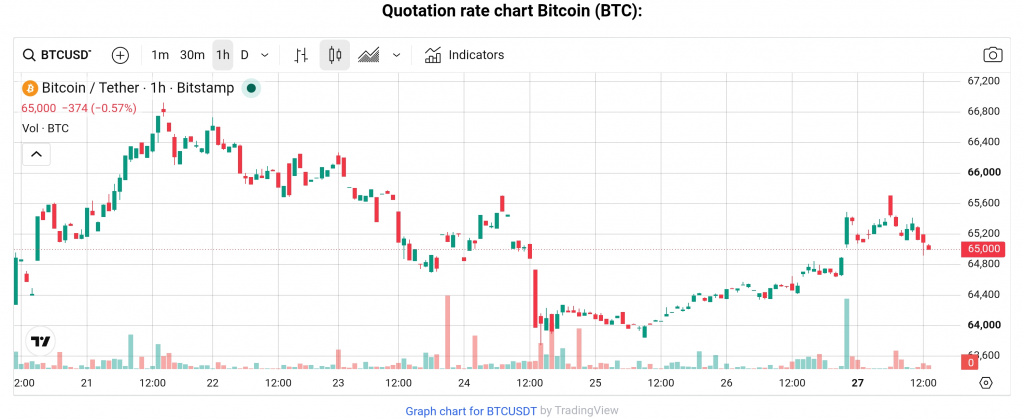
However, a "higher-for-longer" monetary stance continues to influence the strength of the DXY and the performance of the Nasdaq, dictating overall risk appetite. Conducted against this macroeconomic backdrop, bitcoin price analysis indicates that BTC has faced choppy resistance around the $64,000–$65,000 threshold, constrained by macro uncertainty and geopolitical friction.
Regulatory Shifts and Network Architecture
The structural plumbing of blockchain technology is undergoing a massive compliance overhaul. The expansion of robust frameworks, ranging from Europe's MiCA enforcement to discussions surrounding the U.S. Digital Asset Market Clarity Act, has accelerated the institutionalization of cryptocurrencies.
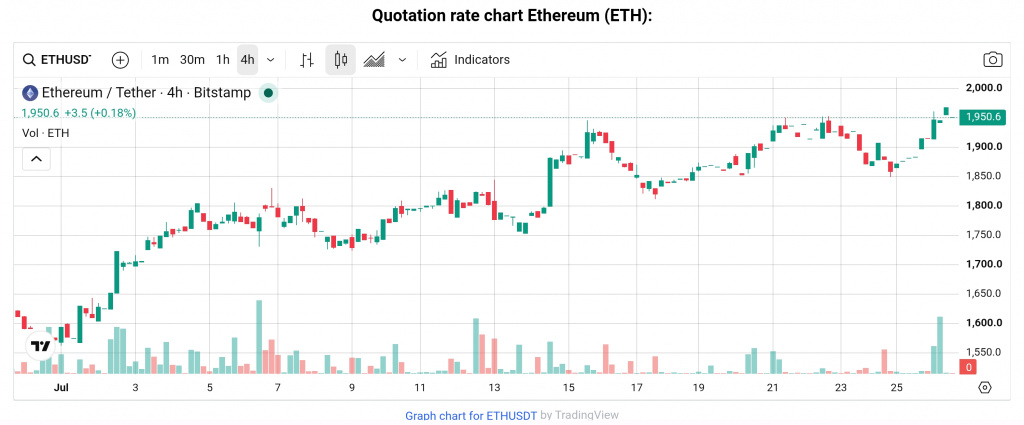
Ethereum has achieved significant milestones, breaking past key moving averages as institutional interest surges. Concurrently, networks like Solana continue to command high transactional throughput, reinforcing the divergence between speculative retail tokens and foundational layer infrastructure designed for institutional deployment.
The Data Behind the Move
Beneath the surface price action, on-chain analytics highlight robust capital allocation trends across stablecoins and decentralized infrastructure. U.S. spot Bitcoin and Ethereum ETFs recorded a combined net inflow of $137.69 million during late July, with Ethereum funds outperforming Bitcoin equivalents nearly threefold ($103.9 million versus $33.79 million).
However, stablecoins continue to anchor decentralized finance (DeFi) liquidity, acting as the primary friction-free settlement layer for cross-border institutional settlements.
Despite positive institutional inflows, the Crypto Fear and Greed Index hovers around 30 (representing "Fear"), illustrating a cautious market posture among retail participants.
Scenarios for the Coming Week
As traders prepare for the impending central bank decisions and global economic data releases, crypto market news points toward heightened near-term volatility.
If the Fed maintains current interest rates as widely predicted and signals a neutral stance, markets may experience range-bound consolidation, allowing altcoins and Ethereum to test higher resistance bands.
Should macroeconomic commentary lean softer regarding future monetary easing, a renewed wave of risk-on capital could drive Bitcoin past immediate overhead resistance toward $66,000–$68,000.
But an unexpected shift toward monetary tightening or persistent inflationary shocks could force a retest of crucial downside supports near $60,000.
Disclaimer. This analysis and forecast are the personal opinions of the author. The data provided is collected by the author and is not sponsored by any company or token developer. This is not a recommendation to buy or sell cryptocurrency and should not be viewed as an endorsement by Coinidol.com. Readers should do their research before investing in funds.
Writer with over a decade of experience covering the cryptocurrency and blockchain industry. She began her career in the Blockchain and Crypto space in 2013 working with Cointelegraph.







 English (US) ·