
 1 hour ago
20
1 hour ago
20
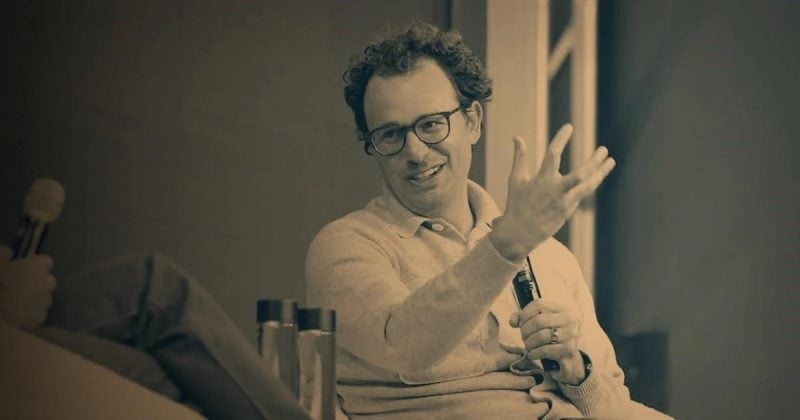
The person running one of crypto’s most prominent venture funds just told the industry that funds like his might not exist much longer. Haseeb Qureshi, managing partner at Dragonfly, predicted in a July 21 interview that dedicated crypto venture capital could effectively disappear before 2030.
The thesis: maturity kills the VC star
Qureshi’s argument centers on two forces that are converging fast. First, the crypto industry is centralizing. The scrappy, anyone-can-launch-a-protocol era is giving way to a landscape dominated by established players with deep moats. Second, the number of genuinely venture-backable opportunities in pure-play crypto is shrinking.
This isn’t a new thought experiment for Qureshi. He first floated the idea back in 2022, asserting bluntly that “crypto VC will be gone by 2030.” Four years later, he’s doubling down on that timeline rather than walking it back.
Here’s the thing. He’s saying this while sitting atop a fund that just raised $650 million. Dragonfly closed its Fund IV in February 2026, which is not exactly the fundraising profile of a firm that thinks the sky is falling tomorrow. But Qureshi seems to view that capital raise as evidence of consolidation rather than contradiction. The big funds are getting bigger while smaller, less differentiated crypto VCs struggle to raise or deploy capital effectively.
Where the capital is flowing instead
The shift Qureshi describes isn’t about money leaving crypto entirely. It’s about money changing form and destination. Capital that once chased layer-1 protocols and speculative token plays is increasingly moving toward AI integration, stablecoins, privacy infrastructure, tokenization of real-world assets, and fintech plumbing.
What this means for the market
Qureshi’s prediction, if it plays out, has real implications for early-stage crypto founders. If dedicated crypto funds continue consolidating or shutting down, founders will need to pitch generalist VCs who evaluate deals on cash flow projections and unit economics rather than tokenomics and community vibes.
The practical takeaway for market participants is to watch where Dragonfly actually deploys that $650 million over the next 12 to 18 months, because the firm’s portfolio construction will reveal whether its managing partner truly believes the pure-play crypto thesis is fading.
Disclosure: This article was edited by Editorial Team. For more information on how we create and review content, see our Editorial Policy.





 English (US) ·