
 4 weeks ago
24
4 weeks ago
24

The European Central Bank is weighing a move that could quietly reshape how European banks operate — and the industry is already pushing back hard. The ECB’s potential minimum reserve increase, which would double the share of customer deposits banks must park in unremunerated accounts, has drawn immediate and forceful opposition from Germany’s banking sector, setting up a collision between central bank cost management and the lending capacity of European financial institutions.
Key takeaways
- The ECB is considering raising minimum reserve requirements from 1% to 2% of banks’ customer deposits and some other forms of funding.
- The change aims to reduce the ECB’s own interest expenses and soften the side effects of its inflation-control policy.
- The Association of German Banks strongly opposes the proposal, calling it effectively a tax on European banks.
- Heiner Herkenhoff, its chief executive, warns the hike would tie up liquidity, weaken profitability, and shrink lending capacity.
- No formal discussion has yet taken place in the ECB’s Governing Council; a decision is expected by autumn.
ECB’s Proposal to Increase Minimum Reserve Requirements
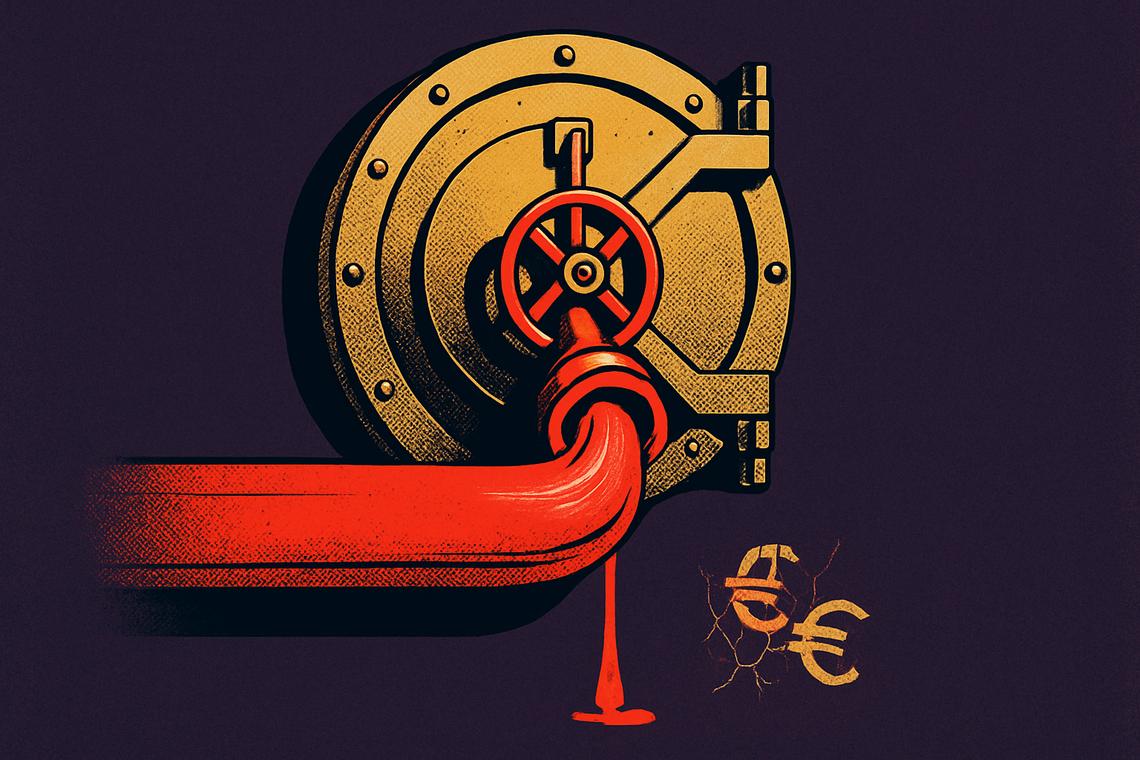
The proposal under consideration at the ECB would raise minimum reserve requirements to 2% from the current 1% of banks’ customer deposits and certain other forms of funding. That may sound like a minor technical adjustment, but it represents a doubling of the cash that banks must hold idle in accounts that earn no interest — a change with real consequences for how banks manage their balance sheets.
The motivation is partly self-interested from the ECB’s perspective: keeping rates high to fight inflation has a cost, and that cost includes interest payments the central bank makes on excess reserves held by commercial banks. By raising reserve requirements — and keeping those reserves unremunerated — the ECB can reduce its own interest bill while also adjusting one of the structural tools left over from its inflation-fighting cycle.
What makes this particularly notable is where the decision stands right now. The ECB’s Governing Council has not formally discussed the proposal. Sources described the internal debate as still at an early stage. Yet despite that, a decision is expected by autumn, meaning the window for industry input — and opposition — is relatively short.
German Banks’ Strong Opposition to the Reserve Hike
Germany’s banking industry did not wait for a formal proposal before making its position clear. The Association of German Banks came out firmly against the potential increase, with its chief executive Heiner Herkenhoff framing the measure in blunt terms.
“It will tie up additional liquidity, weaken the institutions’ profitability, and reduce their scope for investment and lending,” Herkenhoff said. He described the higher reserve requirement as something that would “exacerbate what is essentially a tax on European banks” — language that signals the industry views this not as a neutral technical tweak but as a policy burden with direct financial costs.
The competitive dimension matters here too. Herkenhoff raised a concern that goes beyond balance sheets: that forcing European banks to hold more unproductive reserves would push them “further behind in global competition.” In a financial system where European banks are already competing against larger American institutions with different regulatory frameworks, any additional drag on profitability carries strategic weight.
His second statement sharpened the argument: “Especially at a time of growing geopolitical uncertainties, Europe needs strong and competitive banks, not additional competitive disadvantages.” That framing ties the reserve debate directly to broader anxieties about European financial resilience — making this less about accounting and more about whether European banks can remain credible players on the world stage.
Economic Implications and Context
Impact on Bank Liquidity and Lending
The mechanics of the proposed change are straightforward, but the downstream effects are not trivial. When banks are required to hold a larger share of deposits in reserve, that capital is effectively locked — it cannot be deployed in loans, investments, or other income-generating activities. Doubling the reserve ratio means more cash sitting idle, which compresses the margins banks rely on to fund their operations and grow their businesses.
For banks already navigating a post-rate-hike environment where net interest margins are under pressure, an additional liquidity constraint could meaningfully reduce their ability to extend credit to businesses and households. The Association of German Banks was explicit on this point: reduced lending scope is a direct consequence, not a theoretical risk.
Concerns Over Global Competitiveness Amid Geopolitical Uncertainty
The timing of this debate adds another layer of complexity. Geopolitical uncertainties — whether related to trade, security, or the broader realignment of global economic alliances — have raised the stakes for European financial institutions. Banks that are weaker, less profitable, or constrained in their ability to allocate capital are less equipped to support the kind of investment-heavy economic adaptation Europe may need in the years ahead.
From an analytical standpoint, the ECB’s interest in raising reserve requirements reflects a genuine structural tension: the central bank wants to manage its own cost base more efficiently after an unusually aggressive rate-tightening cycle, but doing so by shifting the burden onto commercial banks creates a conflict with the broader goal of a strong, competitive European financial sector. The fact that this debate is emerging now — before any formal Governing Council discussion — suggests that the ECB is testing the political ground as much as the economic case. How loudly the industry responds before autumn may shape how far the proposal actually goes.
FAQ
What is the ECB considering regarding minimum reserve requirements?
The ECB is considering doubling the minimum reserve requirements from 1% to 2% of banks’ customer deposits to reduce its own interest expenses and mitigate the side effects of its inflation-fighting policy.
Why do German banks oppose the ECB’s proposal?
German banks, through the Association of German Banks, argue the increase would effectively act as a tax on banks — tying up liquidity, weakening profitability, reducing lending capacity, and putting European institutions at a further disadvantage in global competition.
Has the ECB formally decided on raising the reserve requirements?
No. The ECB’s Governing Council has not formally discussed the proposal yet. The internal debate remains at an early stage, with a decision expected by autumn.
What are the potential economic consequences of the proposed reserve hike?
The hike could reduce banks’ investment and lending scope by locking up additional liquidity in unremunerated accounts. It may also weaken European banks’ competitive position globally, a concern heightened by the current backdrop of geopolitical uncertainty.
Article produced with the assistance of artificial intelligence and reviewed by the editorial team.







 English (US) ·