
 1 month ago
39
1 month ago
39
Europe’s gas cupboard is looking dangerously bare, and one of the continent’s biggest energy suppliers just said the quiet part out loud. Equinor, Norway’s state-controlled energy giant, warned on May 21 that European gas inventories could hit critically low levels if the Strait of Hormuz remains closed for one to three months.
The warning comes as European gas storage sits just above 35% full. For context, the seasonal average at this point in the year is roughly 50%. That 15-percentage-point gap is not a rounding error. It is a structural deficit that could define Europe’s energy security heading into next winter.
The math doesn’t work without Hormuz
Helle Ostergaard Kristiansen, Equinor’s Senior Vice President for Gas & Power Trading, laid out the scenario in stark terms. Even if the Strait of Hormuz reopened quickly, storage levels would only reach about 75% by winter. That sounds manageable until you remember the EU mandates 90% storage capacity between October and early December for the heating season.
A 75% fill rate against a 90% regulatory target is the energy equivalent of showing up to a final exam having studied three-quarters of the material. You might pass, but you probably won’t sleep well.
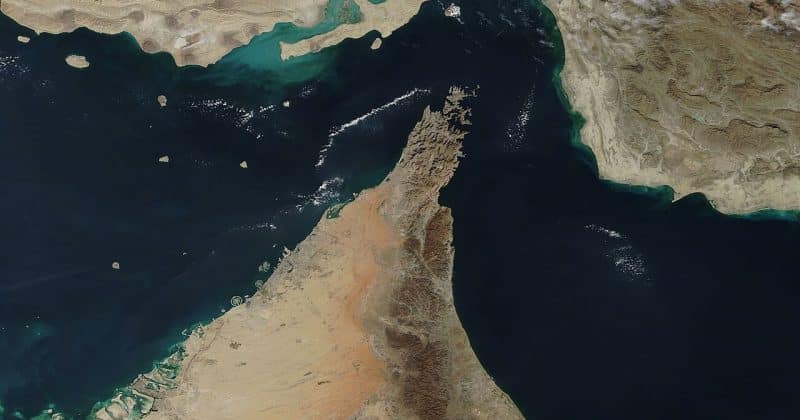
The Strait of Hormuz, that narrow chokepoint between Iran and the Arabian Peninsula, handles a massive share of global oil and LNG trade. Its closure, linked to Iran-related tensions that began disrupting gas flows in early March 2026, has throttled one of the key arteries feeding Europe’s LNG import terminals.
Without those cargoes, Europe is trying to refill its gas tanks with one hand tied behind its back. And winter doesn’t care about geopolitics.
Prices tell a messy story
Dutch TTF hub prices, the benchmark for European natural gas, are hovering around 50 euros per megawatt-hour as of May 21. That is down sharply from a peak of 74 euros per megawatt-hour in March 2026, which was the highest level since January 2023.
On the surface, a 32% drop from peak prices looks like relief. Look closer and the picture gets murkier.
The current market is plagued by a structural distortion: winter gas contracts are trading below summer prices. In a normal market, winter contracts carry a premium because that is when demand spikes. When the price curve inverts like this, it signals that traders lack confidence in the market’s ability to incentivize storage injections during the summer refill season.
Here’s the thing. If it costs more to buy gas now and store it than what you can sell it for in winter, the economic incentive to fill storage evaporates. Traders won’t voluntarily lose money to pad Europe’s reserves. That is the kind of market failure that regulators have nightmares about.
At 50 euros per megawatt-hour, gas remains expensive by historical standards. It is not the crisis-level pricing Europe endured in 2022, but it is elevated enough to strain industrial consumers, utilities, and ultimately household energy bills across the continent.
The pre-existing condition
Europe’s gas vulnerability did not start with the Hormuz closure. The continent has been navigating a fundamentally altered energy landscape since Russian pipeline flows collapsed in 2022. The shift to LNG as a replacement source made Europe more dependent on global shipping routes, including the very chokepoints now under threat.
Think of it as trading one vulnerability for another. Europe escaped its reliance on Russian gas only to become hostage to maritime bottlenecks thousands of miles away. The Strait of Hormuz disruption is exposing that trade-off in real time.
The 35% storage level is particularly concerning because it means Europe has less buffer to absorb unexpected demand spikes. A cold snap in early autumn, an unplanned outage at a major LNG terminal, or even a delayed reopening of Hormuz could cascade into a genuine supply emergency.
EU storage regulations were designed precisely for this kind of scenario. The 90% fill target was introduced after the 2022 energy crisis to prevent Europe from entering winter unprepared. But regulations only work if the physical supply exists to meet them. Right now, that is far from guaranteed.
What this means for energy markets and investors
The Equinor warning should be read as a signal flare for anyone with exposure to European energy markets. If Hormuz stays closed through summer, the gap between current storage levels and the 90% winter target becomes almost impossible to bridge through market mechanisms alone.
That scenario would likely trigger several knock-on effects. First, expect gas prices to reprice higher, potentially revisiting or exceeding the March 2026 peak of 74 euros per megawatt-hour. The market would need to reflect genuine scarcity, and scarcity pricing in energy is rarely gentle.
Second, demand destruction measures could come back on the table. During the 2022 crisis, European governments and industries turned to fuel switching, pushing utilities toward coal and other alternatives to conserve gas. A repeat of those measures would carry its own costs, both financial and political, given Europe’s stated climate commitments.
Third, volatility itself becomes a risk factor. Energy-intensive industries that rely on stable input costs, from chemicals to manufacturing to data centers, face margin compression when gas prices swing wildly. Companies with unhedged energy exposure are particularly vulnerable.
For crypto markets specifically, the connection is indirect but real. European data centers consume significant energy, and miners or validators operating in gas-dependent electricity markets could see operating costs rise. More broadly, an energy-driven economic slowdown in Europe would dampen risk appetite across asset classes, digital assets included.
The key variable to watch is the Hormuz timeline. Every additional week of closure makes the 90% storage target harder to achieve and increases the probability of policy intervention, whether through emergency gas procurement programs, relaxed storage mandates, or coordinated demand reduction. Equinor just told the market that Europe’s margin for error is razor thin. The question is whether anyone acts before the margin disappears entirely.
Disclosure: This article was edited by Editorial Team. For more information on how we create and review content, see our Editorial Policy.




 English (US) ·