
 2 months ago
47
2 months ago
47

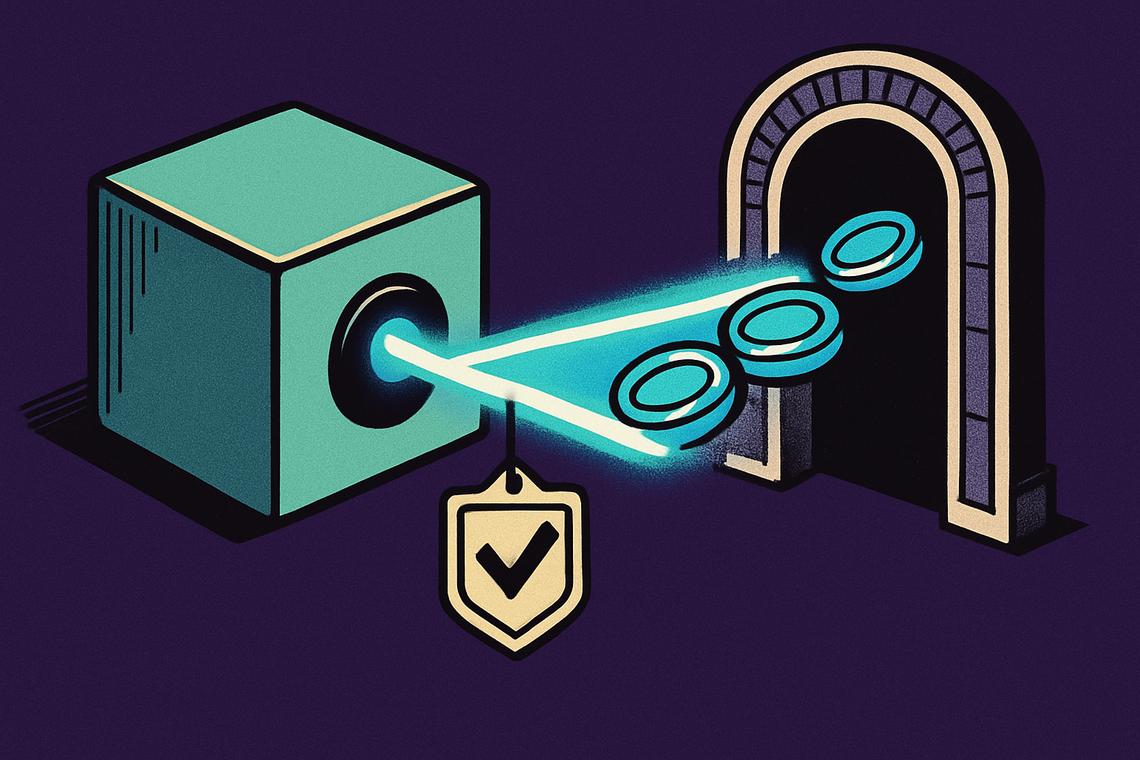
Ethereum just gave the AI agent world something it has been quietly missing: a formal, cryptographically backed way to prove that an AI agent is trustworthy without exposing everything about it. The Ethereum AI agent verification standard, ERC-8126, reached finalized status in early June 2026 and is built around zero-knowledge proofs and a risk-scoring framework designed to make AI agents verifiable, privacy-preserving, and interoperable across the Ethereum ecosystem.
The standard was proposed on January 15, 2026, by co-authors Leigh Cronian and Chris Johnson, then finalized roughly five months later after community consensus on Ethereum Magicians. That timeline matters because five months from proposal to finalization is relatively fast in the world of Ethereum improvement proposals, and it suggests broad agreement among developers that structured AI agent verification has become an urgent priority.
Ethereum Finalizes ERC-8126 for AI Agent Verification
The question ERC-8126 answers is straightforward, but genuinely difficult to solve: how do you know whether an AI agent operating on-chain is safe to interact with?
Until now, there was no standardized answer. ERC-8126 fills that gap by defining a multi-layer verification framework that produces a single risk score ranging from 0 to 100. A low score indicates a trustworthy agent, while a high score acts as a warning signal. In practice, the scoring is modular, composable, and designed to work across different agent types operating within the Ethereum ecosystem.
This is not a minor protocol adjustment. Instead, it represents a structural upgrade to how AI agents can be assessed and trusted at the infrastructure level.
Multi-Layer Verification Framework With Five Modular Checks
At the core of the Ethereum AI agent verification standard is a set of five distinct verification checks, each aimed at a different exposure point.
- Ethereum Token Verification (ETV) — examines how the agent interacts with tokens
- Media Content Verification (MCV) — reviews media the agent produces or handles
- Solidity Code Verification (SCV) — audits smart contracts the agent deploys or interacts with
- Web Application Verification (WAV) — covers web-facing interfaces connected to the agent
- Wallet Verification (WV) — validates the integrity of the agent’s wallet operations
Each check contributes to the unified risk score. Because the framework is modular, verification can be scoped, extended, or referenced by other standards. That is already happening, since ERC-8183, which deals with agent-commerce protocols, references this verification framework directly.
The breadth of those five checks also shows how ERC-8126 was designed. It does not treat AI agents as a single monolithic system to be stamped “safe” or “unsafe.” Instead, it recognizes that an agent’s trustworthiness is multi-dimensional, spanning token behavior, code quality, wallet integrity, media outputs, and web exposure.
How the ERC-8126 risk scoring model works
The ERC-8126 risk scoring model turns those separate checks into a single number between 0 and 100. As a result, other protocols and users can compare agent trust signals more easily, rather than interpreting each check on its own. A lower number signals less risk, while a higher number suggests more concern across one or more verification dimensions.
ERC-8126 Zero-Knowledge Proofs Keep Verification Private
One of the most technically significant aspects of ERC-8126 is how it handles verification without forcing agents to expose sensitive data.
The standard uses two key techniques: Private Data Verification (PDV) and ERC-8126 zero-knowledge proofs. ZKPs allow one party to mathematically prove that a statement is true without revealing the underlying information. Applied here, that means an AI agent can demonstrate it passed all five verification checks and earned a score of, say, 15 out of 100, without disclosing wallet balances, code logic, or media history.
That distinction matters enormously for adoption. In a world where on-chain AI agents may hold assets, execute trades, and interact with sensitive protocols, demanding full transparency as a prerequisite for trust creates a real dilemma. ERC-8126 resolves that dilemma by separating the question of whether an agent is trustworthy from the question of what exactly that agent holds or does.
How ERC-8126 Fits Into Ethereum ERC Standards
ERC-8126 does not operate alone. It sits within a broader, interconnected architecture of Ethereum ERC standards specifically designed for AI agents.
ERC-8004 handles agent registration and serves as the registration layer. ERC-8126 provides the verification layer on top of that, while ERC-8196 covers authenticated wallets. Together, these three standards form the backbone of what is taking shape as Ethereum’s native AI agent infrastructure.
Attestations generated through the ERC-8126 verification process are posted to the ERC-8004 Validation Registry, where they become discoverable by other agents, protocols, and users across the network. That discoverability transforms individual verifications into a shared trust layer, because any participant in the ecosystem can query an agent’s attestation rather than re-running verification from scratch.
The strategic logic here is clear. As autonomous AI agents become more common on Ethereum, executing transactions, interacting with DeFi protocols, and operating in agent-to-agent marketplaces, the ecosystem needs standardized trust signals. Without them, each protocol would have to build its own verification logic, which would lead to fragmentation and incompatibility. ERC-8126, alongside ERC-8004 and ERC-8196, is an attempt to solve that before fragmentation takes hold.
Tokens Connected to the ERC-8126 Ecosystem
Two tokens are associated with the broader ERC-8126 ecosystem. $VIRTUAL is the base asset for Virtuals Protocol’s AI agent economy, while $CENTRY, from Cybercentry, is designed for accessing verification scans and risk scoring through platforms connected to the standard.
Neither token has seen a direct price impact from the standard’s finalization, at least not yet. Standard finalization and market repricing often operate on different timescales, and the practical adoption curve for ERC-8126 will depend on how quickly protocols and agent developers integrate it into production systems.
For now, the bigger story is infrastructure. ERC-8126 gives Ethereum a common way to measure AI agent trust while preserving privacy, and that may matter more than immediate token reaction.
FAQ
What is the purpose of ERC-8126 in the Ethereum ecosystem?
ERC-8126 is a finalized Ethereum standard designed to verify the trustworthiness of AI agents operating on-chain. It produces a risk score from 0 to 100 using a multi-layer verification framework and zero-knowledge proofs, allowing agents to prove they are safe without exposing private data.
How does ERC-8126 use zero-knowledge proofs for AI agent verification?
ERC-8126 uses zero-knowledge proofs to let an AI agent prove it has passed verification checks and received a given risk score without revealing underlying sensitive information such as wallet balances or code logic.
What are the five modular checks included in the ERC-8126 verification framework?
The five checks are Ethereum Token Verification, Media Content Verification, Solidity Code Verification, Web Application Verification, and Wallet Verification. Each one targets a different aspect of an agent’s behavior and exposure.
How does ERC-8126 integrate with other Ethereum standards like ERC-8004 and ERC-8196?
ERC-8126 works as the verification layer within a broader Ethereum AI agent infrastructure. ERC-8004 handles agent registration, ERC-8196 covers authenticated wallets, and attestations from ERC-8126 are posted to the ERC-8004 Validation Registry for ecosystem-wide discoverability.
What does the risk score generated by ERC-8126 represent?
The risk score is a single number between 0 and 100 that aggregates the results of the five modular verification checks. A lower score indicates a more trustworthy agent, while a higher score signals elevated risk or concerns across one or more verification dimensions.


 English (US) ·