
 4 months ago
54
4 months ago
54
- New framework connects L2s into one composable Ethereum system
- Removes need for bridges with single-transaction cross-chain execution
- Signals Ethereum is refining, not abandoning, its rollup strategy
Ethereum’s scaling story has been impressive on paper, but messy in practice. The rollup-first roadmap lowered fees and expanded capacity, sure, but it also introduced a problem that kept growing quietly. Every new Layer 2 became its own island. Liquidity split, users jumped between chains, and what was supposed to feel like one ecosystem started feeling… fragmented.
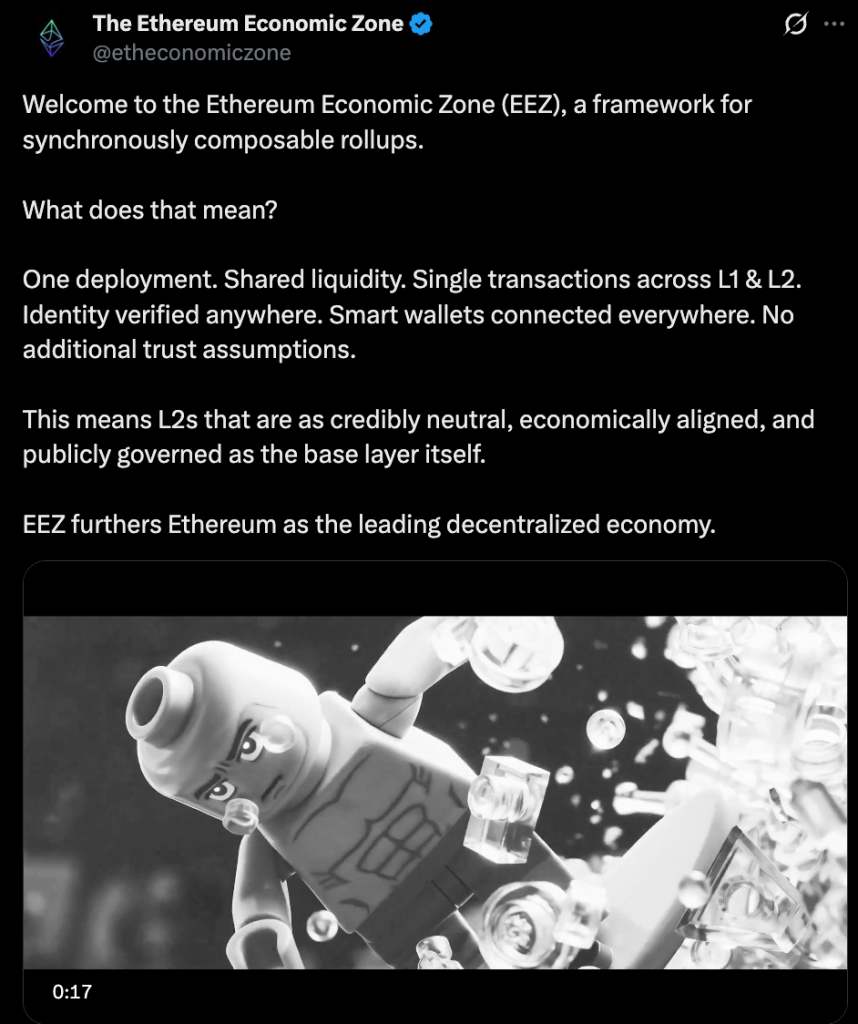
That fragmentation wasn’t just inconvenient, it changed how Ethereum actually functioned. Instead of one unified system, it became a collection of semi-connected environments. And as more L2s launched, the complexity only increased.
The EEZ Approach Reconnects the System
Now there’s an attempt to bring everything back together. The Ethereum Economic Zone, backed by Gnosis, Zisk, and the Ethereum Foundation, is aiming to unify rollups into a single composable layer. The idea is simple in theory, but powerful in execution.
Smart contracts on one rollup can directly interact with contracts on another rollup, or even mainnet, within the same transaction. No bridges, no delays, no fragmented user experience. It’s closer to how Ethereum was always expected to work, just finally implemented at scale.
No Bridges Changes Everything
One of the biggest pain points in the current system is bridging. Moving assets between chains introduces delays, risks, and often confusing UX. Removing that entirely shifts how users interact with the network.
Instead of thinking in terms of chains, users can operate as if everything exists within one environment. That’s a subtle change, but it dramatically simplifies both development and usage. And honestly, it’s something Ethereum probably needed earlier.
ZK Tech Is Doing the Heavy Lifting
The technical backbone here is real-time zero-knowledge proofs. This isn’t a new concept, but applying it in a way that enables synchronous composability, without added trust assumptions, is what makes this different.
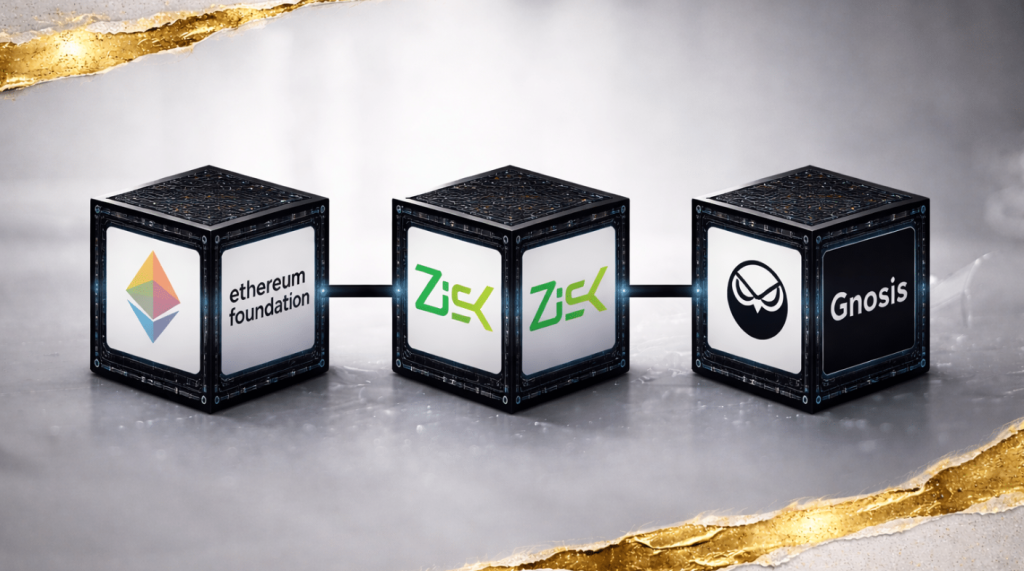
If Zisk’s proving system works as expected, it allows transactions to execute across multiple layers instantly, while still maintaining security guarantees. That’s not just interoperability, it’s a deeper integration of the entire stack.
Competing Visions Are Still in Play
EEZ isn’t the only attempt to solve this problem. Optimism’s Superchain and Polygon’s AggLayer are also pushing toward a more connected ecosystem. But many of these approaches still rely on delayed finality or additional trust layers.
EEZ’s positioning feels tighter, fewer compromises, more direct integration. Whether it succeeds probably comes down to execution, not the idea itself. Because the vision, at this point, is pretty clear across the board.
Ethereum Is Evolving Its Own Strategy
This doesn’t mean Ethereum is walking away from rollups. It’s doing something more interesting, it’s correcting them. Instead of scaling through fragmentation, it’s trying to scale while preserving the feeling of a single system.
And if this works, the narrative changes. Users won’t ask which L2 they’re on. They’ll just be on Ethereum again, even if under the hood, it’s far more complex than before.
Disclaimer: BlockNews provides independent reporting on crypto, blockchain, and digital finance. All content is for informational purposes only and does not constitute financial advice. Readers should do their own research before making investment decisions. Some articles may use AI tools to assist in drafting, but every piece is reviewed and edited by our editorial team of experienced crypto writers and analysts before publication.







 English (US) ·