
 5 months ago
128
5 months ago
128

The post Ethereum Staking Yields Dropping in 2026? Why Holders Are Switching to Bitcoin Everlight Shards for Real BTC Rewards appeared first on Coinpedia Fintech News
The math behind Ethereum staking has changed considerably since the early post-Merge period. When only 15 million ETH was staked in early 2023, annual yields sat above 6%. With approximately 37 million ETH now committed to validators — nearly 30% of the entire circulating supply — those yields have compressed to around 3.3% on average. Staking rewards have compressed toward 3% as total staked ETH grew faster than issuance and fee income, and the structural dynamic driving that compression isn’t reversing — every market dip pushes more ETH into staking as holders seek yield while waiting for price recovery, which pushes yields lower still.
For participants reassessing what their ETH yield position is delivering in 2026, Bitcoin Everlight is emerging as a structurally different alternative.
A Reward Model That Scales With Network Activity
Bitcoin Everlight is a decentralized validation network where participants earn Bitcoin rewards by contributing to blockchain infrastructure security. The platform runs on a Transaction Validation Node framework — the technical backbone handling validation, routing, and reward distribution — with Everlight Shards as the participation layer connecting users to the BTC-denominated fee pool the infrastructure generates.
The reward logic is fundamentally different from Ethereum’s staking model. Ethereum’s fixed reward pool divides among more participants as staking participation grows, reducing per-token yields across the board. Bitcoin Everlight’s post-mainnet distribution scales in the opposite direction — the reward pool grows with network transaction volume and fee activity, meaning increased adoption expands what’s available for distribution. Shard holders aren’t competing for a fixed issuance budget that gets diluted as more people join.
During the presale phase, activated shards earn fixed BTCL rewards at rates that sit considerably higher than anything Ethereum staking currently offers. After mainnet, those fixed incentives transition to performance-based BTC distribution drawn from real transaction routing fee activity — paid in Bitcoin, independent of BTCL’s own price trajectory. Before the presale opened, the project completed dual smart contract audits through Spywolf and Solidproof, alongside dual KYC verifications through Spywolf and Vital Block — all publicly linked and completed before a single token was sold.

From $50 to an Active Network Position
Entry into Bitcoin Everlight begins with acquiring BTCL tokens — priced at $0.0008, with a minimum purchase of $50. Once a participant’s cumulative USD commitment crosses a tier threshold, the shard activates automatically based on the value at the time of purchase, with BTCL rewards beginning to distribute immediately. Tokens remain locked during the presale period and commitments are final — a design that keeps participants aligned with the network’s long-term economics.
When mainnet launches, the fixed presale APY gives way to performance-based BTC distribution. The reward pool scales with what the infrastructure generates from actual transaction activity, with no fixed post-mainnet ceiling capping the upside as network usage grows.
What Each Tier Delivers
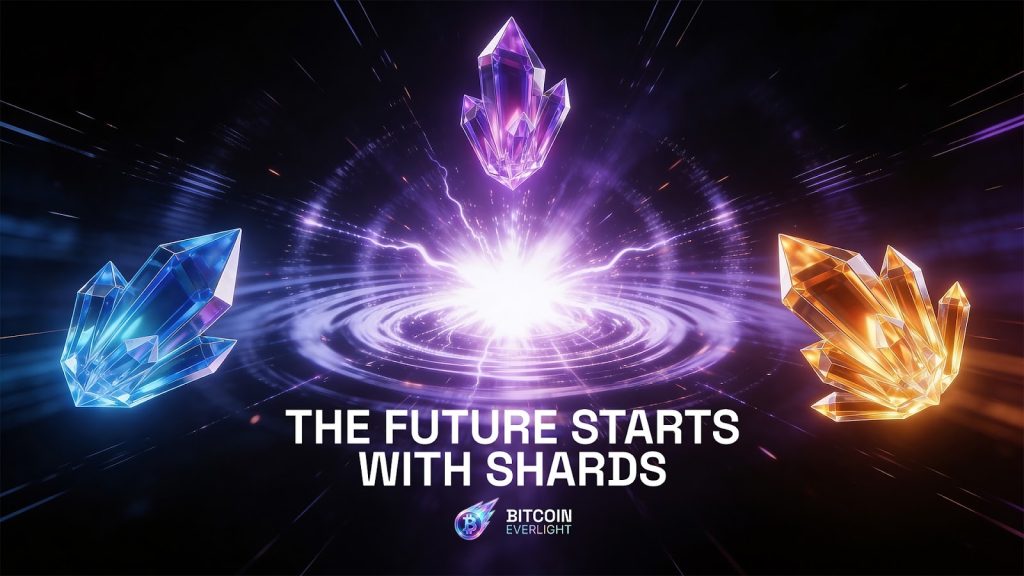
The Azure Shard activates at a $500 commitment and earns up to 12% APY in BTCL during the presale period, transitioning to BTC rewards at mainnet. The Violet Shard activates at $1,500 with up to 20% APY during presale, and the Radiant Shard activates at $3,000 with up to 28% APY — both carrying the same BTC reward transition when the network goes live.
In 2026, nominal staking APYs across the broader crypto market range from 3% to 19%, but real yields after network inflation drop to 0–10%. Bitcoin Everlight’s presale tiers sit at the upper end of that nominal range during the presale period, with the added distinction that post-mainnet rewards are denominated in BTC from actual network fee activity — not in an inflationary token whose real yield depends on whether the protocol’s own price holds up.
Participants holding tokens below any threshold maintain a dormant shard position that upgrades automatically once the balance reaches the next tier. After mainnet, tiers are sustained through ongoing USD-equivalent BTCL balance, adjusting up or down as holdings change relative to the thresholds. Any governance-driven adjustments to those thresholds would follow a transparent, proposal-based process.

The Window That Matters
Bitcoin Everlight is currently in Phase 1 of its presale — a phase that runs for 6 days, with 472,500,000 tokens available at $0.0008 per token. For ETH stakers watching their yields compress toward 2–3% while their principal sits well below its 2025 highs, the timing of this presale window relative to where Ethereum staking currently stands makes for a direct comparison worth examining carefully.
The full details on how Everlight Shards work and what the BTC reward distribution looks like after mainnet launch can be found here:







 English (US) ·