
 1 month ago
44
1 month ago
44
- Ethereum has been rejected again near the $1,720 to $1,780 resistance zone.
- ETH is now testing a major demand area around $1,460 to $1,560 as buyers try to slow the decline.
- Rising exchange inflows suggest selling pressure remains elevated, keeping the outlook cautious.
Ethereum is still struggling to shake off heavy selling pressure after another failed attempt to push through a key resistance zone. The latest rejection has sent ETH back toward a major demand area, where buyers are trying, again, to keep the market from breaking lower.
For now though, the broader trend remains bearish. Ethereum is still trading below its major moving averages, and every bounce continues to look more like a temporary pause than a real reversal.
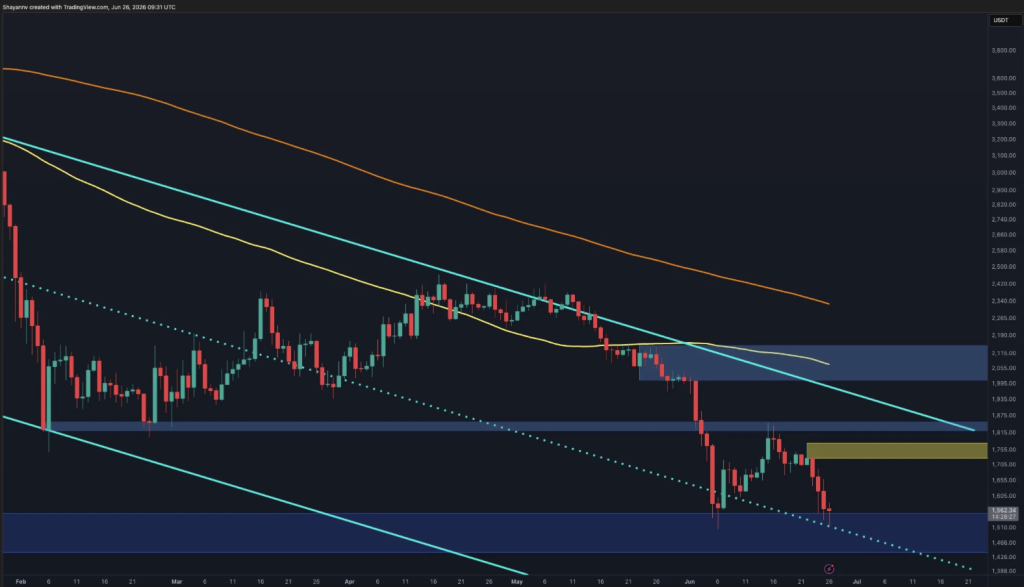
Ethereum Price Analysis: The Daily Chart
On the daily chart, Ethereum continues to form lower highs and lower lows. That alone shows sellers still have control, but the setup becomes even weaker when looking at the bigger structure. ETH remains below the 100-day moving average, the 200-day moving average, and its long-term descending trendline.
The most recent recovery attempt stalled below the $1,720 to $1,780 supply zone, an area that has now become a major hurdle for bulls. Once ETH failed there, bearish momentum returned quickly and pushed the price back toward the $1,460 to $1,560 support region.
This demand zone has produced a reaction, but so far it is not a strong one. Buyers are defending the area, yes, but they have not done enough to change the larger downtrend. Until Ethereum reclaims the $1,720 to $1,780 range with strength, most rallies will likely be treated as corrective moves rather than the start of a true trend reversal.
A clean break below the current support zone could open the door to another leg lower. On the other hand, reclaiming nearby resistance would be the first real sign that bearish pressure is starting to weaken.
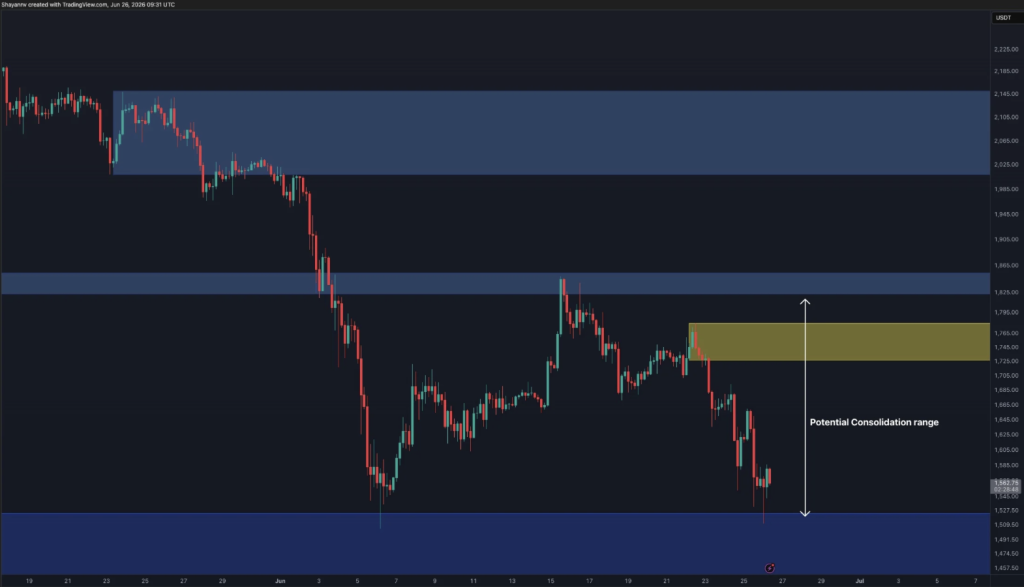
ETH 4-Hour Chart Shows Weak Recovery Attempts
The 4-hour chart tells a similar story, just on a shorter timeframe.
Ethereum was rejected from the $1,720 to $1,780 resistance zone before dropping sharply toward the lower boundary of its current range. After that sell-off, ETH bounced modestly from the $1,500 to $1,530 area, showing that buyers are still active around demand.
But the problem is clear. ETH remains near the bottom of the broader consolidation range, and every recovery attempt has continued to create a lower high. That makes the bounce look fragile, not convincing.
In the near term, Ethereum may continue moving between roughly $1,520 and $1,750. The lower boundary is the level to watch closely. If ETH loses that support, selling could accelerate. If buyers manage to reclaim the upper range, however, the short-term outlook would improve and a stronger recovery attempt could begin.
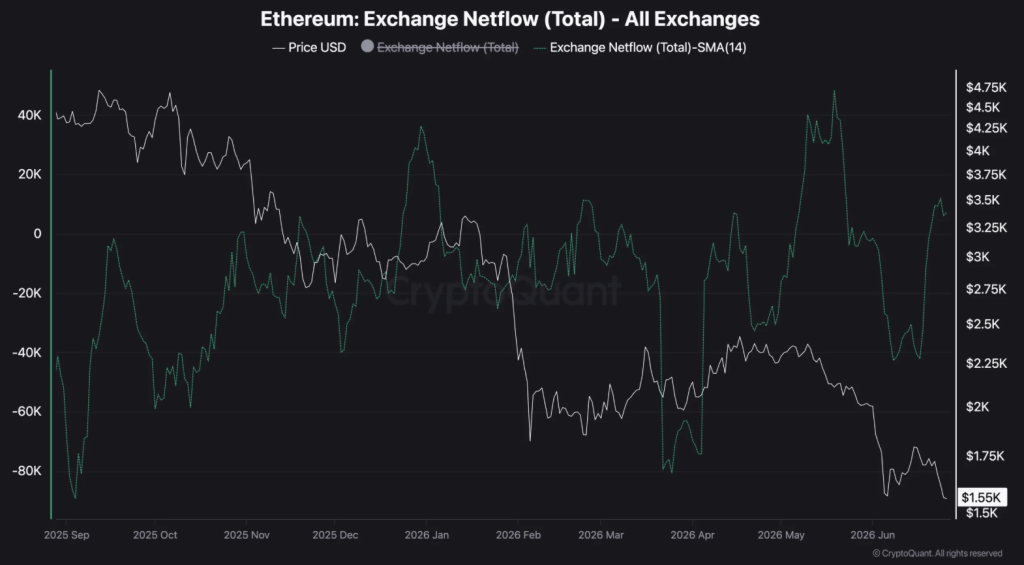
Exchange Flows Add More Caution
On-chain data is also leaning cautious.
Ethereum exchange netflows have increased in recent sessions, with the 14-day moving average turning sharply positive. In simple terms, more ETH is moving onto exchanges.
That matters because sustained exchange inflows often suggest holders are preparing to sell, trade, or reduce exposure. It does not guarantee another drop, but it does add pressure at a time when the price is already sitting near a major support area.
This rise in exchange inflows has also happened while Ethereum has been falling back toward the $1,500 zone, making the setup even more sensitive. Unless inflows begin to cool and price stabilizes around current demand, the data still supports a cautious outlook.
For now, Ethereum is not broken beyond repair, but it also has not shown enough strength to flip the trend. Bulls need to defend the current support zone and reclaim resistance before the market can start talking about recovery with any real confidence.
Disclaimer: BlockNews provides independent reporting on crypto, blockchain, and digital finance. All content is for informational purposes only and does not constitute financial advice. Readers should do their own research before making investment decisions. Some articles may use AI tools to assist in drafting, but every piece is reviewed and edited by our editorial team of experienced crypto writers and analysts before publication.








 English (US) ·