
 7 months ago
72
7 months ago
72
Quick Facts:
 Celebrity investor, Kevin O’Leary’s view that Bitcoin can hold up without imminent Fed cuts shifts attention from macro speculation to actual network adoption.
- Bitcoin’s base layer still struggles with throughput, fees, and programmability, pushing real-world DeFi and gaming activity toward faster, smart-contract-ready ecosystems.
- Competing Bitcoin Layer 2s are racing to bring scalable execution to $BTC, utilizing designs ranging from payment channels to roll-ups and modular sidechains.
- Bitcoin Hyper introduces an SVM-powered Bitcoin Layer 2 that targets Solana-level performance while anchoring settlement to $BTC, aiming to unlock programmable, low-fee Bitcoin DeFi.
Kevin O’Leary’s latest stance on Bitcoin is ($BTC) blunt: if the asset’s investment case depends on a single Federal Reserve meeting, it probably wasn’t robust to begin with.
The Canadian businessman and TV personality’s argument that $BTC can hold its own even without near-term rate cuts shifts the spotlight back to adoption, utility, and real transaction demand.
For you as a $BTC holder, that’s a very different conversation from the usual ‘pivot or no pivot’ guessing game. If Bitcoin is going to matter regardless of Fed timing, then the infrastructure that actually lets people pay, trade, and build on top of it becomes the real battleground for upside.
That’s where Bitcoin’s structural limits come roaring back into view.
 The base layer still handles roughly seven transactions per second (TPS), with long confirmation times and fee spikes during congestion. That’s fine as a store-of-value ledger, but it’s a non-starter for high-frequency DeFi or gaming.
Bitcoin Hyper ($HYPER) steps into that gap as a high-octane way to express long-term $BTC conviction.
Instead of trying to time macro, it offers a Bitcoin-aligned Layer 2 that uses a Solana Virtual Machine (SVM) execution layer to push performance to and beyond Solana-style speeds, while anchoring settlement and trust back to Bitcoin itself.
Why Macro Fatigue Is Pushing Attention Back to Bitcoin Infrastructure
After two years of ‘will they, won’t they’ on Fed cuts, investor fatigue is real. Bitcoin’s resilience through multiple rate-hike cycles has already tested the original thesis that it’s a levered bet on liquidity. Increasingly, the more durable narrative is that $BTC will survive macro noise if it keeps gaining real-world usage.
At the same time, Bitcoin’s base chain was never designed for modern, smart-contract-heavy workloads. Competing Layer 1s like Solana and Ethereum offer sub-second or low-single-second finality and thousands of transactions per second, with fees often below $0.01.
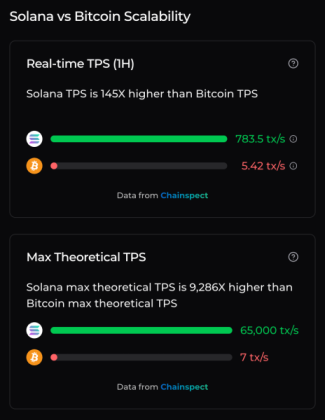
That’s why you see NFTs, perpetual DEXs, and gaming clusters gravitate there instead of to Bitcoin.
To pull that activity back toward $BTC, a new wave of infrastructure is emerging.
Among the frontrunners, Bitcoin Hyper fits into that broader race as one of several contenders trying to marry Bitcoin’s settlement guarantees with throughput and programmability that can actually host complex DeFi, NFT, and gaming ecosystems at scale.
 Learn more about the project in ‘What is Bitcoin Hyper?’
How Bitcoin Hyper Turns BTC Conviction Into High-Throughput Utility
Where Bitcoin Hyper differentiates itself is in its preferred execution layer. Rather than inventing yet another VM, it integrates the Solana Virtual Machine directly into a Bitcoin Layer 2.
That means developers can tap SVM’s parallelized execution and high TPS design, while still routing economic value through Bitcoin.
Under the hood, Bitcoin Hyper uses a modular design: Bitcoin Layer 1 acts as the settlement and security anchor, while a real-time SVM Layer 2 handles execution.
A single sequencer batches and orders transactions, periodically anchoring state back to Bitcoin. The result is extremely low-latency processing for swaps, payments, and dApp calls, while $BTC itself remains the ultimate source of truth.

For users, that architecture shows up as practical advantages: high-speed payments in wrapped $BTC with low fees, DeFi primitives like swaps, lending, and staking, plus NFT and gaming dApps built in Rust using familiar SVM tooling.
SPL-compatible tokens are adapted for the Layer 2, giving Solana-native builders a clear porting path into the Bitcoin universe without rewriting everything from scratch.
On the market side, the presale has already raised over $28.8M, with tokens currently offered at $0.013365, signaling strong demand for a BTC-centric scalability play.
Whales are also betting big on the project, with one recently snapping up over $500K worth of $HYPER tokens.
 If you want to grab your share of tokens, you can check out our Bitcoin Hyper buying guide for more information.
Meanwhile, if you’re more of a long-term investor, you’ll be pleased to know that $HYPER has a huge potential upside given its premise. By the end of 2026, $HYPER could go a high of $0.20, or a 1396% increase from its current price.
But with yet another price increase coming up in a few hours, now’s your chance to buy tokens at a currently discounted price.
Join the $HYPER presale today.
This article is for informational purposes only and does not constitute financial, investment, or trading advice; always do your own research.
Authored by Bogdan Patru, Bitcoinist — https://bitcoinist.com/kevin-oleary-says-fed-cuts-wont-impact-bitcoin-as-bitcoin-hyper-pumps








 English (US) ·