
 1 hour ago
16
1 hour ago
16
Fireworks AI is in discussions to raise capital at a $15 billion valuation, according to Bloomberg. If the deal closes anywhere near that number, it would represent one of the more aggressive valuation leaps in the current AI funding cycle, nearly quadrupling the $4 billion post-money valuation the company achieved in its Series C round in October 2025.
The numbers so far
Fireworks AI’s most recent confirmed fundraise was a $250 million Series C completed on October 28, 2025. That round valued the company at $4 billion post-money and was co-led by Lightspeed Venture Partners, Index Ventures, and Evantic Capital.
Sequoia Capital also participated, alongside strategic investors NVIDIA and AMD.
The Series C brought the company’s total capital raised above $327 million. That followed a $52 million Series B in July 2024, which had valued Fireworks AI at $552 million.
What Fireworks AI actually does
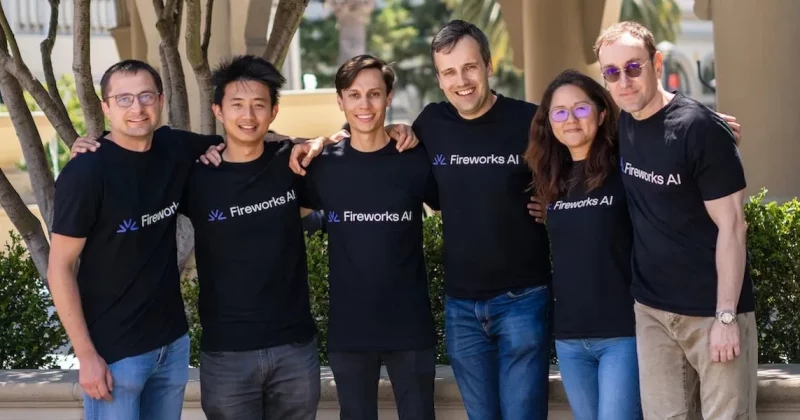
The company, led by CEO and co-founder Lin Qiao and headquartered in Redwood City, California, operates a cloud platform focused on AI inference. Fireworks AI’s pitch is that it helps enterprises deploy and scale AI models efficiently, focusing on speed and cost optimization.
The platform has also cultivated partnerships with infrastructure providers. Notably, IREN, a Bitcoin mining company that has been diversifying into AI cloud services, is among its partners.
Why the valuation jump matters
Fireworks AI is positioning itself as an inference provider, competing against cloud giants like AWS, Google Cloud, and Azure, as well as other inference-focused startups. The presence of NVIDIA and AMD as investors suggests the chip companies see strategic value in having a strong inference platform in their ecosystem.
Investors watching this space should pay close attention to whether the round actually closes at that figure, and on what terms. Valuation headlines in private markets can be misleading, often inflated by structured deal terms like liquidation preferences or anti-dilution provisions that protect new investors at the expense of earlier shareholders or employees.
Disclosure: This article was edited by Editorial Team. For more information on how we create and review content, see our Editorial Policy.






 English (US) ·