
 1 hour ago
20
1 hour ago
20
When the person tasked with steering monetary policy during the worst financial crisis in a generation says the Federal Reserve has a trust problem, it’s worth paying attention.
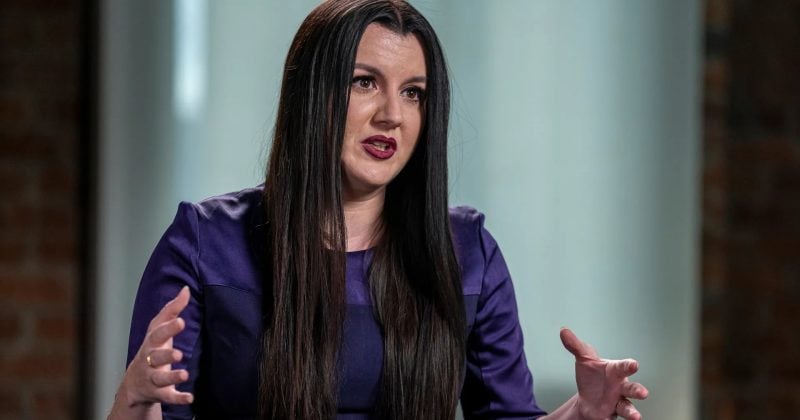
Randy Kroszner, who served as a Fed Governor from 2006 to 2009 and now teaches economics at the University of Chicago Booth School of Business, appeared on Bloomberg’s “Money” program to dissect what he sees as a widening credibility gap between the central bank and the consumers it’s supposed to serve. His core argument: if people stop believing the Fed can manage inflation, the Fed’s job becomes exponentially harder.
The credibility problem, explained
Kroszner noted that interest rates may stay “higher for longer” than previously anticipated, a phrase that has become a sort of unofficial motto for the current rate environment. That language alone signals the Fed isn’t confident it has inflation cornered.
The former governor also flagged AI and automation as emerging wildcards for labor markets and economic policy. The argument goes something like this: if artificial intelligence reshapes employment patterns faster than policymakers can adapt, the Fed’s traditional tools for reading the economy become less reliable.
Political pressure compounds the problem. The Fed’s independence has always been more of a gentleman’s agreement than an ironclad guarantee, and Kroszner framed that independence as directly tied to market credibility. When markets perceive political interference in rate decisions, they price in uncertainty.
Why crypto investors should care
Kroszner didn’t mention Bitcoin, Ethereum, or any digital asset during his Bloomberg appearance. Not once. But the implications of his analysis map directly onto the thesis that has powered crypto adoption for the past decade.
A prolonged “higher for longer” rate environment creates an interesting tension for digital assets. On one hand, elevated rates increase the opportunity cost of holding non-yielding assets like Bitcoin. On the other hand, if higher rates signal that the Fed is struggling to get inflation under control, the narrative around hard-capped supply assets gets stronger.
The leadership question and what comes next
Broader discussions around Fed leadership have also surfaced the name Kevin Warsh as a potential figure in the institution’s future direction. Leadership transitions at the Fed are never just personnel shuffles. They signal policy philosophy shifts that ripple through every asset class.
The crypto market has matured significantly since the last major inflation scare. Institutional custody solutions exist. Spot Bitcoin ETFs trade on major exchanges. Stablecoin infrastructure handles billions in daily volume. The on-ramps for inflation-nervous capital to enter crypto are wider and smoother than they’ve ever been.
That scenario isn’t guaranteed. The Fed has navigated credibility challenges before, most notably in the early 1980s under Paul Volcker, who essentially broke the economy to prove the central bank was serious about prices. But Volcker operated in a different political environment with different constraints.
Disclosure: This article was edited by Editorial Team. For more information on how we create and review content, see our Editorial Policy.







 English (US) ·